• Bhubaneswar India
  • Contact+ 91-9938772605
  • Mon - Sat : 10:00AM - 6:00PM

Archive: November 11, 2021

Symphony SummitAI

Symphony SummitAI announces “IT Hero Rises” in partnership with CIO association

An initiative to recognise dedication and professionalism of IT Heroes across industries which keeps the wheels of economy & society running even during exigencies like the recent pandemic

Bengaluru, Thursday, November 11th, 2021: In an effort to bring forth and recognise the unsung, the largely unknown role played by IT support professionals/teams toward ensuring business continuity and zero business disruption, Symphony SummitAI, a leading provider of AI-driven IT/Enterprise Management solutions, today announced “IT Hero Rises”, an initiative in partnership with CIO Association. The initiative is open to all IT support professionals (or their colleagues who can nominate them) across all verticals in India currently and will soon be extended worldwide. Stories of these Heroes will be featured at https://it-hero-rises.com/, which is dedicated to the initiative. Apart from being featured, selected ‘IT Heroes’ will receive a certificate from SummitAI & CIOKlub India besides a LinkedIn badge to add to their social handles in recognition of their dedication and passion.

Announcing the initiative, Satyen Vyas, CEO, Symphony SummitAI, said, “The sudden disruption due to Covid-19 last year brought to light the true importance of technology for businesses. IT teams across industries responded with incredible agility to the challenges of the new working environment. This crisis also showed us another important fact- the sheer human passion and commitment of people behind keeping the wheels running during such a challenging time, largely goes unnoticed. We were witness to many extraordinary stories where individuals and teams went beyond the call of duty. These are our true IT Heroes and Symphony SummitAI we take pride in recognizing/honoring them through this initiative. Thank CIO Association for readily consenting to partner.”

Added, Umesh Mehta, President, and CIO Association, “The CIO Association is pleased to partner with Symphony SummitAI for the “IT Hero Rises” initiative for too long, the sweat, tears and dedication of the countless thousands who slogged behind the scenes through personal hardships and sleepless nights, has not been told or recognized. I don’t think they went beyond seeking recognition but that does not mean their role, their passion should not be highlighted to the larger society. Salute each of these featured on the site and off it.”

Textile Industry hit hard by Covid, but aiming high despite challenges: Infomerics Report

New Delhi, November 11, 2021: After being hit hard by COVID, India’s textile industry is well on course on the road to recovery. During the pandemic, the domestic textiles and apparels industry slumped to US $75 billion after peaking at US$ 106 billion in FY2020. However, government initiatives to bolster the sector have raised hopes of the sector growing to $300 billion by 2025-26, a growth of 300% in the next 2 years.

There has been a remarkable turnaround in Technical Textiles. In terms of value, technical textiles imports exceeded exports by ₹1058 crore in FY20 while in FY21 exports exceeded imports by ₹2998 crore.

These are some major findings of a report titled Textile Industry: Trends and Prospects released by Infomerics Valuation and Rating Pvt Ltd., the well-known SEBI-registered and RBI-accredited financial services credit rating company.

The report analyses the factors that have affected the sector’s performance. It notes that apart from the impact of COVID, other reasons which are acting as bottlenecks are, high tariffs faced by Indian exporters in key markets, such as the European Union, and logistics. The report compares the high tariffs in the EU with zero-duty access given to competing nations like Bangladesh, Sri Lanka, Pakistan, and Turkey, which affected export performance. The report also highlights logistics as one of the major constraints with Indian exporters. For comparative purposes, the turnaround time (TAT) (from order to delivery) is 50 days for Bangladesh and 63 days for India, whereas the time taken to reach port is 1 day for Bangladesh and 7-10 days for India.

Turnround in Technical Textiles

India has transitioned from being a net importer, in terms of value, of technical textiles (imports exceeded exports by ₹1058 crore) in FY20 to a net exporter of the same (exports exceeded imports by ₹2998 crore) in FY21.

In January 2019, 207 HSN Codes have been classified and notified as technical textiles with a view for ease of doing business.

The Government has earlier approved the proposal for the creation of the National Technical Textiles Mission (NTTM) for a period of 4 years (2020-21 to 2023-24) with an outlay of ₹1480 crores.

Indian technical textiles market could increase at a CAGR of 7.6 percent in Asia-Pacific to reach USD 23.3 billion in 2027, up from USD 14 billion in 2020, says the report. Currently, Indian technical textiles constitute approximately 8 percent of the global share.

A target has been taken by the Govt, to increase the export of technical textiles to five times in three years, from the current approximately USD 2 billion to USD 10 billion.

Other Government interventions

The Infomerics report outlines the various initiatives taken by the government to help and bolster the sector. Historically such initiatives include the introduction of Technology Mission on Cotton (TMC), Technology Upgradation Fund Scheme (TUFS), Scheme for Integrated Textile Park (SITP), etc. Some of the recent measures include the National Technical Textiles Mission (NTTM) for a period of 4 years (2020-21 to 2023-24) with an outlay of ₹1480 crores.

State-level action is also visible whereby Tamil Nadu, one of the largest T&A hubs in the country, signed up for Techtextil India 2021 – the leading International Trade Fair for Technical Textiles and Nonwovens. It notes that this is likely to open doors for innovation and reduce foreign dependence.

Other measures include the Scheme for Capacity Building in Textile Sector (SAMARTH) to address the shortage of skilled workers in the textile sector with a target of training 10 lakh persons.

Challenges

Fund allocation is a major limitation for the textile industry, says the report, pointing out that the Finance Ministry approved only ₹3,631.64 crores for the Textile Ministry as against the proposed outlay of ₹16,883 crores during the FY22.

Further, the industry has been lately witnessing low manufacturing activity accompanied by high prices for the final product reflected in the annual NIC-2 digit and sectoral indices of industrial production wherein the index for ‘manufacturing of textiles’ has fallen below the 100 marks, settling at 91.1 for the first time in almost a decade. The yearly wholesale price index for ‘manufacturing of textiles’ has been nearing the 118-point mark which is 6-7 notches above the decadal average of approximately 112.

The report also highlights other generic factors like weakened consumer demand or production networks; obsolete technology, inflexible labour laws, infrastructure bottlenecks, and fragmented industry; the major role of the unorganized and small players hit by a triple whammy of demonetization, rolling out of GST, and the COVID-19 pandemic.

More specifically, it outlines industry risk factors, which relate to the GST issue, the gap in Proposed Outlay and Amount Approved, Low Performance and High Price, and Poor Textile Machinery Performance.

The way ahead

The Infomerics report stress that the industry needs to command premium prices; target niche products and markets; need redesign products in higher value-added segments. It also needs to focus on regional and cluster subsidies, technology up-gradation, and skill development subsidies for sustained development. Investment in value-added services, e.g., marketing, warehouse rentals, logistics, courier, other product fulfillment costs constitute a pre-requisite for the sector going to scale.

However, the report is optimistic about the potential for growth and structural transformation of the textile industry. India’s textile industry is one of the largest in the world with a large unmatched raw material base and manufacturing strength across the value chain. It is the second-largest producer of man-made fiber (MMF) after China. The textiles and apparel (T&A) industry contributes 2.3 percent to the country’s GDP, 13 percent to industrial production, and 12 percent to exports.

The report recommends that the industry needs to effectively address the risk factors, the distinctive peculiarities of the sector, and the integration of the textile value chain for steady growth and consolidation of the Indian textiles position in the comity of nations.

Fooza Foods Private Limited App

Children’s Day Special Offers on Fooza Foods Private Limited App

Kolkata, 11th November 2021: On the onset of this Children’s Day, Fooza envisions to be one of the most dynamic and innovative food delivery platforms for food lovers. Fooza Foods Private Limited, one of the leading online food delivery apps in Kolkata, celebrates Children’s day to add more to the kid’s taste buds around the city.

To celebrate this special day, Fooza and its select partner restaurants have come up with several fun offers including: a delicious breakfast combos for a pocket-friendly budget from Boma Asian Bakery; Creamy white Sauce Cheese pasta from 3 Idiots Dhaba; and a Children’s Day dining menu from Golden Bowl Restaurant with mouth-watering specials like Chicken Hakkah Noodles, Honey Lemon Chicken, orfinger-licking dessert Triple Chocolate Shake.

Speaking on the same, Mr. Kapil Lohia, CEO, Fooza Foods Private Limited, added that, “This year Fooza is celebrating Children’s Day hoping to bring a smile to all the little ones out there. The pandemic has been hard on every one of us, but it’s been even harder on children as they have been inside or online for the last year and a half. Hence, Fooza has come up with delicious offers for the kids, keeping their safety in mind, to make the day worthwhile. The best ingredient behind a child’s good upbringing is to make them happy, and for Fooza’s customers, food is happiness!

About Fooza:

Headquartered in Kolkata, Fooza Foods Private Limited is the food tech company leading a new wave of innovation in India’s food ordering and delivery business. The company started its operations in December 2020 in Kolkata. Fooza aims to createa the widest network of multi-cuisine food suppliers across select cities and locals in India. In addition to specialty and multi-cuisine restaurants, Fooza offers a world of food choices by bringing together experienced chefs, home kitchens all under one roof.

For Further information Contact
Candid Communication
Sumana Sarkar- 8697727257/ Trisha Dasgupta- 8697727258

Habitas AlUla

Royal Commission for AlUla and UNESCO announce partnership to share Saudi Arabia’s rich cultural heritage with the world

Paris, France, November 10, 2021: The Royal Commission for AlUla (RCU) today signed a long-term strategic partnership with UNESCO to preserve and promote a cultural landscape of outstanding natural and historical significance in North-West Saudi Arabia

Signed at the UNESCO Headquarters in Paris, the agreement accelerates the ongoing cultural and socio-economic renaissance of AlUla by further protecting its historical, natural and cultural sites as well as its local culture, by fostering capacity building and knowledge transfer with experts from around the world joining RCU efforts to transform AlUla into a benchmark destination for heritage, nature, arts & culture.

The partnership was signed by HH Prince Badr bin Abdullah Al-Saud, Governor of RCU and Minister of Culture of Saudi Arabia, with Audrey Azoulay, Director General, UNESCO; HH Princess Haifa AlMogrin, Ambassador, Saudi Arabia’s Permanent Delegation to UNESCO, and Amr AlMadani, CEO of RCU.

Audrey Azoulay, Director General, UNESCO declared: “The relationship between Saudi Arabia and UNESCO builds on a long history that extends back to 1946, when the Kingdom became a Member State of our Organization. Today, cooperation between UNESCO and the Kingdom of Saudi Arabia is taking another important step forward, with a view to accompanying a major transformation of the AlUla region.”

HH Prince Badr bin Abdullah Al-Saud, Governor of RCU and Minister of Culture of the Kingdom of Saudi Arabia said: “It is the vision of His Royal Highness Prince Mohammed bin Salman, Crown Prince of Saudi Arabia, to transform AlUla into a global destination for heritage, nature, arts & culture. The signing of this first-of-its-kind agreement is another significant moment in our journey towards reaching these ambitions and building upon the enduring relationship that exists between Saudi Arabia, RCU and UNESCO. Aligned with Saudi Arabia’s Vision 2030 plans and UN Sustainable Development Goals, this partnership will connect AlUla’s past, present and future by harnessing the power of education, science and culture to act as a catalyst for sustainable development model and long-lasting change.”

HH Princess Haifa AlMogrin, Ambassador, Saudi Arabia’s Permanent Delegation to UNESCO said: “The Kingdom of Saudi Arabia is home to some of the most unique and culturally significant heritage sites, of which AlUla is the most iconic and inspiring. As a global institution that celebrates and protects cultural and heritage diversity, UNESCO will be instrumental in helping to advance RCU’s commitment to fulfilling the potential of the AlUla region, its people, landmarks and natural environment through diverse development and economic programmes that reflect Saudi Arabia’s Vision 2030 and UNESCO’s efforts towards Sustainable Development.”

Amr AlMadani, CEO of RCU said: “Mutually beneficial partnerships and alliances are essential to our strategy and demonstrate an open and engaged dialogue that amplifies AlUla’s heritage status and show culture’s capacity to be an engine for sustainable and long-term development. The alignment of RCU, UNESCO and Saudi Arabia’s Vision 2030 is powering growth, fostering intellectual, cultural and scientific exchange and enabling wisdom to grow on a global scale in full alignment with the 17 UN’s Sustainable Development Goals. Our motive for protecting and evolving AlUla is to help bring it to the world, to develop shared knowledge, grow understanding of AlUla’s past and anticipation of its future by establishing it as a destination of global prominence for visitors and residents alike, in partnership with UNESCO.”

AlUla tells the story of 200,000 years of human history. It has been home to ancient civilisations, including the Dadanties, Lihyanites and Nabateans who each left their indelible imprint on the area, most clearly preserved in grand tombs carved into the mountains.

The partnership will see the implementation of knowledge-based initiatives to transform sustainably and responsibly the cultural, heritage and natural landscape of AlUla and establish this vast swathe of north-west Saudi Arabia as the world’s largest living museum.

AlUla’s development will establish it as a unique destination home to a culturally rich local population who are empowered to interact with and inspire visitors through informed storytelling.

Leading academics from across the globe will be invited to explore AlUla through immersive opportunities designed to unlock the secrets of ancient languages and societies that are captured in time in AlUla.

RCU will work alongside UNESCO and global experts on key programmes including:

  • Memory of the World, focused on the preservation of documentary heritage.
  • UNESCO-Kingdoms Institute Fellowships Programme, for researching, preserving, promoting and transmitting heritage.

The jewel in Saudi Arabia’s heritage crown, AlUla is part of the Kingdom’s Vision 2030 plan to unlock its vast cultural, tourism and economic potential. UNESCO and Vision 2030’s Agenda for Sustainable Development are strategically aligned to promote education, culture and science as a powerful platform to stimulate economic opportunities, job creation and growth.

Spanning the next five years and focused on 10 programmes, the new partnership includes the listing of new natural and cultural sites under UNESCO’s taxonomy to protect and promote local heritage and natural landscape and ecosystems. Key sectors that will shape this include heritage conservation, education and capacity building, nature and creative arts, with local people as the main beneficiaries of AlUla’s development.

Helping to open up the long-hidden potential, knowledge and unique culture that make up Saudi Arabia’s identity and heritage, AlUla will act as a laboratory for sustainable development models and conservation practices while also enabling UNESCO to increase its footprint in the region.

The agreement builds on a long history of collaboration between Saudi Arabia and UNESCO that extends back to 1946 when the Kingdom was one of 20 countries to ratify the UNESCO constitution. Over the years this relationship has continued to thrive and develop in both directions; UNESCO designated Hegra in AlUla as Saudi Arabia’s first World Heritage Site in 2008, KSA became a member of UNESCO’s Executive Committee in 2019 and was elected to UNESCO’s Intangible Cultural Heritage Committee for the first time in 2020.

Philippines Minister

Countries Call On WHO To Consider Science-Based Regulations To Tackle Smoking Problems

Mumbai, November 11, 2021: The 9th edition of the conference of parties (COP 9) of the WHO’s Framework Convention on Tobacco Control is currently being held virtually this week.  During the event, Teodoro Locsin Jr. the Foreign Affairs Secretary, Philippines has called on the WHO “to regain the momentum” of tobacco control and consider “evolving and latest scientific information” in solving the global smoking problem. Philippines – Statement WHO FCTC Global Progress Report 2021 – YouTube

Philippines Minister

The Philippines Minister has said tobacco is a source of bad health but acknowledged that it “is also a source of good through taxation.” “Tobacco tax laws fund our poverty reduction, Universal Health Care, and COVID-19 recovery programs. They underscore the importance of tobacco use and funding of the state’s most important activities,” he said.

Locsin stressed that the Philippines’ position is for regulation and taxation, noting that a total ban is not under consideration due to the unwanted consequences that it poses.

Locsin noted that the tobacco industry is making progress in moving away from harmful products by introducing “products with similar satisfaction but with far less harm.” To cover the “far less harmful novel tobacco products,” Philippines has passed two more excise tax laws which ban the sales of e-cigs to minors and flavorings on vapor products.

“These laws recognize the fundamental difference between various tobacco and nicotine products – and acknowledge the benefits of continuing taxation on revenue rich activity,” Locsin said.

The FCTC is a global accord under the auspices of the World Health Organization (WHO) governed by (COP) which meets bi-annually to discuss the progress of the treaty’s implementation and policy recommendations around tobacco for its member states.

In a quest towards progressive regulations around tobacco harm reduction, Philippines’ recent remarks and positive policies is a reminder for regulators across the world to develop policies based on relevant and updated scientific evidence as opposed to moralistic policies.

Every year, healthcare expenditure and loss of productivity amount to a massive loss, especially impacting emerging economies. Smoke-free nicotine products offer a promising route to reduce the harms arising from smoking and is backed by compelling evidence. Yet, policy decisions deny adult smokers the option to switch to better alternatives – either through outright bans, outdated regulation or philosophical opposition.

India is home to 12% of world’s smokers making it the second largest tobacco consuming population in the world. Despite these spiraling numbers, the country has made limited progress to promote measures to control tobacco based on relevant scientific, technical, and economic considerations. As one of the largest emerging economies, India could have led by example by adopting scientifically approved safer alternatives, yet the country banned THR products. This approach misses a huge opportunity to address the problem of cigarette smoking, considered by many to be the leading preventable cause of death and disease in India.

Extreme policies like bans go against the growing body of science that points to these products being significantly less harmful than cigarette smoking. Many experts and health authorities around the world, such as the UK’s Royal College of Physicians and Public Health England, have recognized that smoke-free alternatives to cigarettes represent a revolutionary opportunity to reduce the harm caused by cigarette smoking. As per a report undertaken by Public Health England ‘E-cigarettes: An evidence update’, E-cigarettes are 95% less harmful than normal cigarettes.

Realizing these vast benefits, many countries including UK, US, Japan and even emerging economies like Thailand and Uruguay are exploring progressive regulations to legalise e-cigarettes to help adult smokers quit real cigarettes.

WHO Framework Convention on Tobacco Control mandates countries to promote measures of tobacco control based on scientific evidence and economic considerations. Yet, many countries continue to look at the worst form of regulation by banning safer alternatives to tobacco. According to Locsin, the updating reports at COP 10 “must be done with transparency and in full consultation with all stakeholders so that our national experiences are all taken into account and due importance accorded each.

While Governments have historically looked at education, regulation and taxation to control the growing number of tobacco smokers, there is an urgent need to revisit its stance and provide smokers safer alternatives to smoking.

Satnam Narang_Staff Research Engineer_Tenable

Microsoft’s November 2021 Patch Tuesday Addresses 55 CVEs

“This month’s release includes a fix for CVE-2021-42321, a critical remote code execution vulnerability in Microsoft Exchange Server due to issues with the validation of command-let (cmdlet) arguments. In order to exploit this flaw, an attacker would need to be authenticated, which limits some of the impact. Microsoft says they are aware of “limited targeted attacks” using this vulnerability in the wild. Microsoft Exchange Server has been the subject of several notable vulnerabilities throughout 2021, from ProxyLogon and associated vulnerabilities, as well as ProxyShell. Though unconfirmed, this may be similar to an Exchange Server vulnerability that was discovered at the Tianfu Cup hacking competition last month. We strongly encourage organizations to apply these patches as soon as possible.

“Microsoft also patched CVE-2021-42292, a security feature bypass vulnerability in Microsoft Excel. Microsoft’s Security Threat Intelligence Center (MSTIC) is credited with discovering this flaw, and they say that it was exploited in the wild as a zero-day. Microsoft says that the Outlook Preview Pane is not an attack vector for this vulnerability, so a target would need to open the file in order for exploitation to occur. Updates are primarily available for Windows systems, but updates for Office for Mac are not yet published.” – Satnam Narang, Staff Research Engineer, Tenable

Swara bhaskar

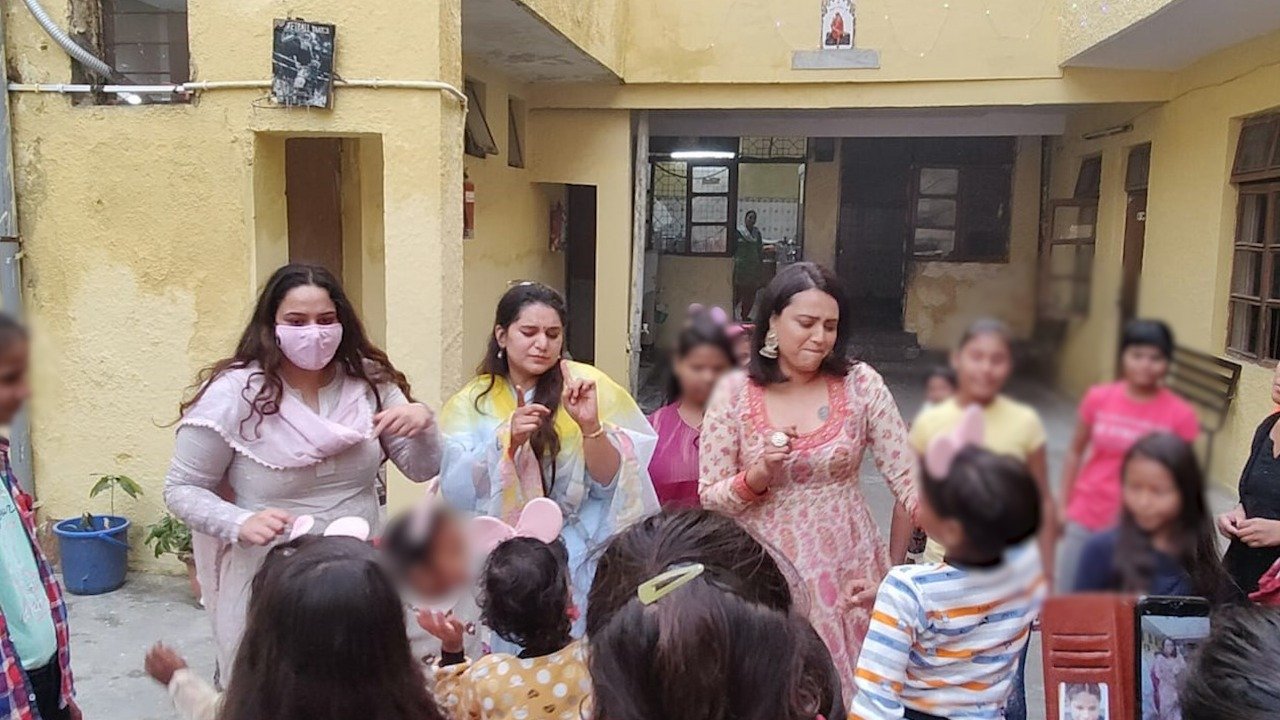
Swara Bhaskar celebrates Diwali with the orphans in Delhi along with Poulomi Pavini Shukla

~ Poulomi’s social media campaign #DiwaliWithOrphans was supported by many celebrities like Dhamendra, Swara Bhaskar, Ankush Bahuguna, Rohit Bose Roy, Raju Srivastav, and Satish Kaushik, amongst others ~

Mumbai, 11th November 2021: Spreading happiness and joy among the underprivileged children, actress Swara Bhaskar and Supreme Court lawyer, activist – Poulomi Pavini Shukla celebrated the Deepavali festival in Delhi’s orphanage on November 4th. Both of them spent quality time with them, providing them with a much-needed feeling of togetherness and bonding of a family, which is what, makes Diwali special to all. They played, danced, and spent the afternoon with them, where the children dedicated Diwali greetings to each other. They also lit diyas, crafted rangolis, sang songs, played games, danced, ate sweets, and shared smiles. Swara also got cakes for all and chocolate and goodies were given to all the kids.

Simultaneously to spread awareness on their social media, celebrities like Superstar Dharmendra; Actress Swara Bhaskar; Social media influencer Ankush Bahuguna; Actor Rohit Bose Roy; Comedian Raju Srivastav; Director Satish Kaushik; Rita Bahuguna Joshi, MP; Swatantra Dev Singh, BJP chief UP; Cricketer RP Singh; House of Kotwara, designers; Director Anil Sharma; Anku Goyal, founder of IndiaPodcasts; and Sargam Dhayan Bhayana, CEO Paul Penders lent their voices about #DiwaliWithOrphans and posted on their social media pages. This helped the campaign reach as many people as possible, making this a Happy wali Diwali for the children.

Commenting on the same, Poulomi said, “After my marriage in 2016, my husband and I have spent our Diwali with orphans lighting diyas, making rangolis, eating sweets, and having fun! Over the years, we have encouraged others to follow suit. This year we wanted to take it to the next level asking people on social media to do the same. We are so grateful to have the support of some brilliant people like Rita Bahuguna Joshi (MP), superstar Dharmendra, actress Swara Bhaskar, and influencer and actor Ankush Bahuguna as well as others. They have lent their voices to the cause and encouraged more people to spend this festival with those that have no family and no one to share the joy with”

Viewers can follow Poulomi Pavini Shukla on her Instagram page to follow the campaign and stay updated on the mentioned link: https://www.instagram.com/poulomipavinishukla/?hl=en

Chicco ‘Natural Sensation’ cares for the baby skin just like a mother’s womb

Inspired from the unique concept of ‘Vernix Caseosa’

The new born babies are so cute and adorable that one can’t take their eyes of them but what many people don’t know is that babies have very sensitive and fragile skin. It is soft, thin and naturally delicate in comparison to an adults’ skin, making it more vulnerable to external factors. Taking care of new-born’s skin is vitally important in a similar fashion as a baby is protected in a mother’s womb. During the last quarter of pregnancy, the womb form a thin white-yellowish layer made up of water, waxes and fatty substances called “Vernix Caseosa”. This protective layer is so important because its supports skin formation, hydrates and protects the baby’s skin.

Natural Sensation_Body Lotion

Inspired by the composition of ‘Vernix Caseosa’, Chicco’s ‘Natural Sensation’ range is a first and only kind of a product range that helps in skin development like a mother’s belly, containing only what the baby skin needs. The product range comprises of Plant based specialized natural ingredients which supports the composition of vernix caseosa namely Aloe Vera, Calendula, Shea Butter, Almond Oil, Rice Oil, Oats, Wheat Oil, Corn starch, Tapioca starch.

The complete ‘Natural Sensation’ range undergoes a variety of tests like high clinical, safety, tolerability and efficacy tests so that the company can make a high degree of pure and caring product as similar to a Vernix Caseosa. The product range is also Parabens, Phenoxyethanol, Alcohol, SLS and SLES free and contains no Colour, Dyes, Mineral Oil, Silicone or Soap giving it an approval by the Dermatologist and Paediatricians to be used right from birth.

Every new-born’s skin has NMF- Natural Moisturising Factor which keeps skin’s outer layer hydrated and prevents skin dryness thus protecting the skin form any damage. The Natural Sensation product range comprises of products like Body Lotion, Face cream and massage oil and its specifications are listed below:

Body Lotion: Every body lotion comprises of natural active ingredients and goes through high tolerability test and carries no irritants. Body lotion is produced with the help of Shea Butter, Vitamin E, Sweet Almond Oil, Rice Oil, Allantoin which maintains 24 hours moisturisation, does not clog pores, is non-sticky, reduces acne & eczema, strengthens and heals skin. It is approved by 97% mothers and doctors as it is Parabens, Phenoxyethanol, Alcohol, SLS and SLES free and contains no Colour, Dyes, Mineral Oil, Silicone or Soap.

Face Cream: Every face cream is made using natural active ingredients and goes through high tolerability test thus carrying no irritants. Face cream is produced with the help of Shea Butter, Vitamin E, Glycerine, Rice Oil, Panthenol which maintains 24 hours moisturisation, removes dryness from face and hands, evens skin tone, protects skin from cold weather, smog and temperature and most importantly supports skin regeneration and repair damage tissues. It is approved by 97% mothers and doctors as it is Parabens, Phenoxyethanol, Alcohol, SLS and SLES free and contains no Colour, Dyes, Mineral Oil, Silicone or Soap.

Price – Body Lotion 150ml is 749/-

500ml 1299/-

Face Cream 50ml – 649/-

RSWM Ltd.

RSWM Ltd. commits INR 330 Cr for Capex in FY22; delivers strong business performance in H1 FY22

New Delhi, 11th November 2021: RSWM Ltd., one of the largest manufacturers and exporters of synthetic and blended spun yarns from India, announced its financial results for the quarter ended September 30, 2021.

Financial and Business Outlook for Q2 and H1 FY22

RSWM Limited delivered a robust business performance and closed H1FY22 with INR 82 crores Profit After Tax (PAT)- a strong return to profitability after the loss of INR (83) crores in the corresponding period  H1FY21. The company continued to see the rallying effect of the positive sentiments and market recovery on the business in FY22, reflecting in the strong sales and profit results recorded in the first half of the year, despite the continued lockdown in the initial months of H1 FY22.

Despite the lockdown induced restrictions in many parts of the country during the second wave of COVID-19, RSWM Ltd. registered a turnover of INR 1695 crores in H1FY22 against INR 769 crores in the corresponding period in FY21. Within the group, RSWM Yarn business witnessed a sudden surge in demand in H2FY21. With ease in restrictions, the denim business performed better with increasing demand from existing customers which continues to see upwards growth trend and reflects in the strong business performance of the group.

RSWM also announced its business plans, including a few critical structural changes, manufacturing capacity building and allocation of INR 330 crore to continue growth trajectory and stronger financial performance. The investment allocation will support expansion of Denim Fabric manufacturing capacity, Cotton Melange Yarn manufacturing capacity and Modernisation & Balancing equipments across all units.

With strategic inteventions and focused efforts, RSWM has improved its Debt Equity ratio from 1.56 as on 31.03.18 to 0.92 as on 30.09.21. Over the last 4.5 years, the debt has been reduced to INR 612 crores. from INR 1402 crores. as on 31.03.18 to INR 790 crores. as on 31.09.21.

Current Scenario and Outlook

RSWM is looking forward to continued robust business performance in Q3FY22. Despite the initial impact of local lockdowns and night curfews which impacted dispatches in the first quarter of FY22, consumer sentiments and market confidence improved due to increasing vaccination. Along with this, operations at the manufacturing plants remained normal. Moreover, increased penetration of organised retail, festive celebrations, favourable demographics and rising income level is expected to drive demand of Textiles after recording sharp increase in in Online apparel buying during COVID 19 lockdowns. With this, pandemic has also led to increased demand for Technical Textiles.

Additionally, the company will be setting up 30,000 spindles of Mélange yarn at its largest unit in Kharigram (Rajasthan) and also installating  20,000 spindles for combed cotton at the yarn facility in Mordi (Banswara).  This is apart from the modernization and balancing equipment across all the locations in FY22.

Denim Business

The denim business expects to perform well given the global industry forecast. In addition, the company expects new opportunity creation in the denim market owing to the demand for recycled denim. The addition of important global brands to RSWM’s clients’ portfolio lends growth optimism in the coming years. The company also reinforces its sustainability efforts to protect the environment by recycling waste and converting it into wearables.

Sufficient cash generation has put the company in very comfortable position in terms of liquidity.

The investment in Denims allocated for building facility of 8.4 million metres of denim capacity for sheet dyeing and finishing capacity at Mordi.


Commenting on the results, Mr. Riju Jhunjhunwala, Chairman & Managing Director of RSWM Ltd. said,  “FY21 was full of learnings and challenges both in terms of business and battling the pandemic which catalyst for change. RSWM stood among the companies that envisioned the change and showcased agility to prepare to continue delivering better financial numbers in a highly unpredictable ecosystem. Also, FY21 was a very satisfying year for us because we made structural changes that we believe were critical for a sharper focus of business growth. As we step into a new period of growth with a sharper focus on business growth, our consolidation efforts, new investment allocation and focus on core business capabilities building remains critical for sustainable business growth. With stronger business performance in H1 FY22, we are confident that the company would continue to build on the momentum while executing our blueprint with disciplined determination.”