• Bhubaneswar India
  • Contact+ 91-9938772605
  • Mon - Sat : 10:00AM - 6:00PM

Archive: March 1, 2026

Dr. Bhargav Mallappa Appointed National General Secretary of Bharathiya Hindu Parivar

Bharathiya Hindu Parivar leaders meet Union Tourism Minister Gajendra Singh Shekhawat to Discuss Religious and Sustainable Tourism Growth

Dr Mallapa


Delhi, 01 Mar:

The Bharathiya Hindu Parivar has appointed Dr. Bhargav Mallappa as National General Secretary (Organisation and Administration) with immediate effect. The appointment acknowledges his public service background, leadership experience and commitment to organisational principles.

After the appointment, National President Dr. S. Selvaganesh and Dr. Mallappa met Union Tourism Minister Gajendra Singh Shekhawat in New Delhi to deliberate on strengthening India’s tourism ecosystem.
Discussions focused on enhancing India’s global tourism positioning, expanding religious tourism circuits and accelerating tourism-led economic growth in southern states. 

Dr, Mallapa

The leaders also reviewed infrastructure modernisation, sustainable destination development and policy-driven initiatives aligned with the Viksit Bharat 2047 vision.

Dr. Mallappa appreciated flagship programmes such as Swadesh Darshan 2.0, PRASHAD and UDAN, noting that tourism has emerged as a critical driver of economic growth and employment generation. Dr. Selvaganesh emphasised coordinated policymaking and promotion of niche segments including wellness, eco and MICE tourism.

The organisation expressed confidence that Dr. Mallappa’s new role will further strengthen its national outreach and engagement on development-focused issues.

Philips Evnia Unleashes 200Hz Speed Demon Gaming Monitor: Built for Middle Eastern Gamers

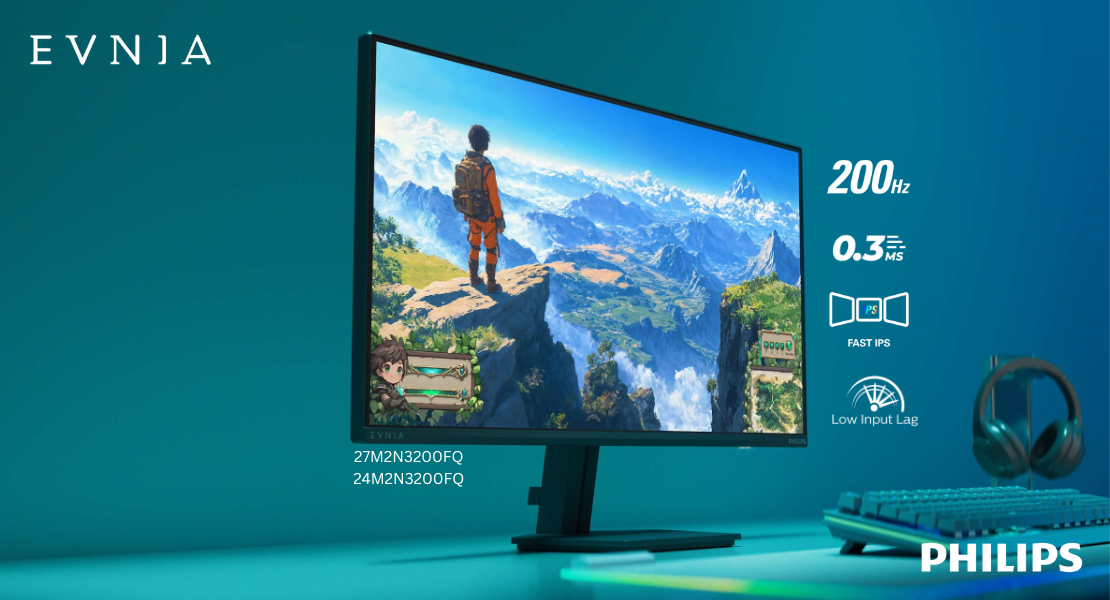
Cairo,  Mar 1 – MMD Singapore the manufacturer of Philips displays, announced the regional launch of its latest competitive gaming monitor, the 24M2N3200FQ and 27M2N3200FQ, designed to deliver championship-level performance and immersive visuals to the passionate gaming community across the Middle East. This 24 and 27 inch Fast IPS monitor combines blistering 200Hz speed with cutting-edge image clarity technologies, offering gamers the critical edge needed for victory.

The Middle East’s gaming scene is renowned for its intensity and competitive spirit. The Philips Evnia gaming monitor meets this demand head-on with its ultra-fast 200Hz refresh rate and a near-instant 0.3ms (Smart MBR) response time, effectively eliminating motion blur and ghosting. This ensures every panning shot in an FPS and every high-speed turn in a racing game is rendered with stunning sharpness, giving players a seamless and lag-free advantage.

Philips Evnia Unleashes 200Hz Speed Demon Gaming Monitor: Built for Middle Eastern Gamers


“Gamers in our region deserve equipment that matches their skill and ambition”, said Carol Anne Dias, Sales Director, Middle East & Africa for Philips Monitors“The 24M2N3200FQ and 27M2N3200FQ are engineered for those decisive moments where a split-second can mean the difference between victory and defeat. We’re bringing hyper-responsive performance and rich, immersive visuals to a broader audience of dedicated gamers”.

Beyond raw speed, the monitor features Stark ShadowBoost, a proprietary technology that illuminates dark scenes in games without overexposing bright areas, ensuring enemies lurking in shadows are clearly visible. The Smart Crosshair feature dynamically changes color based on the background for maximum visibility, enhancing targeting accuracy.

For a truly captivating visual experience, the monitor supports HDR10 content, delivering a wider range of colours, superior contrast, and more lifelike images. Gamers can further personalize their experience through the Evnia Precision Center software, which offers intuitive controls to fine-tune settings for different game genres or create custom profiles.

Designed with players well-being in mind, the monitor incorporates LowBlue Mode and Flicker-Free technology to reduce eye strain during marathon gaming sessions. It’s sustainable design, featuring chassis made with 85% post-consumer recycled plastic, aligns with a forward-thinking ethos.

The monitors are now available for purchase in the UAE with Naam Electronics. The monitors come with 3 years warranty.

Europe Risks Widening Space Gap Despite Investment Rebound


Europe Risks Widening Space Gap Despite Investment Rebound

Daiva Rakauskaitė, CFA, partner and fund manager of Aneli Capital (Source: Aneli Capital)

The European space industry lags behind the US and China due to insufficient and fragmented funding from both public and private sources, a McKinsey report claims. According to the report, the majority of funded European startups are early-stage and not yet ready for commercialization.

February 26, 2026. Growing defence spending, Europe’s push for greater strategic resilience amid shifting US policy, and increasing demand for commercial space applications are creating new opportunities for European startups. However, European companies still face many challenges, including funding, that could further increase the gap between Europe and the US and China, an investor says.

Last year, space technology startups raised $12.4bn in VC funding, 48% more than in 2024, according to estimates by Seraphim Space. The total surpassed the 2021 peak of $10.9bn and marked a full recovery from the previous pullback.

The lion’s share of last year’s investments, 60%, were raised by the US companies, which increased overall funding by 130% year over year. Meanwhile, funding in Europe grew by 25%, primarily driven by increased defence spending and renewed focus on resilience, but the deal count fell by 15%.

The latest McKinsey space report notes that in recent years, the European space sector has lagged behind the US and China, primarily due to fragmented governmental funding and subscale private investments. Other issues, such as talent shortages and difficulties scaling production, also affected European space companies.

According to Daiva Rakauskaitė, manager at Aneli Capital, a fund management company that supports Central and European (CEE) startups, the current pace of investment in Europe needs to accelerate for the continent to remain competitive.

“As competition with the US and China intensifies, the coming years will be decisive for turning political ambition into industrial scale. Europe must speed up capital deployment and strengthen growth-stage funding and commercialization. Helping more startups enter and scale would narrow the gap, boost competitiveness, and drive innovation. Rising defence spending and expanding market demand point in the right direction, creating strong momentum for new technologies and major opportunities for European startups,” she says.

According to Rakauskaitė, key areas of focus for European space startups include satellites in low Earth orbit and medium Earth orbit used for Earth observation, intelligence, and secure communications.

Manufacturing satellite systems is a particularly good niche for CEE startups, which already have established players such as NanoAvionics in Lithuania and SatRev in Poland. Rakauskaitė stresses that the CEE region has not only experience, but also lots of hidden talent that could pave the way for a stronger European space industry.

One of the issues regarding funding European startups, according to the McKinsey report, is that private investment in European space is focused primarily on earlier-stage projects, and close to 70% of investments in space industry companies are below €10 million.

“Based on these statistics, I would expect an increase in later-stage investments in SpaceTech companies over the next 2–3 years, as more commercial solutions are brought to market. More active participation of EU pension fund capital in the VC ecosystem is also likely during this period,” Rakauskaitė says.

Currently, pension funds in Europe have massive assets – around €3 trillion – only a fraction of which actively participate in the European VC ecosystem, whereas in the US, such practice is much more common.

However, Rakauskaitė also emphasizes that, beyond increasing funding, it should be accepted as natural that a portion of these investments will not yield returns. Therefore, it is equally important to accelerate the commercialization of early-stage companies to maximize the impact of those that do succeed.

“Way too often, startups spend too much in the development phase. While for space companies pathways to commercialization are limited in the early days, they should still look for ways to find small revenue streams – whether through dual-use applications, data services, pilot contracts with defence institutions. Early commercial validation not only strengthens resilience, but it also makes companies significantly more attractive to later-stage investors and strategic buyers,” Rakauskaitė concludes.


Scientists Map How Aging Reshapes Cells Across the Entire Mammalian Body

As we age with each passing year, we become more susceptible to chronic diseases like cancer, heart disease, and dementia. Scientists have long focused on fighting these conditions one at a time. Recently, however, many have begun to wonder whether they can slow aging itself. But to ward off age-related changes to the body, they must first understand what triggers them.  

Now, in a study published in Science, researchers at The Rockefeller University have created the most comprehensive atlas yet of how aging affects thousands of cell subtypes across 21 mammalian tissues. By profiling nearly 7 million individual cells from mice at three different ages, the team identified which cells are most vulnerable to aging and what drives their decline. 

“Our goal was to understand not just what changes with aging, but why,” says Junyue Cao, who heads the Laboratory of Single Cell Genomics and Population Dynamics. “By mapping both cellular and molecular changes, we can identify what drives aging. That opens the door to interventions that target the aging process itself.” 

Among the most surprising takeaways from the new study was that many age-related changes are synchronized across organs, and that nearly half of all changes are different between males and females.  

A cellular census of aging

To achieve the scale needed to map aging across the entire body, Cao’s team, led by graduate student Ziyu Lu, optimized a technique called single-cell ATAC-seq. The method studies how DNA is packaged in each cell to reveal which genomic regions are open and readable—a telltale signature of the cell’s state and function. The researchers applied this technique to millions of individual cells from 21 different organs in 32 mice at three ages: one month (young adult), five months (middle-aged), and 21 months (elderly). 

“What’s remarkable is that this entire atlas was generated by a single graduate student,” Cao says. “Most large atlases like this require large consortia with dozens of laboratories but our method is far more efficient than other approaches.” 

Cao’s lab pinpointed more than 1,800 subtypes of cells—including many rare subtypes never before characterized. Then, they tracked how the abundance of each cell changed from young adulthood through middle age to old age in mice. 

Scientists had long assumed that aging mostly changed how cells work, not how many of each type you have. But the new results showed that about a quarter of all cell types show significant population shifts with age. Some types of muscle and kidney cells showed steep declines with age, while immune cells expanded dramatically.  

“The system is far more dynamic than we realized,” says Cao. “And some of these changes begin surprisingly early. By five months of age, some cell populations had already begun to decline. This tells us that aging isn’t just something that happens late in life; it’s a continuation of ongoing developmental processes.” 

Just as surprising, he says, was the coordination of these changes across distant organs. The same cellular states appeared and declined in parallel across different tissues. This suggests that there are signals, such as factors circulating in the blood, that coordinate these changes throughout the body. 

The team also uncovered striking sex differences. About 40 percent of all aging-associated changes were significantly different between males and females. Females showed much broader immune activation during aging, for example.  

“It’s possible this could explain the higher prevalence of autoimmune diseases in women,” Cao speculates.  

Toward anti-aging therapeutics

Beyond tracking which cells changed their population numbers with age, the team also mapped how the readable portions of DNA shifted in those cell types over time. Of 1.3 million regions of the genome that Lu and Cao studied, about 300,000 showed significant aging-related changes. 1,000 of those changes were seen across many different cell types, once again pointing toward shared biological programs that drive aging throughout the body. Many shared areas were linked to the immune system, inflammation, or stem cell maintenance. 

“This challenges the idea that aging is just random genomic decay,” Cao says. “Instead, we see specific regulatory hotspots that are particularly vulnerable, and these are precisely the regions we should be studying if we want to understand what drives the aging process.” 

By comparing their data with previous studies, Cao’s team found that immune signaling molecules called cytokines can trigger many of the same cellular changes seen in aging. Drugs that modulate these cytokines, Cao hypothesizes, could help slow coordinated aging processes across many different organs.  

“This is really a starting point,” Cao says. “We’ve identified the vulnerable cell types and molecular hotspots. Now the question is whether we can develop interventions that target these specific aging processes. Our lab is already working on that next step.” 


Vodia Announces the New Vodia Partner Portal and Partner Program

BOSTON – Mar 1: Vodia Networks, Inc., a provider of unified cloud communications solutions to enterprises, contact centers, and service providers, today announced the new Vodia Partner Portal and Partner Program. Vodia partners now have the exact tools they need to provide their customers with Vodia’s industry-standard phone system, in the cloud or on-prem, faster, more efficiently, and more profitably. 

The new Vodia Partner Portal and the Partner program help Vodia partners be truly competitive. Vodia partners need to get licenses quickly, access attractive pricing, reduce the burden on sales teams, and focus on CX and higher margins, and the portal and the program have been designed to address these day-to-day needs. Vodia partners can now purchase, manage, and track PBX licenses with just a few clicks. 

Partner certification is the first milestone in the Vodia Partner Program. Once certified, partners can move through different levels to gain more benefits. Partner levels and points structure apply to licenses purchased directly through the portal. 

The new Vodia Partner Portal and Partner Program

·        The partner program is structured around a transparent points system. Completion of the Vodia Partner Certification provides the points required to reach Silver level, after which partners accumulate points and progress to higher membership tiers.
Pre-qualified sales leads are accessible within the portal. Vodia partners receive contact information for potential customers who have already expressed interest in a VoIP solution.
Vodia partners have access to professionally crafted marketing collateral, sales presentations, and argumentation frameworks for immediate deployment in local markets. 

·        Partners can now access Vodia Professional Services, implementation support, and other technical assistance via the Portal. 

These capabilities are available now, with others to be introduced as the portal and program evolve:

·        Purchase experience: direct access to Vodia Professional Services, including training, implementation support, integration support, AI integration, call-flow optimization, and add-ons.

·         Knowledge transfer: certifications and regular webinars to help partners build their expertise and enhance their competitive advantage.

·         Ordering efficiency: integration of the portal with partner ordering systems.

·         Faster PBX customization: call-flow and industry-specific templates to accelerate deployments and tailor the Vodia PBX to customer needs. 

To celebrate the launch of the Vodia Partner Portal, every registered partner will receive an exclusive welcome package upon first login. To thank current Vodia partners for their loyalty, Vodia will give each partner complimentary premium support for the first 90 days after login, plus a starter kit with demo licenses and ready-to-use sales materials.