• Bhubaneswar India
  • Contact+ 91-9938772605
  • Mon - Sat : 10:00AM - 6:00PM

Archive: September 4, 2026

NIELIT, Intel India Roll Out Agentic AI Programmes to Build India’s Future-Ready Workforce

India’s workforce is set to receive a new skilling push in emerging Artificial Intelligence technologies, with the National Institute of Electronics and Information Technology (NIELIT) and Intel India launching a joint initiative focused on Agentic AI. The programme was announced at a National Leadership Dialogue in New Delhi that brought together policymakers, educators, industry representatives and skilling experts to examine how rapidly advancing AI systems are changing the requirements of jobs and education.

The dialogue placed particular emphasis on the transition from conventional and generative AI to agentic systems that can reason, plan and carry out complex tasks while operating under human oversight. Participants discussed the need to move beyond theoretical AI education towards practical, industry-linked learning, including updated curricula, faculty development, experiential training and AI-enabled learning environments. Shri Shashi Shekhar Vempati, Chairperson of the Central Board of Film Certification, said continuous learning and employability would become increasingly important as technology transforms workplaces, while stressing the value of real-world exposure for young professionals.

The partnership has introduced two skilling tracks with different levels of technical focus. Agentic AI for Everyone is designed to familiarise learners with AI agents, workflow automation and multi-agent systems, using no-code platforms to explore productivity, business transformation and intelligent decision-making. The second programme, Engineering Agentic AI Systems, is aimed at learners seeking deeper technical capabilities, covering agent architecture, tool integration, orchestration, memory and deployment through no-code, low-code and coding-based frameworks. Together, the programmes are intended to provide learners with hands-on experience in developing and using agentic systems.

NIELIT Director General Dr. Madan Mohan Tripathi said the collaboration combines NIELIT’s nationwide reach with Intel’s technology expertise to take emerging AI education to more institutions and learners. Shri Sudeep Shrivastava, COO of the IndiaAI Mission and Joint Secretary, MeitY, highlighted the importance of developing a strong AI talent pipeline through industry-led training, AI-focused educational programmes, AI Data Labs and closer industry-academia engagement. Intel also stressed that skills, adaptability and human judgment will remain critical as AI systems become more capable. The initiative is expected to widen access to practical Agentic AI training and strengthen India’s talent base for an increasingly AI-driven economy.
Goyal Pushes Nationwide FTA Drive to Take Indian Exports to Global Markets

Union Commerce and Industry Minister Piyush Goyal has called for a nationwide campaign to ensure that Indian businesses make greater use of the country’s expanding network of Free Trade Agreements (FTAs). Speaking at a national workshop on leveraging FTAs in New Delhi, Goyal said the benefits of preferential market access must reach businesses at the grassroots, including MSMEs, startups, traders, first-time exporters and women entrepreneurs across all 780 districts. He said wider FTA utilisation would be critical to expanding India’s global trade footprint and supporting the country’s long-term ambition of becoming a $30 trillion economy by 2047.

The Minister pointed to India’s recent economic performance, including 7.8% GDP growth in the first quarter, as evidence of the economy’s resilience amid global uncertainty. He said India’s nine existing FTAs cover economies accounting for around $60 trillion in GDP and offer preferential access to nearly two-thirds of global trade. With additional agreements and market-access initiatives under consideration, India could gain preferential access to about 75% of global trade at more competitive tariff rates, he said. Goyal stressed that the effectiveness of an FTA should ultimately be judged by how Indian exporters fare against competitors in the same markets.

India is targeting $1 trillion in exports this year, with exports touching nearly $317 billion during the first four months, up from about $280 billion in the same period last year. Goyal said sectors ranging from textiles and engineering to electronics, pharmaceuticals, chemicals, agriculture, marine products, gems and jewellery and leather have significant potential in international markets. He also called for stronger institutional support to help exporters overcome challenges related to standards, sanitary and technical requirements, regulatory approvals and logistics. The government, he said, must particularly ensure that smaller exporters are not left behind as new trade opportunities emerge.

Goyal also outlined a last-mile strategy to convert FTAs into actual export growth. States have been asked to identify products and clusters where FTA benefits are already visible as well as areas where opportunities remain untapped. He urged Export Promotion Councils and industry associations to expand their outreach to smaller businesses, provide information in local languages and bring more exporters into international trade delegations. The workshop also examined the Export Promotion Mission and Districts as Export Hubs, with state-level discussions focused on export clusters, barriers to FTA utilisation and required government support. The Centre said the broader effort aims to deepen Centre-State coordination and ensure the country’s trade agreements translate into jobs, foreign exchange earnings, and wider participation in global commerce.

GeM, Textiles Committee Join Hands to Promote Recycled and Upcycled Textile Products

The Government e Marketplace (GeM), under the Ministry of Commerce and Industry, and the Textiles Committee (TC), Ministry of Textiles, have signed a Memorandum of Understanding (MoU) to promote the procurement of recycled and upcycled textile products made from pre- and post-consumer textile waste, scrap and second-hand clothes.

The partnership, formalised during the 62nd Foundation Day celebrations of the Textiles Committee in Mumbai, seeks to create new market opportunities for enterprises operating in India’s circular textile economy.

The collaboration aims to establish a “Waste-to-Value-to-Market” ecosystem, enabling textile waste and discarded materials to be converted into quality, value-added products for government procurement. Under the agreement, the Textiles Committee will identify, verify, certify and recognise eligible manufacturers and producers of recycled and upcycled textile products. It will also support stakeholder consultations, capacity building, market research and the formulation of technical specifications for such products.

GeM, meanwhile, will develop dedicated categories for recycled and upcycled textiles, facilitate seller registration and provide online market access to government buyers. Training and handholding will be extended to recyclers and last-mile upcyclers to help them participate in public procurement.

The partnership will follow a hub-and-spoke model, with Textiles Committee offices supporting outreach, mobilisation, capacity building and the development of suitable product specifications and catalogues. The initiative will particularly benefit women-led enterprises, MSMEs, artisans, local businesses and other circular-economy participants.

The event was attended by Union Minister of Textiles Shri Giriraj Singh and Maharashtra Minister of Textiles Shri Sanjay Savkare. The MoU was signed by Additional CEO, GeM, Shri Ajit B. Chavan, and Secretary, Textiles Committee, Shri Kartikay Dhanda, in the presence of senior officials and industry stakeholders. GeM CEO Shri Mihir Kumar said the partnership would connect certification, standardisation and market access, enabling government procurement to generate reliable demand for products made from textile waste. The initiative is expected to promote resource conservation, sustainable livelihoods and responsible consumption while supporting the country’s transition towards a circular and resource-efficient textile economy.

ELC 2.0 to Empower Youth and Strengthen Democratic Participation: CEC Gyanesh Kumar

The Election Commission of India (ECI) held its fourth regional conference on Electoral Literacy Clubs (ELC 2.0) and ECINet in Goa, with a focus on enhancing electoral awareness and democratic participation among young citizens. Chief Election Commissioner Shri Gyanesh Kumar said students are the future of the country and that Electoral Literacy Clubs can play a crucial role in strengthening the world’s largest democracy by helping young people understand electoral processes and democratic values.

Interacting with students and teachers from schools, colleges and universities across Goa, the CEC described ELCs as important platforms for developing informed and responsible citizens. He also emphasised that elections in India are conducted in accordance with the Constitution, laws and instructions issued by the ECI, with transparency maintained through the concurrent participation and audit of recognised political parties, candidates and their representatives at various stages of the electoral process.

Under the theme “Learn Democracy. Lead Democracy,” ELC 2.0 seeks to transform Electoral Literacy Clubs into structured, visible and digitally enabled platforms across educational institutions. The initiative will use the ECINet digital ecosystem to provide election-related information and services, while promoting year-round activities through a dedicated ELC portal. With India’s vast education network comprising around 15 lakh schools, nearly 25 crore students, over one crore teachers, nearly 1,500 universities and about 70,000 higher education institutions, the programme aims to create a nationwide network of young citizens engaged in informed democratic participation.

The initiative will focus on experiential and factual electoral education, covering voter registration, polling, counting, the ECINet App and other ECI initiatives, while encouraging students to become ambassadors of democratic awareness. Shri Gyanesh Kumar was on a two-day visit to Goa, during which he also interacted with Booth Level Officers (BLOs) from across the state. At a session attended by more than 1,000 BLOs on Thursday, he commended their contribution to the smooth conduct of the Special Intensive Revision (SIR) of electoral rolls. The Goa conference also featured a question-and-answer session, giving students an opportunity to directly engage with the Chief Election Commissioner.

National Institute of Homoeopathy, Kolkata Marks Golden Jubilee with New Clinical and Research Facilities

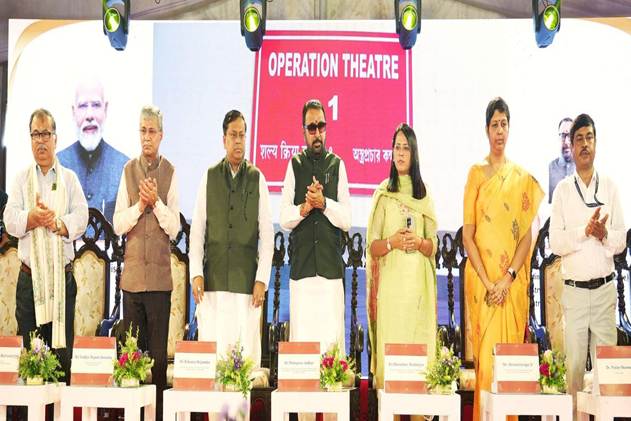
The National Institute of Homoeopathy (NIH), Kolkata, has celebrated its Golden Jubilee, marking 50 years of contribution to homoeopathic education, research and patient care. The milestone event also saw the inauguration of a state-of-the-art Modular Operation Theatre and a Centre of Excellence, aimed at strengthening the institute’s clinical services, academic capabilities and research infrastructure.

The celebrations were attended by Shri Prataprao Jadhav, Minister of State (Independent Charge), Ministry of Ayush and Minister of State, Ministry of Health & Family Welfare, and Shri Sukanta Majumdar, Union Minister of State for Education. Members of Parliament Jyotirmay Singh Mahato and Samik Bhattacharya, West Bengal MLA Sumana Sarkar, Vaidya Rajesh Kotecha, Secretary, Ministry of Ayush, along with senior officials, faculty members, doctors, students and other stakeholders, were also present.

National Institute of Homoeopathy, Kolkata Marks Golden Jubilee with New Clinical and Research Facilities

Addressing the gathering, Shri Prataprao Jadhav described the completion of 50 years as a significant milestone in NIH Kolkata’s journey. He said the Golden Jubilee provides an opportunity not only to recognise the institute’s achievements over the past five decades but also to define its priorities and vision for the years ahead.

The Minister said the newly inaugurated facilities demonstrate the government’s focus on modernising Ayush institutions through improved infrastructure, quality education, advanced research and better patient-care services. He stressed the importance of combining the strengths of traditional systems of medicine with contemporary technology, research and innovation to respond to emerging healthcare needs. Jadhav also called for stronger opportunities in homoeopathic education and research for students, researchers and young professionals, expressing confidence that NIH Kolkata would further strengthen its position as a leading centre for homoeopathic education, research and patient care.

Enso Launches Flashloan Actions: Institutional Infrastructure for Single-Transaction Capital Efficiency

ZURICH, Switzerland, Sep 04: Enso, the execution infrastructure platform for onchain finance, announced Enso Flashloan Actions, providing institutional allocators, fintechs, and asset managers with a unified API to execute complex multi-venue capital strategies in a single, signer-ready transaction. By standardizing temporary liquidity across eight major providers, including Morpho, Aave V3, and Balancer V3, Enso eliminates capital drag and engineering overhead for institutional yield looping, debt repayments, and portfolio rebalancing.

Institutional capital managers frequently face operational friction during market volatility. Rebalancing collateral, restructuring debt, or protecting portfolios against stablecoin de-pegs and liquidations historically required holding excess cash reserves or deploying custom smart contract callbacks across multiple venues, exposing capital to slippage, gas overhead, and mid-strategy execution failure.

Enso Flashloans removes this friction by embedding temporary liquidity directly into Enso’s Bundle API. Strategy managers and partners with high on-chain volume can define the borrowed asset, the execution sequence of actions, and the final repayment step. Enso compiles the sequence into one transaction that either completes in full or reverts entirely, guaranteeing absolute atomicity and eliminating partial-execution risk.  

The capability unifies eight venues through a single API field. It integrates directly with Enso’s Quote Simulator engine, giving risk teams a pre-sign review layer to verify route validity, detect quote decay, and filter out toxic pool behavior before capital moves. 

“Managing risk and capital efficiency onchain shouldn’t require building custom smart contract infrastructure for every lender you access” said Milos Costantini, Co-Founder and CPO of Enso. “Flashloan Actions gives fintechs and asset managers institutional-grade execution. Allocators can construct atomic leverage loops, rebalance positions during market stress, and execute multi-venue strategy flows in one transaction without maintaining custom callback contracts.”

Enso Flashloans is live in production with design partners Reservoir and Arkonix, along with a vault manager on Centrifuge, who worked with Enso’s engineering team on the provider-by-provider requirements throughout development.

Flashloans are available across eight supported protocols on 19 chains,  including Ethereum, Arbitrum, Base, Optimism, Polygon, HyperEVM, Berachain, BNB Chain, Monad and Robinhood Chain, with provider coverage varying by network. Access is permissionless and available globally via API key, with no geographic gating.

Enso Flashloans is available now via theEnso Bundle API. 

Ten-Nine Technologies Moves to Commercial-Scale Production of TENIX – its ‘Anti-Aging’ Battery Additive

TULSA, Oklahoma | Sept 04:Ten-Nine Technologies, an advanced materials company based in Tulsa, Oklahoma, is scaling production of TENIX, its patented cathode additive, as the battery industry’s shift toward manganese-rich chemistries accelerates. Ten-Nine describes TENIX as “anti-aging for batteries.”

Every time batteries charge and disc harge, unwanted chemical by-products build up inside them – the same process that makes your phone run hot, an EV’s range shrink, a laptop need charging more often, and power tools lose their punch.

TENIX stops that aging process at the source. It’s blended directly into a battery’s cathode material during manufacturing – taking up just 0.5–2% of its weight, or roughly 0.5–2kg for every 100kg of cathode, which is about what’s in a typical EV battery pack.

It drops into cathode production lines that manufacturers already run, so adopting it requires no new equipment and no battery redesign. At its current production capacity of 100 tons, Ten-Nine can supply enough TENIX to treat between 50,000 and 200,000 typical EV battery packs.

In third-party testing, TENIX delivered over 75% more charge-discharge cycles, extending a typical EV battery’s life from a 150,000-mile warranty baseline to more than 265,000 miles. That longer life translates into roughly 40% lower cost per kilowatt-hour delivered over a battery’s lifetime, while 10% lower internal resistance means faster charging and less energy wasted as heat.

TENIX can also cut a battery’s heat output by around 40% over its lifetime – a benefit that is becoming increasingly critical as AI-driven data centers push backup batteries harder than ever.

This momentum comes as the battery industry is increasingly shifting toward manganese-rich cathodes – a cheaper, more abundant, and more geographically secure alternative to the cobalt- and nickel-heavy chemistries that dominate EV batteries today.

Manganese-rich cathodes also offer a far more secure supply chain than the nickel- and cobalt-heavy chemistries they could replace. Manganese is mined widely across Africa, South America, and Southeast Asia, rather than concentrated in a handful of countries, making it far less exposed to the geopolitical pressure points that increasingly worry battery manufacturers and policymakers alike.

Manganese-rich cathodes have also long been held back by poor cycle life, exactly the problem TENIX is built to solve. Ten-Nine believes the shift could reshape the global cathode supply chain the way LFP did twenty years ago.

Paige Johnson, Founder and CEO of Ten-Nine Technologies, said:

“Just like people, batteries age. Products of chemical decomposition build up during use, limiting a battery’s performance and lifetime, and until now that’s just been treated as an unavoidable cost of doing business. I’m a chemist so I wanted to fix that at the source rather than build a whole new battery to work around it. TENIX has a unique surface chemistry that disrupts that aging process, giving batteries more power and significantly longer life. I started this company in the back of a warehouse in Tulsa with $100,000 and four grams of material in a flask. I never imagined we’d end up here, but I always believed that if the chemistry was right, it would matter to a lot of people’s lives. That’s still what gets me up in the morning.”

Ten-Nine is currently in evaluation trials with battery manufacturers that together represent more than half of the world’s battery production volume, and is now accepting orders for 2026–27 delivery from its own production facility in Tulsa.

The company holds 67 granted patents protecting its core cathode chemistry, and has no direct competitor offering a cathode additive of its kind – the nearest points of comparison, silicon anode and solid-state electrolyte technologies, solve different problems in different parts of the battery entirely. TENIX works across battery types used in all sectors including electric vehicles, defense equipment, power tools, and grid-scale energy storage.

Ten-Nine Technologies was founded in 2014 by Paige after a local angel investor offered her $100,000 to pursue her research independently. The company’s name traces back to its original incorporation as “10-9 LLC”: 10⁻⁹ is nano, representing the scale of the surface chemistry Ten-Nine engineers; 10⁹ is a billion, representing the number of lives Paige believes better batteries can improve. That original $100,000 has since grown into $45 million raised to date, funding Ten-Nine’s transition from a lab experiment into a commercial-scale manufacturer.

Nvidia Shares Gain as Dollar 12.9 Billion Hugging Face Deal Strengthens AI Bet

New York, Sep 4: Nvidia shares moved higher after the chipmaker confirmed its agreement to acquire artificial intelligence platform Hugging Face for about $12.9 billion, reinforcing investor confidence in the company’s strategy to expand beyond AI chips.

Nvidia stock gained around 1.8 per cent on Thursday following the announcement, as investors viewed the acquisition as another step towards strengthening the company’s presence across the wider AI ecosystem.

The acquisition gives Nvidia access to Hugging Face’s large community of developers and its extensive collection of AI models, datasets and applications. For Nvidia, the deal is aimed at building a stronger connection between its computing infrastructure and the software platforms used to develop and deploy AI applications.

The move also highlights Nvidia’s efforts to diversify its business as major technology companies increasingly develop their own AI chips. By expanding into AI software and open-source models, Nvidia is seeking to strengthen its position across more parts of the rapidly growing artificial intelligence market.

The market reaction has so far been positive. Nvidia shares have remained supported by strong demand for AI infrastructure, while the Hugging Face deal adds another potential growth avenue for the company beyond its traditional semiconductor business.

The transaction is expected to close in the first half of 2027, subject to customary closing conditions and regulatory approvals. The deal includes about $11.9 billion for Hugging Face shareholders and up to $1 billion in equity-based incentives for employees.

For investors, the acquisition represents a significant bet on the next phase of AI growth, where demand is expected to extend beyond computing hardware into models, developer tools and software platforms. Nvidia’s ability to turn that broader ecosystem into sustainable revenue growth will remain a key focus for the market.

Mundra Port Gets New Empty Container Hub to Make Cargo Movement Faster

Ahmedabad, Sep 4: Adani Ports and Special Economic Zone Ltd (APSEZ) is strengthening container logistics at Mundra with a dedicated Empty Container Yard (ECY), aimed at making the movement and management of empty containers quicker and more efficient.

The new facility, which includes integrated warehousing, will provide services such as container storage, inspection, maintenance and movement to exporters and container freight stations. By bringing these activities into a dedicated setup, APSEZ expects to reduce avoidable container movements, improve turnaround times and help bring down logistics costs.

The move comes as Mundra handles a growing share of India’s containerised trade. The port accounts for nearly 35 per cent of India’s container trade, while APSEZ holds about 45.5 per cent of the country’s container market as of FY26.

The scale of empty-container movement at Mundra also highlights the importance of the new facility. APSEZ estimates that around 1.6 million TEUs of empty containers are handled at the port every year. A more organised system for storing, checking and repositioning these containers could help reduce delays across the wider supply chain.

For exporters, faster access to inspected and maintained containers could make shipment planning easier. Shipping lines and logistics operators could benefit from quicker turnaround and fewer unnecessary trips between different yards and the port.

The initiative is part of APSEZ’s broader Ambition 2031 expansion programme. The company plans to add more than 6 million TEUs of container-handling capacity over the next five years, signalling its focus on expanding alongside India’s growing trade requirements.

The company said the dedicated yard will be operated by APSEZ and/or its partners, including container freight stations and shipping lines. The integrated model is expected to improve coordination among different participants involved in empty-container management.

The development also comes at a time when logistics companies are under increasing pressure to reduce turnaround time, control transportation costs and improve supply-chain reliability. For a high-volume gateway such as Mundra, efficient handling of empty containers can play an important role in keeping cargo movement smooth.

APSEZ currently operates 16 ports and terminals, with an overall cargo-handling capacity of about 653 million tonnes per annum. The company has set a target of reaching 1 billion tonnes of cargo throughput by 2030.

With Mundra continuing to serve as a major gateway for India’s import-export trade, the new yard is expected to add another layer of efficiency to the port’s growing logistics ecosystem.