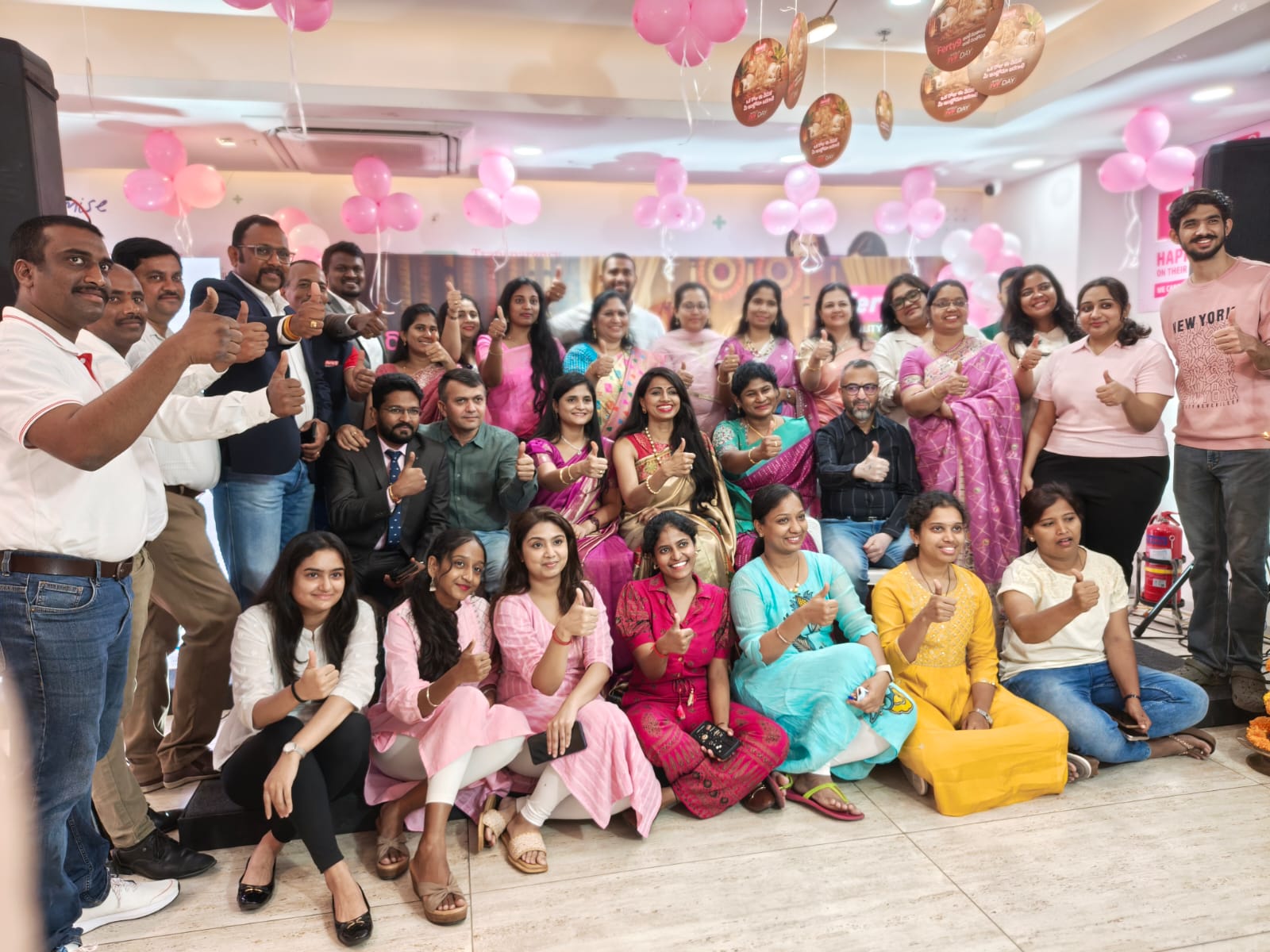
Hyderabad, July 27: On World IVF Day, a homegrown fertility care network from Andhra Pradesh and Telangana is being recognised at multiple international research forums this year, with its clinical team presenting work across three global conferences:
• 4 papers + an oral presentation at ESHRE 2026 (European Society of Human Reproduction and Embryology)
o Drawn from 5 years of IUI outcome data analysed by Ferty9’s clinical team, examining how increasing maternal age, changing workforce participation, night-shift occupations, and the alarming decline in male
fertility parameters – including sperm quality and DNA fragmentation are reshaping fertility trends in Andhra Pradesh and Telangana.
• 4 papers accepted at a conference in Tokyo, Japan
• 11 papers presented at the ASPIRE conference
For a regional network built primarily to serve local communities, the recognition marks a notable moment, and reflects a broader story Ferty9 wants to tell this World IVF Day: that its research is being driven by a concern closer to home, the declining TFR (Total Fertility Rate) in India.
What the data is showing:
“India’s TFR is at 1.9, Telangana is already below that at 1.8, and Andhra Pradesh is among the lowest in the country at 1.7. In simple terms, this is the average number of children a woman is expected to have during her reproductive years. For couples in our states, that’s not just a statistic, it’s a signal that fertility care needs to move earlier into couple’s lives, not later,” said Dr. Jyoti, Clinical Director, Ferty9 (Kukatpally).
“Over the past decade, we have observed a steady shift towards couples seeking fertility care later in their reproductive years, with an increasing proportion presenting after the age of 30 and many after 35, when age-related decline in fertility becomes a significant concern,” said Dr. Suma, Associate Clinical Director, Ferty9 (Vijayawada).
“PCOS/PMOS continues to be one of the leading causes of female infertility, contributing to nearly 30-40% of infertility cases seen in fertility clinics. What surprises many couples is that male factors are involved in approximately 40-50% of infertility cases, either alone or in combination with female factors. Among male infertility cases, reduced sperm motility accounts for nearly 30-40% of semen abnormalities. We are also witnessing a steady rise in fertility preservation, with enquiries for egg freezing increasing nearly 2-3 fold over the last few years, particularly among urban, career-focused women and those planning delayed parenthood,” said Dr. Anusha Reddy, Associate Clinical Director, Ferty9 (Warangal).
Ferty9 says the pattern across its data is consistent: fertility care in Andhra Pradesh and Telangana is being sought later, closer to or past 35, driven increasingly by male-factor and PCOS/PMOS-related causes rather than female factors alone, alongside a rising number of women choosing to freeze their eggs to delay parenthood on their own terms.
Alongside this recognition, Ferty9 is also marking the day with a patient-facing milestone: Needle-Free IVF is now available across all 11 Ferty9 centres, using aneedle-free drug delivery system for the ovarian stimulation phase, aimed at easing the pain and anxiety many women associate with daily IVF injections.
Ferty9 is also collaborating with stakeholders in tech-assisted reproductive health, exploring AI-driven data analysis to improve success rates and reduce implantation failure.
Looking ahead, Ferty9 says this body of research is a step toward a longer-term goal: a dedicated center of excellence, driven by its own clinicians alongside outside experts, focused on reducing implantation failure and miscarriage rates, and eventually, extending its welfare model to couples across Andhra Pradesh and Telangana beyond its own patient base.
