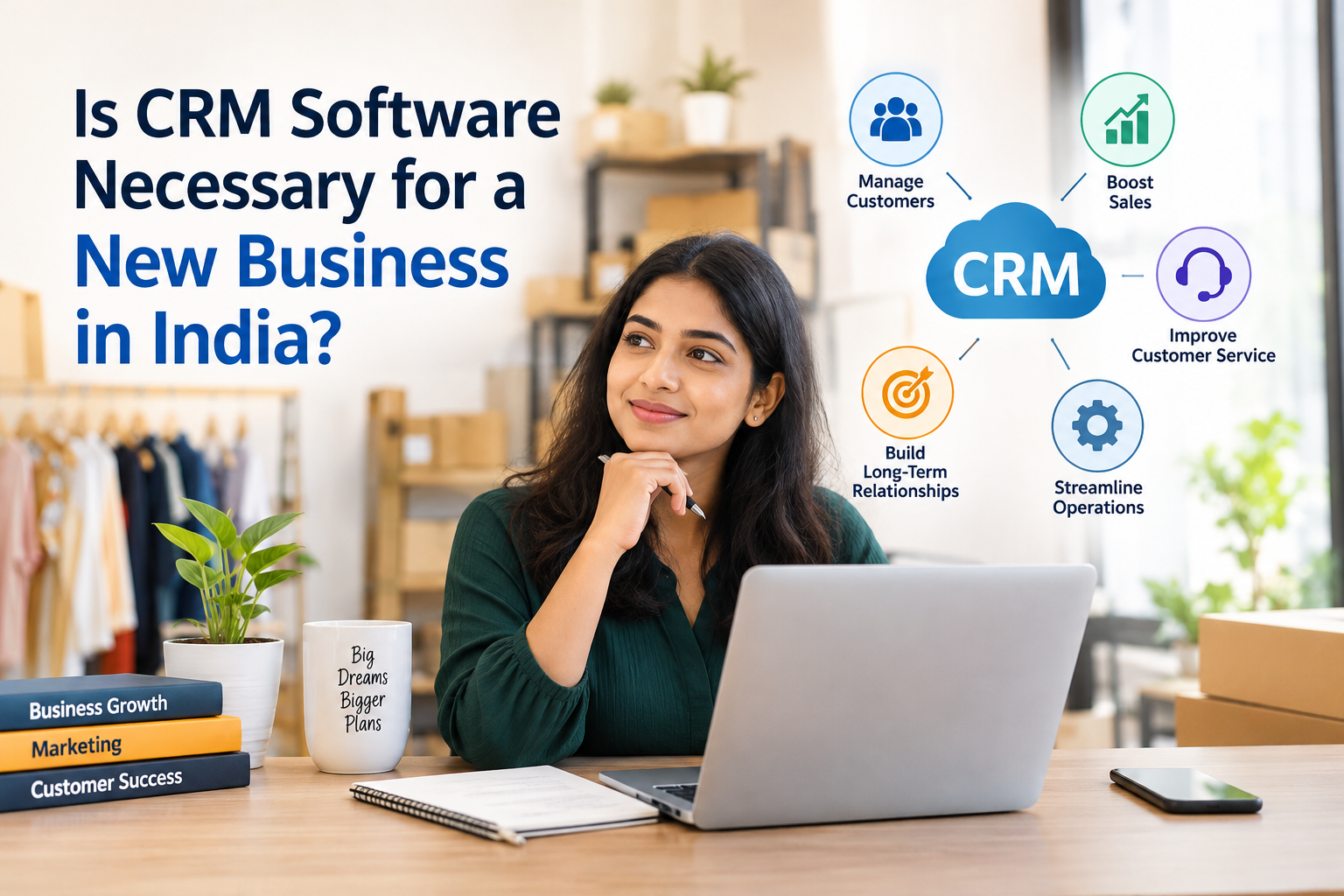
Oct 27: Starting a business in India often means managing sales, customer enquiries and daily operations with a small team. In the early stages, founders may rely on spreadsheets, phone contacts and WhatsApp conversations to keep track of potential customers. While these tools can work initially, managing multiple enquiries and remembering every follow-up becomes harder as the business grows.
Customer relationship management (CRM) software helps businesses organise customer information, track sales opportunities and manage communication in one place. It can improve the way a startup handles leads without requiring a large sales team.
However, CRM software is not essential for every new business from day one. The decision depends on the number of enquiries, the complexity of the sales process and the company’s growth plans.
What Is CRM Software?
CRM software is a tool for managing relationships with potential and existing customers. It allows businesses to maintain contact records, track conversations, schedule follow-ups and monitor the progress of sales opportunities.
For example, a small IT services company may receive enquiries through its website, email, social media and referrals. Without a central system, the founder might struggle to remember which prospects have received quotations and which need another call.
A CRM can bring these activities together, making it easier to identify pending tasks and keep sales discussions moving.
Depending on the platform, additional features may include sales reports, email integration, marketing automation and customer support management.
Why Should Startups in India Consider CRM Software?
1. Manage Customer Enquiries More Effectively
For a new business, every promising enquiry matters. When customer details are scattered across different applications, it becomes easy to overlook a message or miss an opportunity.
CRM software creates a central record of customer details, requirements and previous interactions. This helps founders and employees respond with better context and maintain consistent communication.
2. Improve Lead Follow-Ups
Many customers need time before making a purchasing decision. They may request a quotation, compare providers or seek approval from other decision-makers.
A CRM helps businesses organise leads according to their progress and schedule follow-up activities. Sales teams can see which prospects need attention instead of relying on memory or manually checking old messages.
Consistent follow-ups can help businesses manage their sales pipeline more effectively, although successful conversions still depend on the quality of the offer and the customer’s needs.
3. Understand Sales Performance
New business owners often want to know which marketing activities generate enquiries and how many of those enquiries become paying customers.
CRM reports can help track lead sources, sales stages, conversion rates and pending opportunities. This information can support decisions about marketing budgets, sales priorities and areas that need improvement.
The reports are useful only when customer records are entered and updated consistently.
4. Strengthen Existing Customer Relationships
Winning a new customer is only part of building a sustainable business. Repeat purchases, contract renewals and referrals can also contribute to long-term revenue.
CRM software helps businesses maintain records of previous purchases, service requirements and customer conversations. This makes it easier to follow up at relevant times and offer services that match customer needs.
5. Prepare for Business Expansion
A founder may manage customer relationships personally during the initial months. As the business hires employees or serves more clients, this approach can become difficult to maintain.
A CRM establishes a shared process for recording enquiries, assigning responsibilities and tracking progress. It can help a growing team maintain continuity without depending entirely on one person’s records.
Does Every New Business Need CRM Software?
No. A new business should invest in CRM software when it addresses a genuine operational problem.
A freelancer managing a few regular clients may be comfortable using a spreadsheet and calendar. A small retailer with straightforward transactions may need billing or inventory software before a dedicated CRM.
However, a startup receiving regular enquiries, managing several quotations or employing multiple salespeople may benefit from CRM software much earlier.
Consider adopting a CRM when customer information becomes difficult to organise, follow-ups are frequently missed or the business cannot easily track its ongoing sales opportunities.
Which Businesses Can Benefit From CRM Software?
CRM software is particularly useful for businesses that depend on enquiries, sales discussions and long-term customer relationships.
-
IT and consulting companies: Track business enquiries, proposals and sales discussions.
-
Digital marketing agencies: Organise leads, manage client communication and monitor renewals.
-
Real estate businesses: Record buyer enquiries, property preferences and scheduled follow-ups.
-
Education and training providers: Manage course enquiries, admissions and prospective students.
-
Manufacturers and distributors: Maintain business customer records, quotations and dealer relationships.
-
E-commerce businesses: Organise customer service requests and support repeat-purchase activities where suitable integrations are available.
The best CRM depends on how the business operates. Startups should prioritise features that solve their current problems rather than paying for tools they may never use.
How Much Should a Startup Spend on CRM Software?
CRM pricing varies by provider, subscription plan, number of users and available features. Some platforms offer free plans for individuals or small teams, while others charge for advanced reporting, automation or additional users.
Before selecting a paid plan, founders should calculate the overall cost, including setup, training, integrations and any additional services.
A business starting with a limited budget can begin with basic contact management and follow-up reminders. More advanced features can be introduced as the number of customers and complexity of sales activities increase.
Testing a free plan or trial, where available, can help determine whether the software fits the team’s workflow before making a long-term commitment.
How to Choose the Right CRM for a New Business
Choosing a CRM should start with the business’s needs rather than the number of features offered.
Ease of use: Employees should be able to add customer details, update sales stages and schedule follow-ups without unnecessary effort.
Relevant features: Lead tracking, contact management and task reminders may be enough for an early-stage startup.
Integration options: Check whether the software works with existing email accounts, website forms and other business tools.
Data security: Review access permissions, authentication options, backup arrangements and how the provider handles customer information.
Flexibility: Choose a system that can accommodate the business as its team and customer base expand.
Total cost: Compare subscription fees and additional charges before selecting a plan.
Businesses should also ensure that their collection and use of customer information comply with applicable Indian data protection requirements.
CRM Software vs Spreadsheets: What Should Startups Choose?
Spreadsheets are often sufficient when a business has a small customer base and a straightforward sales process. They are familiar, flexible and relatively inexpensive.
The limitations become more noticeable when several employees need access to the same information, follow-ups take place over extended periods or managers need regular sales reports.
CRM software can make these activities easier by combining shared customer records, reminders and sales pipeline tracking.
There is no fixed number of customers that determines when a business must switch. The right time is when the existing process becomes unreliable, difficult to maintain or too time-consuming.
Common CRM Mistakes New Businesses Should Avoid
Buying CRM software does not automatically improve sales. Without a clear process, the system can become another tool that employees struggle to maintain.
Startups should avoid choosing an unnecessarily complex platform, leaving customer records outdated or expecting automation to replace personal communication.
They should also establish who is responsible for updating information, restrict access to sensitive records and review whether the software is delivering practical benefits.
A simple system that the team uses consistently is often more valuable than an advanced platform filled with unused features.
Conclusion
CRM software can help Indian startups organise customer information, improve follow-ups and gain better visibility into their sales activities. It is particularly valuable for businesses that handle regular enquiries, manage several sales opportunities or depend on repeat customers.
However, not every new business needs a paid CRM immediately. Spreadsheets and basic tracking tools may be sufficient until customer management becomes more complex.
The best approach is to identify the business’s requirements, select a solution that fits the budget and introduce it when it can deliver measurable value. For a growing startup, effective customer management can create a stronger foundation for sales, customer retention and long-term business growth.
