From minimalist chains and oxidised designs to zodiac-inspired jewellery, silver is finding a new generation of buyers in India and around the world
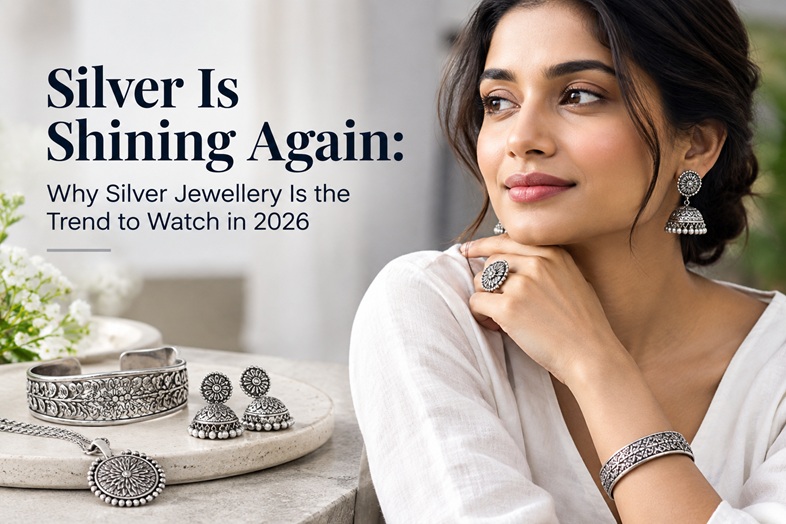
What if the next jewellery trend isn’t about buying more gold, but wearing silver differently?
Silver jewellery is becoming increasingly visible in fashion stores, social media feeds and everyday wardrobes. Delicate chains, chunky rings, oxidised earrings, anklets and layered bracelets are being styled not just for festivals or traditional occasions, but as everyday accessories.
In India, the story goes beyond fashion. Silver has long been connected with tradition and astrology, while changing consumer habits are giving the metal a fresh appeal among younger shoppers. At the same time, rising silver prices are creating new challenges for jewellery manufacturers and retailers, making design, personalisation and affordability increasingly important.
Why Silver Jewellery Is Trending in 2026
From Special-Occasion Jewellery to Everyday Style
Jewellery is changing from something bought mainly for special occasions into something people use to express their personality. A silver chain can be worn with office clothing, a stack of rings can become part of a casual outfit, and oxidised earrings can add character to traditional wear.
That versatility is one reason silver continues to attract attention. Younger consumers are increasingly comfortable experimenting with jewellery instead of waiting for weddings or festivals to purchase precious-metal accessories. Smaller pieces can be mixed, matched and layered, allowing consumers to create different looks without making a major purchase.
Social Media Is Changing Jewellery Discovery
Social media has accelerated this shift. Fashion creators and influencers regularly demonstrate jewellery layering, stacking and styling, turning accessories into part of everyday fashion content.
A design that might once have been discovered inside a jewellery showroom can now reach thousands of potential buyers through a short video. This has made jewellery discovery more visual, faster and heavily influenced by styling rather than just product specifications.
Silver and the Astrology Connection
Why Silver Has Traditional Significance in India
There is another reason silver has a distinctive place in the Indian market: astrology. In traditional Vedic astrology, silver is commonly associated with the Moon or Chandra. The Moon is traditionally linked with qualities such as emotions, the mind and sensitivity. Some astrological traditions therefore recommend silver jewellery as part of specific practices.
These associations are traditional beliefs rather than scientifically established effects. Nevertheless, cultural beliefs can influence purchasing behaviour. A consumer may choose silver because they like the design, while another may select it because of its traditional astrological association.
This creates an interesting space where fashion, culture and personal belief overlap.
Zodiac Jewellery Adds a Personal Touch
Astrology can also make jewellery more personal. Zodiac pendants, celestial motifs, birthstones and personalised designs allow consumers to purchase jewellery that represents something about them.
This can be particularly relevant to gifting. A silver pendant featuring someone’s zodiac sign or a personalised symbol can feel more meaningful than a generic accessory.
For jewellery brands, the opportunity is to use astrology as a cultural and storytelling element, rather than making unsupported claims about health, luck or guaranteed outcomes.
What the Global Market Is Telling Us
A Large Market Facing Higher Silver Prices
The global silver jewellery market remains substantial. One recent market estimate valued the market at around US$40.5 billion in 2025 and projected it to reach approximately US$54.2 billion by 2031.
But the industry’s outlook is not simply a story of rising demand. According to the Silver Institute’s World Silver Survey 2026, global silver jewellery demand is forecast to decline by more than 9% in 2026 to around 178 million ounces.
Higher silver prices are an important factor behind this expected decline.
The result is an interesting shift in the industry. Consumers may still want silver jewellery, but manufacturers have to find ways to make products more accessible. That could mean lighter pieces, different product compositions, gold-plated silver and greater emphasis on design rather than the weight of the metal.
India: Tradition Meets a Changing Market
Silver Remains Important Despite Market Pressure
India remains an important market for silver jewellery because silver has both cultural and commercial significance.
The Silver Institute reported that Indian silver jewellery fabrication declined by about 20% in 2025, reaching approximately 70.3 million ounces, or around 2,186 tonnes. Higher local silver prices and market volatility contributed to the pressure on demand.
However, the numbers do not tell the entire consumer story.
The market is adapting through lighter jewellery, changes in product composition and gold-plated silver. The Silver Institute has also highlighted the expansion of standalone silver jewellery stores and the growing presence of silver collections among organised jewellery retailers.
For Indian brands, this means the opportunity may increasingly depend on how silver is designed, positioned and marketed, rather than simply how much silver goes into a product.
The Many Faces of Silver Jewellery
Minimalism Meets Statement Fashion
The current silver trend covers two very different aesthetics. On one side is minimalism, with thin chains, small hoops, delicate bracelets and simple rings. On the other is statement jewellery, including chunky rings, oversized earrings, layered necklaces and bold designs.
Silver works particularly well across both ends of the spectrum. Consumers can start with one simple piece and gradually build a collection around it. This makes the category suitable for experimentation and personal styling.
Oxidised Silver Connects Heritage With Modern Fashion
Oxidised silver continues to appeal to consumers who prefer a handcrafted or traditional aesthetic. Its darker finish can complement Indian ethnic clothing while also working with contemporary outfits.
For jewellery brands, this creates an opportunity to tell stories around craftsmanship, regional design traditions and artisan skills.
It also shows why silver cannot be treated as a single fashion category. The same metal can represent minimalism, heritage, street style or festive fashion depending on the design.
Silver and the Sustainability Conversation
Recyclability Does Not Automatically Mean Sustainability
Silver is recyclable, which has brought the metal into conversations around responsible consumption. However, silver jewellery should not automatically be described as sustainable simply because the material can be recycled.
Mining and sourcing practices, manufacturing, transportation, packaging and product longevity all influence the overall environmental impact.
For brands, transparency can therefore be more meaningful than simply using sustainability as a marketing claim. Explaining where materials come from, how products are made and how consumers can care for them can help build greater trust.
What the Trend Means for Jewellery Brands
Selling the Story Along With the Jewellery
The opportunity for jewellery businesses goes beyond adding more silver products to an online catalogue.
Brands need to understand the different reasons consumers are buying. One shopper may want lightweight everyday jewellery, while another may be looking for an astrology-inspired pendant. Someone else may prefer traditional oxidised silver, while another consumer may simply want a statement accessory that works with several outfits.
Digital marketing can help brands communicate these different motivations.
A short-form video can show three ways to style the same silver chain. A zodiac collection can use personalised storytelling. An artisan collection can focus on craftsmanship and heritage.
The product category remains the same, but the consumer story changes.
The New Silver Consumer
Jewellery Is Becoming More Personal
The growing interest in silver reflects a wider change in jewellery consumption. Consumers are increasingly looking for pieces that are wearable, expressive, personal and meaningful.
Fashion can drive the purchase. Personalisation can make the jewellery feel unique. Tradition can give it cultural significance. Astrology can add another layer of meaning for believers. And price remains an important consideration, particularly when silver prices are elevated.
This combination makes silver an interesting category to watch in 2026.
The Bigger Picture
The silver jewellery trend is not simply a revival of an old fashion. It represents a meeting point between fashion, tradition, personal identity, digital culture and changing consumer economics.
The global market remains significant, while higher silver prices are pushing manufacturers to rethink product weight, pricing and design. In India, the cultural familiarity of silver gives the category another dimension, allowing consumers to connect with it through fashion, tradition, gifting or astrology.
For jewellery brands, the opportunity may therefore not be about simply selling more silver. It may be about giving consumers more reasons to connect with what they wear.
For some, that reason will be fashion. For others, tradition. For some, astrology. And increasingly, it could be a combination of all three.
