• Bhubaneswar India
  • Contact+ 91-9938772605
  • Mon - Sat : 10:00AM - 6:00PM

Category: business

Dr. Bhargav Mallappa Appointed National General Secretary of Bharathiya Hindu Parivar

Bharathiya Hindu Parivar leaders meet Union Tourism Minister Gajendra Singh Shekhawat to Discuss Religious and Sustainable Tourism Growth

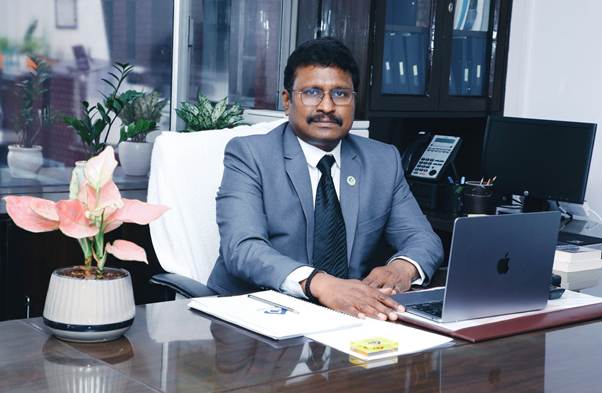
Dr Mallapa


Delhi, 01 Mar:

The Bharathiya Hindu Parivar has appointed Dr. Bhargav Mallappa as National General Secretary (Organisation and Administration) with immediate effect. The appointment acknowledges his public service background, leadership experience and commitment to organisational principles.

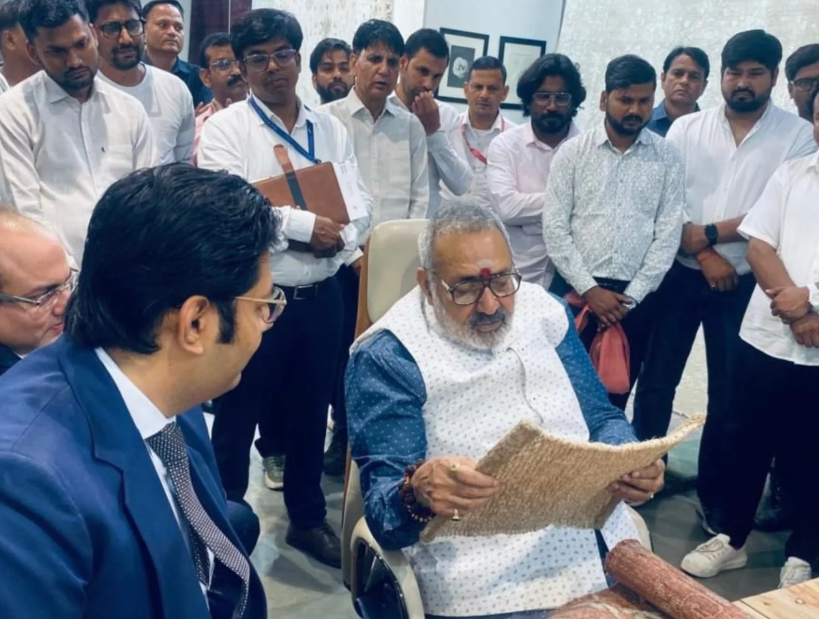
After the appointment, National President Dr. S. Selvaganesh and Dr. Mallappa met Union Tourism Minister Gajendra Singh Shekhawat in New Delhi to deliberate on strengthening India’s tourism ecosystem.
Discussions focused on enhancing India’s global tourism positioning, expanding religious tourism circuits and accelerating tourism-led economic growth in southern states. 

Dr, Mallapa

The leaders also reviewed infrastructure modernisation, sustainable destination development and policy-driven initiatives aligned with the Viksit Bharat 2047 vision.

Dr. Mallappa appreciated flagship programmes such as Swadesh Darshan 2.0, PRASHAD and UDAN, noting that tourism has emerged as a critical driver of economic growth and employment generation. Dr. Selvaganesh emphasised coordinated policymaking and promotion of niche segments including wellness, eco and MICE tourism.

The organisation expressed confidence that Dr. Mallappa’s new role will further strengthen its national outreach and engagement on development-focused issues.

Europe Risks Widening Space Gap Despite Investment Rebound


Europe Risks Widening Space Gap Despite Investment Rebound

Daiva Rakauskaitė, CFA, partner and fund manager of Aneli Capital (Source: Aneli Capital)

The European space industry lags behind the US and China due to insufficient and fragmented funding from both public and private sources, a McKinsey report claims. According to the report, the majority of funded European startups are early-stage and not yet ready for commercialization.

February 26, 2026. Growing defence spending, Europe’s push for greater strategic resilience amid shifting US policy, and increasing demand for commercial space applications are creating new opportunities for European startups. However, European companies still face many challenges, including funding, that could further increase the gap between Europe and the US and China, an investor says.

Last year, space technology startups raised $12.4bn in VC funding, 48% more than in 2024, according to estimates by Seraphim Space. The total surpassed the 2021 peak of $10.9bn and marked a full recovery from the previous pullback.

The lion’s share of last year’s investments, 60%, were raised by the US companies, which increased overall funding by 130% year over year. Meanwhile, funding in Europe grew by 25%, primarily driven by increased defence spending and renewed focus on resilience, but the deal count fell by 15%.

The latest McKinsey space report notes that in recent years, the European space sector has lagged behind the US and China, primarily due to fragmented governmental funding and subscale private investments. Other issues, such as talent shortages and difficulties scaling production, also affected European space companies.

According to Daiva Rakauskaitė, manager at Aneli Capital, a fund management company that supports Central and European (CEE) startups, the current pace of investment in Europe needs to accelerate for the continent to remain competitive.

“As competition with the US and China intensifies, the coming years will be decisive for turning political ambition into industrial scale. Europe must speed up capital deployment and strengthen growth-stage funding and commercialization. Helping more startups enter and scale would narrow the gap, boost competitiveness, and drive innovation. Rising defence spending and expanding market demand point in the right direction, creating strong momentum for new technologies and major opportunities for European startups,” she says.

According to Rakauskaitė, key areas of focus for European space startups include satellites in low Earth orbit and medium Earth orbit used for Earth observation, intelligence, and secure communications.

Manufacturing satellite systems is a particularly good niche for CEE startups, which already have established players such as NanoAvionics in Lithuania and SatRev in Poland. Rakauskaitė stresses that the CEE region has not only experience, but also lots of hidden talent that could pave the way for a stronger European space industry.

One of the issues regarding funding European startups, according to the McKinsey report, is that private investment in European space is focused primarily on earlier-stage projects, and close to 70% of investments in space industry companies are below €10 million.

“Based on these statistics, I would expect an increase in later-stage investments in SpaceTech companies over the next 2–3 years, as more commercial solutions are brought to market. More active participation of EU pension fund capital in the VC ecosystem is also likely during this period,” Rakauskaitė says.

Currently, pension funds in Europe have massive assets – around €3 trillion – only a fraction of which actively participate in the European VC ecosystem, whereas in the US, such practice is much more common.

However, Rakauskaitė also emphasizes that, beyond increasing funding, it should be accepted as natural that a portion of these investments will not yield returns. Therefore, it is equally important to accelerate the commercialization of early-stage companies to maximize the impact of those that do succeed.

“Way too often, startups spend too much in the development phase. While for space companies pathways to commercialization are limited in the early days, they should still look for ways to find small revenue streams – whether through dual-use applications, data services, pilot contracts with defence institutions. Early commercial validation not only strengthens resilience, but it also makes companies significantly more attractive to later-stage investors and strategic buyers,” Rakauskaitė concludes.


Vodia Announces the New Vodia Partner Portal and Partner Program

BOSTON – Mar 1: Vodia Networks, Inc., a provider of unified cloud communications solutions to enterprises, contact centers, and service providers, today announced the new Vodia Partner Portal and Partner Program. Vodia partners now have the exact tools they need to provide their customers with Vodia’s industry-standard phone system, in the cloud or on-prem, faster, more efficiently, and more profitably. 

The new Vodia Partner Portal and the Partner program help Vodia partners be truly competitive. Vodia partners need to get licenses quickly, access attractive pricing, reduce the burden on sales teams, and focus on CX and higher margins, and the portal and the program have been designed to address these day-to-day needs. Vodia partners can now purchase, manage, and track PBX licenses with just a few clicks. 

Partner certification is the first milestone in the Vodia Partner Program. Once certified, partners can move through different levels to gain more benefits. Partner levels and points structure apply to licenses purchased directly through the portal. 

The new Vodia Partner Portal and Partner Program

·        The partner program is structured around a transparent points system. Completion of the Vodia Partner Certification provides the points required to reach Silver level, after which partners accumulate points and progress to higher membership tiers.
Pre-qualified sales leads are accessible within the portal. Vodia partners receive contact information for potential customers who have already expressed interest in a VoIP solution.
Vodia partners have access to professionally crafted marketing collateral, sales presentations, and argumentation frameworks for immediate deployment in local markets. 

·        Partners can now access Vodia Professional Services, implementation support, and other technical assistance via the Portal. 

These capabilities are available now, with others to be introduced as the portal and program evolve:

·        Purchase experience: direct access to Vodia Professional Services, including training, implementation support, integration support, AI integration, call-flow optimization, and add-ons.

·         Knowledge transfer: certifications and regular webinars to help partners build their expertise and enhance their competitive advantage.

·         Ordering efficiency: integration of the portal with partner ordering systems.

·         Faster PBX customization: call-flow and industry-specific templates to accelerate deployments and tailor the Vodia PBX to customer needs. 

To celebrate the launch of the Vodia Partner Portal, every registered partner will receive an exclusive welcome package upon first login. To thank current Vodia partners for their loyalty, Vodia will give each partner complimentary premium support for the first 90 days after login, plus a starter kit with demo licenses and ready-to-use sales materials.

Riju Jhunjhunwala Welcomes INR 16,000 Crore Ajmer Projects as Game-Changer

Ajmer, Feb 28: Prime Minister Narendra Modi on Friday launched and laid the foundation stone for development projects worth over ₹16,000 crore in Ajmer, marking a major push for infrastructure and economic growth in Rajasthan.

Reacting to the announcement, prominent textile industrialist Riju Jhunjhunwala described the initiative as a historic step in the state’s development trajectory. He said the projects would significantly accelerate progress toward the vision of a “Developed Rajasthan.”

INR 16,000 Crore Projects Unveiled in Ajmer: Riju Jhunjhunwala Calls PM Modi’s Initiative a Historic Step Toward ‘Developed Rajasthan’


Jhunjhunwala said that key infrastructure initiatives such as the Bandikui–Jaipur Greenfield Expressway and the Amritsar–Jamnagar Corridor will strengthen road connectivity and improve freight movement across the region. He added that these projects will enhance logistics efficiency, reduce transportation time, and create fresh opportunities for trade and industry.

Highlighting the social impact of the announcements, he said the Nonera and Parvan Akawad drinking water projects will improve water security in several parts of the state. He also termed the nationwide HPV vaccination campaign an important public health measure that will support the well-being and empowerment of young girls.

Under the Rozgar Mela initiative, the distribution of appointment letters to more than 21,000 youth marks a commendable effort to integrate young talent into the nation-building process. Additionally, the expansion of the renewable energy grid is set to unlock new avenues for investment, industrial growth, and employment generation in Rajasthan. He emphasized that this comprehensive approach reflects the Prime Minister’s commitment to balanced and holistic development of the state.

He further pointed out that the expansion of the renewable energy grid will attract investment, promote industrial growth, and generate employment across Rajasthan. According to him, the combined impact of these initiatives demonstrates a clear and structured approach to balanced regional development.

Jhunjhunwala also expressed appreciation to Rajasthan Chief Secretary V. Srinivasan, Director General of Police Rajeev Kumar Sharma, and other senior ministers and officials for their cooperation in advancing projects in the state’s interest.

Concluding his remarks, he thanked the people of Ajmer for their continued support and reiterated his commitment to contributing to the broader goal of “Developed India – Developed Rajasthan.”

Mars Impact Fund Launches in India with Humane World for Animals as Part of Global Grant to Advance Science-Led Dog Population Management

Hyderabad, Feb 28: Mars, Incorporated, a global leader in snacking, pet care and food & nutrition, announced a USD $726,000 global grant through the Mars Impact Fund, its enterprise-wide philanthropic entity designed to accelerate meaningful and lasting impact in the communities where it operates. As part of this global commitment, India will be a key focus market for implementation, with Humane World for Animals leading a comprehensive, science-based approach to street dog population management, expanded access to veterinary care, and long-term municipal and professional capacity strengthening across high-need regions.

The programme prioritises science-led dog population management, institutional strengthening, and sustainable workforce development in high-need regions.

The programme integrates sterilisation and rabies vaccination efforts with mobile veterinary clinics, hands-on training for professionals, and meaningful partnerships with communities. Through these efforts, the project aims to deliver large-scale preventive care, public health interventions, and sustained community action helping animals across targeted geographies.

“Delivering impact starts with listening to communities and partnering with organisations that understand local needs,” said Michelle Grogg, Executive Director, Mars Impact Fund. “Our partnership with Humane World for Animals reflects this approach by helping expand access to veterinary care and training in communities where it is needed most.”

India is home to one of the world’s largest free-roaming dog populations. While the Animal Birth Control Rules, 2023, provide a clear legal and scientific framework for humane management, implementation across municipalities remains uneven due to funding constraints, limited veterinary infrastructure, and inconsistent operational capacity. Rapid urbanisation has intensified human–animal conflict in several cities, reinforcing the need for sustained, structured, and science-led solutions. Mars’ State of Pet Homelessness Report highlights that millions of dogs globally lack secure homes and underscores that sustained sterilisation coverage, often benchmarked at 70 per cent or higher, is essential to stabilise and humanely reduce street dog populations over time. In many Indian cities, achieving this threshold stays a structural challenge. This initiative seeks to close that gap through coordinated, systems-based intervention rather than episodic response.

In India, the partnership will work in Uttar Pradesh and Uttarakhand to deliver high-quality spay-neuter services and professional training for veterinary professionals, while fostering strong partnerships with communities and local governments. Humane World for Animals will facilitate the launch of the country’s first dedicated National Animal Birth Control Training Center in Lucknow and a Mobile Training and Capacity-Building Program for animal welfare NGOs across the country.

In Hyderabad and Ahmedabad, Humane World for Animals will launch a pet welfare initiative to improve access to vaccinations and encourage formal registration of owned dogs. This program will deliver a large-scale, city-supported pet welfare and rabies vaccination campaign, complemented by a targeted communications effort designed to raise awareness, increase registration, and promote long-term owner commitment.

Manish Syag, Managing Director, Mars Pet Nutrition India, said, “India is at a defining moment in how it manages human–animal coexistence. According to Mars’ State of Pet Homelessness Report 2023, nearly 69 million dogs and cats in India are without secure homes. These figures reinforce that free-roaming dog populations cannot be addressed through fragmented or short-term measures. Through this initiative, we aim to advance sterilisation coverage, vaccination access, and professional capacity building in alignment with the widely recognised 70 per cent sterilisation benchmark necessary for long-term population stability. This initiative is more than a grant; it represents a long-term blueprint for building safer, healthier, and more resilient cities for both people and animals.”

“What better partners than Mars to work together to address one of the biggest challenges surrounding street dogs – human – dog conflict. We are delighted to be partnering with them! By promoting science-led Animal Birth Control programs and strengthening human-dog interactions through community engagement, we are working towards long-term solutions. Through high-volume sterilisation, vaccination, and community engagement initiatives in states like Uttarakhand and cities like Lucknow, we are demonstrating how these programs effectively reduce conflict, dog bite incidents and rabies risks,” said Alokparna Sengupta, Managing Director, Humane World for Animals India. “Our expansion of mobile animal clinics in underserved regions is further supporting community-driven solutions that make our neighbourhoods safer and healthier and addresses street animal welfare.”

As a family-owned, principle-driven company, Mars has long believed that business should be a force for good. Building on this legacy, the Mars Impact Fund is designed to complement existing sustainability efforts and foundation activities with strategic, long-term investments. The Mars Impact Fund will contribute $85 million between 2025 and 2027. From 2028 onward, the company expects to distribute $50 million annually in philanthropic capital.


FTCCI hosts a full-day workshop on “Resilient Minds – Thriving Businesses”

FTCCI hosts a full-day workshop on “Resilient Minds – Thriving Businesses”


Hyderabad, Feb 28: The Federation of Telangana Chambers of Commerce and Industry (FTCCI) conducted a unique one-day program titled “Resilient Minds – Thriving Businesses” at the FTCCI Surana Auditorium, Federation House, Hyderabad, on Saturday. The workshop witnessed participation from over 200 entrepreneurs, business leaders, healthcare professionals, and industry stakeholders who gathered to explore the powerful intersection of psychology, leadership, and sustainable business growth.

The event was graced by Dr Dilip P. Bhanushali, National President, Indian Medical Association (2024–25), and Dr P. Kishan, President, Indian Medical Association – Telangana, as the Guests of Honour. Their presence reinforced the importance of mental health awareness and resilience in leadership and organisational ecosystems.

Addressing the gathering, Dr Dilip P. Bhanushali stated that doctors, too, must be granted immunity, similar to judges and advocates, from the provisions of the Clinical Consumer Protection Act. He informed that several representations had been made in the past in this regard. Emphasising the sacrifices made by the medical fraternity, he noted that more than 2,000 doctors lost their lives during the COVID-19 pandemic while rendering medical aid to patients. “Doctors render yeoman service to society and deserve appropriate legal protection,” he said.

Highlighting the stature of the Indian Medical Association (IMA), he shared that it is one of the world’s largest medical bodies with over 4.5 lakh members, 32 state branches, and nearly 1,800 local branches. He also mentioned that IMA has trained more than 50,000 doctors on the MPV vaccine.

Speaking on mental health, Dr. Bhanushali said that mental toughness can make or mar business success. “A stronger mind protects you from market fluctuations, business ups and downs, regulatory changes, and complex team dynamics. We must cultivate a growth mindset. A healthy mind fosters creativity and long-term success,” he added.

Dr. P. Kishan, President of IMA Telangana, stressed the need to develop a structured “manual” to understand and manage the mind. “Every other critical component in life has a manual. Why not a manual for the mind? We need to understand it better to manage it effectively,” he remarked, adding that the world is watching the Indian model of mind management.

Drawing a spiritual analogy, he said, “Lord Vishnu rests upon the serpent Adishesha — a symbol of immense power and potential turbulence — yet His repose is unwavering and undisturbed. The message is profound: true resilience is not the absence of challenges, but the ability to remain steady amidst them. When the mind is calm, even a bed of serpents does not oscillate.”

R. Ravi Kumar, President of FTCCI, observed that life is full of stress and how one handles it shapes both personality and business success. “Growing a business and controlling the mind are equally important. Business, family, or managing any institution is ultimately about managing people. If you manage people well, they manage your business. To manage people, you must first manage your mind,” he said.

In his introductory remarks, Shekhar Agarwal, Chair of the Health Committee, said, “Man hi devta hai, man hi Ishwar hai — man se bada kuch bhi nahi. The mind is both the creator and the controller of our destiny. It can bind us in fear or liberate us with courage. When disciplined and awakened, it becomes divine in its power.”

Designed to equip entrepreneurs and leaders with practical psychological insights, the program focused on strengthening mental well-being, enhancing self-awareness, building resilience, and navigating emotional pressures in demanding professional environments. The sessions emphasized that true business success is rooted not only in strategy and execution but also in emotional intelligence, clarity of thought, and the ability to respond constructively to stress and uncertainty.

The program featured an eminent panel of speakers including Mr. Baijesh Arayil Ramesh, Clinical Psychologist and Organizational Consultant; Dr. Keshav Rao Devulapally, Consultant Psychiatrist and Director, Chetana Hospital; Dr. R. K. Mishra, Former Director, Institute of Public Enterprise; Mr. T. Muralidharan, Founder and Chairman, TMI Group; and Prof. Himanshu Tambe from the Indian School of Business. Through engaging presentations and interactive discussions, the speakers addressed psychometric assessments for improved self-awareness, early identification of mental health indicators, stress management in leadership roles, communication enhancement, and cultivating resilience to drive business excellence.

The program concluded on a high note, with participants appreciating FTCCI’s initiative in bringing a forward-looking and holistic approach to leadership development. FTCCI expressed gratitude to the distinguished speakers, guests, and participants and reaffirmed its commitment to organizing impactful initiatives that support both personal growth and the advancement of the business community in Telangana.

More than 200 people participated in the program.

— 

Vice President C. P. Radhakrishnan Presides Over 57th Convocation of IIMC; Lays Foundation Stone for New Academic Block

Vice President C. P. Radhakrishnan Presides Over 57th Convocation of IIMC; Lays Foundation Stone for New Academic Block

New Delhi, Feb 28: The 57th Convocation Ceremony of the Indian Institute of Mass Communication (IIMC), Deemed to be University, was held today at its New Delhi campus. This is the first convocation of a batch graduating after IIMC attained deemed-to-be-university status in January 2024.

The Hon’ble Vice President of India graced the occasion and laid the foundation stone for a new academic block, marking a major infrastructure expansion at the institute.

Addressing the 57th Convocation Ceremony of Indian Institute of Mass Communication, the Vice President of India, Shri C. P. Radhakrishnan, said that journalism must not ignore challenges, but it must equally highlight progress and nation-building efforts. Speaking to graduating students of Journalism, Advertising and Public Relations, he noted that communicators shape aspirations, amplify national priorities and craft narratives that inspire progress. He emphasized that creativity is not merely a commercial tool, but a catalyst for transformation and social change. The Vice President underlined that while technology, platforms and mediums will continue to evolve, the core values of journalism and communication accuracy, fairness, integrity and accountability must remain non-negotiable. He urged graduates to uphold purpose-driven communication and contribute towards building a confident and inclusive India.

Addressing the gathering, Union Minister for Information & Broadcasting, Electronics & IT and Railways, Shri Ashwini Vaishnaw, said IIMC is one of India’s premier institutions with a high placement rate and graduates widely sought after in the media industry.

He announced that from the next academic session, IIMC will introduce a Fellowship Programme for journalists to enable specialization in areas such as technology, economy and strategy, enhancing research and domain expertise. The Minister also highlighted the establishment of an incubator at IIMC and appreciated innovative startups, including one transforming Indian folk tales into technology-driven storytelling formats. He further underlined the importance of Gen Bharat in shaping India’s future trajectory.

At the ceremony, 509 students from nine PG Diploma programmes across six campuses were awarded diplomas. A total of 35 medals, including 23 with cash prizes, were presented to toppers. Mark sheets under the grade and credit system have been made available through DigiLocker.

IIMC currently runs eight PG Diploma programmes and several MA programmes, with three new MA courses to be introduced from 2026–27. 

Shardul Amarchand Mangaldas & Co. Releases Report Calling for Comprehensive Reform of India’s AI Liability Regime

Shardul Amarchand Mangaldas & Co. Releases Report Calling for Comprehensive Reform of India’s AI Liability Regime

New Delhi, Feb 28:  Shardul Amarchand Mangaldas & Co. (SAM), has released a comprehensive report titled “Reforming India’s AI Liability Regime: Report on Artificial Intelligence and Legal Responsibility in India”, calling for reforms to India’s legal framework governing liability for harms caused by artificial intelligence (AI) systems.

As AI technologies become increasingly embedded across critical sectors such as healthcare, finance, transportation, and public services, the report underscores that India’s existing liability laws were not designed to address the unique characteristics of AI systems. These include opacity in decision-making, self-learning and adaptive behaviour, and the involvement of multiple actors across the AI value chain. 

The report highlights the growing urgency for a modernised liability framework that can respond to the risks posed by AI while continuing to support innovation and adoption.

Key Findings

The report identifies three fundamental gaps in India’s current legal framework:

  • Ambiguity in AI Value Chain Participation: Existing statutes lack precise taxonomies for entities across the AI lifecycle including designers, data providers, developers, and deployers. This absence of clarity complicates judicial determination of liability when AI systems cause harm.
  • Anachronistic Definitions of “Product” and “Defect”: The Consumer Protection Act, 2019, remains largely oriented towards tangible goods and does not explicitly account for intangible, adaptive software or algorithmic failures, such as statistical bias and autonomous decision-making errors.
  • Evidentiary and Procedural Barriers: The “black box” nature of many AI systems create significant information asymmetry. Unlike emerging international norms, Indian law currently lacks the procedural mechanisms – such as rebuttable presumptions – that would enable claimants to establish causation in complex technical disputes. 

Comparative Insights

Drawing on comparative analysis of legal frameworks in the European Union, United States, Australia, and Japan, the report identifies international best practices that India could consider adapting:

  • The European Union’s revised Product Liability Directive and AI Act explicitly recognise the multiplicity of actors within the AI ecosystem and allocate responsibility based on degrees of control and influence.
  • Jurisdictions such as the European Union and Australia have expanded legal definitions to include software, digital services, and evolving AI systems.
  • The European Union has introduced procedural innovations including rebuttable presumptions of causation and evidence disclosure rights, to ease the burden of proof for claimants. 

Principal Recommendations

The report proposes a principled reform agenda for India, including:

  1. Adoption of a Control-Based Liability Framework: Legal responsibility should correspond to the degree of control and influence exercised by actors at various stages of the AI lifecycle, rather than relying solely on traditional categories such as manufacturer or service provider.
  2. Clarification of Legal Definitions: Statutory definitions of “product” and “defect” should be updated to explicitly encompass AI systems, software, and adaptive digital products.
  3. Introduction of Procedural Safeguards: Mechanisms such as evidence disclosure obligations, presumptions of causation, and access to technical expertise should be incorporated to address the evidentiary challenges unique to AI-related disputes.
  4. Consideration of Safe Harbour and Public-Private Models: Certification-based safe harbours and multistakeholder regulatory organisations should be explored to balance innovation with accountability.
  5. Phased introduction of Specialised Dispute Resolution: The report recommends beginning with dedicated AI benches within existing High Courts, supported by technical experts, with a view to evolving specialised forums as the regulatory ecosystem matures.

Leadership Perspective

Commenting on the reportDr Shardul S. Shroff, Executive ChairmanShardul Amarchand Mangaldas & Co., said: “Artificial intelligence is no longer a future concern—it is already shaping critical decisions across the economy. India’s legal framework must evolve to address the distinctive risks posed by AI systems while continuing to foster innovation. This report seeks to contribute constructively to that evolution by identifying principled, comparative, and implementable pathways for reform.” 

Pallavi Shroff, Managing Partner, Shardul Amarchand Mangaldas & Co., said: AI-driven systems challenge some of the most settled assumptions in liability law—from causation and foreseeability to responsibility across complex value chains. India now has an opportunity to develop a forward-looking framework that protects individuals from harm while providing legal certainty to businesses deploying AI at scale. This report is intended to inform that balance with comparative insight and practical recommendations.”

 Akshay Chudasama, Managing PartnerShardul Amarchand Mangaldas & Co., added: “As AI becomes integral to commercial decision-making and public infrastructure, the absence of a clear liability regime creates risk for all stakeholders—developers, deployers, users, and consumers alike. A principled, control-based approach to liability, supported by procedural safeguards, is essential to ensure accountability without stifling innovation. We hope this report contributes meaningfully to India’s evolving technology governance discourse.”

SEDEMAC Mechatronics Limited’s initial public offering to open on Wednesday, March 04, 2026

SEDEMAC Mechatronics Limited’s initial public offering to open on Wednesday, March 04, 2026

Chandigarh, Feb 28: SEDEMAC Mechatronics Limited (the “Company”) proposes to open an initial public offering (“Offer”) of its equity shares of face value of ₹10 each (“Equity Shares”) on Wednesday, March 04, 2026. The Anchor Investor Bidding Date is one Working Day before the Bid/Offer Opening Date, being Monday, March 02, 2026. The Bid/ Offer Closing Date is Friday, March 06, 2026.

The Price Band of the Offer has been fixed from ₹1287 per Equity Shsare of face value ₹10 each to ₹1352 per Equity Share of face value ₹10 each. Bids can be made for a minimum of 11 Equity Shares of face value ₹10 each and multiples of 11 Equity Shares of face value ₹10 each thereafter.

The offer comprises an offer for sale of up to 8,043,300 Equity Shares of face value ₹10 each by existing promoter & promoter group selling shareholders, viz. Manish Sharma, and Ashwini Amit Dixit, and existing investor selling shareholders, viz. A91 Emerging Fund II LLP, NRJN Family Trust (represented by Entrust Family Office Legal & Trusteeship Services Private Limited), Xponentia Opportunities Fund II, Mace Private Limited, 360 One Special Opportunities Fund –  Series 8, 360 One Monopolistic Market Intermediaries Fund, HDFC Life Insurance Company Limited, Xponentia Opportunities Limited, Society for Innovation and Entrepreneurship, Cyrus Jamshed Guzde, Capri Global Holdings Private Limited, SVS Trust No IV, Venktesh Investment and Trading Company Private Limited, Himanshu Kantilal Sanghavi HUF, Devang Mehta, Atul Hiralal Shah, Bakul Hiralal Shah, Devinjit Singh, Perumal Ramamurthy Srinivasan, Bhavya Kapoor, and Rahul Bahri.

This offer includes a reservation of up to [●] equity shares of face value of ₹ 10 each, aggregating up to ₹10.00 million (constituting up to [●] % of the post-offer paid-up equity share capital) for subscription by eligible Employees (employee reservation portion).

A discount of ₹128 per Equity share is being offered to Eligible Employees bidding in the Employee Reservation Portion.

Founded in 2007 by four IIT Bombay engineers, SEDEMAC Mechatronics has grown into a globally deployed control technology company and one of the few Indian-origin suppliers to repeatedly deliver scalable, breakthrough innovations in automotive and industrial electronics.

The company is a leading supplier of control-intensive Electronic Control Units (ECUs) to major OEMs across India, the United States, and Europe. With fully in-house proprietary control technology capabilities, SEDEMAC serves two- and three-wheelers, electric vehicles, and generator applications.

Strategically, the company is expanding into commercial vehicles and the power tools segment, with successful proof-of-concept demonstrations in sensorless motor control and ongoing development of ECUs for commercial vehicle platforms — positioning it for the next phase of growth

This Offer is being made in terms of Rule 19(2)(b) of the SCRR read with Regulation 31 of the SEBI ICDR Regulations. The Offer is being made through the Book Building Process and is in compliance with Regulation 6(1) of the SEBI ICDR Regulations wherein in terms of Regulation 32(1) of the SEBI ICDR Regulations, not more than 50% of the Net Offer shall be available for allocation on a proportionate basis to Qualified Institutional Buyers (“QIBs”, and such portion, the “QIB Portion”) provided that the  Company, in consultation with the BRLMs, may allocate up to 60% of the QIB Portion to Anchor Investors on a discretionary basis in accordance with the SEBI ICDR Regulations (“Anchor Investor Portion”), of which at least 40% shall be reserved for domestic Mutual Funds, Life Insurance Companies and Pension Funds, in the following manner (i) 33.33% shall be reserved for domestic Mutual Funds; and (ii) 6.67% shall be reserved for Life Insurance Companies and Pension Funds, subject to valid Bids being received from domestic Mutual Funds and Life Insurance Companies and Pension Funds at or above the Anchor Investor Allocation Price. In the event of under-subscription in the Anchor Investor Portion reserved for Life Insurance Companies and Pension Funds, the balance Equity Shares shall be available for allocation to domestic Mutual Funds. In the event of under-subscription or non-allocation in the Anchor Investor Portion, the balance Equity Shares shall be added to the Net QIB Portion. Further, 5% of the Net QIB Portion shall be available for allocation on a proportionate basis only to Mutual Funds and the remainder of the Net QIB Portion shall be available for allocation on a proportionate basis to all QIB Bidders (other than Anchor Investors) including Mutual Funds, subject to valid Bids being received at or above the Offer Price. However, if the aggregate demand from Mutual Funds is less than 5% of the QIB Portion, the balance Equity Shares available for allocation in the Mutual Fund Portion will be added to the remaining QIB Portion for proportionate allocation to QIBs. Further, not less than 15% of the Net Offer shall be available for allocation to Non-Institutional Bidders out of which (a) one-third of such portion shall be reserved for applicants with application size of more than ₹200,000 and up to ₹1,000,000; and (b) two-third of such portion shall be reserved for applicants with application size of more than ₹1,000,000, provided that the unsubscribed portion in either of such sub-categories may be allocated to applicants in the other sub-category of Non-Institutional Bidders and not less than 35% of the Net Offer shall be available for allocation to Retail Individual Bidders (“RIBs”) in accordance with the SEBI ICDR Regulations (“Retail Portion”), subject to valid Bids being received from them at or above the Offer Price. Further, Equity Shares will be allocated on a proportionate basis to Eligible Employees applying under the Employee Reservation Portion, subject to valid Bids received from them at or above the Offer Price.

Further, all potential Bidders (except Anchor Investors) are required to mandatorily utilise the Application Supported by Blocked Amount (“ASBA”) process by providing details of their respective bank accounts (including UPI ID for UPI Bidders using UPI Mechanism) (as defined hereinafter) in which the Bid amount will be blocked by the SCSBs or the Sponsor Banks, as applicable, to participate in the Offer.

The Equity Shares of the Company are proposed to be listed on BSE Limited (BSE) and the National Stock Exchange of India Limited (NSE) (BSE and NSE together, the Stock Exchanges).  

ICICI Securities Limited, Avendus Capital Private Limited and Axis Capital Limited are the Book Running Lead Managers (BRLMs) to the Offer.

All capitalised terms not defined herein would have the same meaning as attributed to them in the RHP.