• Bhubaneswar India
  • Contact+ 91-9938772605
  • Mon - Sat : 10:00AM - 6:00PM

Category: technology

Samsung CEO TM Roh on Building AI as Invisible, Trusted Infrastructure for Everyday Life

By: TM Roh, President and CEO of Samsung Electronics

New technologies follow a familiar arc. They begin as marvels—expensive, experimental and full of fanfare. As the excitement settles, the technologies that truly change society fade into the background. That isn’t because they become less powerful but because they become dependable, affordable and broadly usable—quietly triumphant and easily overlooked. As Amara’s Law says, we overestimate a technology’s short-term impact and underestimate its long-term effects.

 Today, artificial intelligence is the great newcomer, as loudly proclaimed as the mobile phone or the internet was. Being mindful of Amara’s Law in its case means advancing AI while never losing sight of what makes it scalable as a practical, everyday innovation. That’s what distinguishes mere invention from infrastructure.

 Infrastructure is something people count on to work—reliably, universally and without the need for outside expertise. The core question isn’t awareness of AI. Recent research shows that 86% of mobile users already use it. What matters is how practical and helpful AI is in real life. Does it understand users’ context and intent well enough to earn their trust?

Language was an early proving ground. Translation isn’t useful if it works well in a handful of standard global languages but fails among dialects, accents and real-world contexts. That’s precisely where misunderstandings have real-life consequences.

 Accessibility is equally important. Features like real-time captions, image descriptions and simplified summaries are more than nice to have. They’re foundational to understanding and action while delivering what infrastructure is built for: consistency.

 Another key measure is trust. AI exists in the most personal areas of our lives—among our messages, photos, documents, finances and even health. People rightly ask if giving up control is necessary to take advantage of AI’s benefits. If it feels like the answer is yes, adoption slows. This isn’t fear of technology, it’s a rational response to risk.

AI infrastructure comes with responsibilities for its builders. Infrastructure must be designed to work reliably in real-world conditions and serve everyone, including the most vulnerable users. By that standard, engineering and design should give priority to reach, openness and confidence.

 A clear measure of meaningful innovation is how many people use the technology every day. To become a default experience for the majority, AI has to reach more devices and more people with a consistent high-quality experience.

 For AI to be universal, it must work equally well across languages, cultures and contexts, delivering the same level of accuracy, fluency and cultural nuance no matter who is using it or where. But openness goes beyond languages. For AI to be used comfortably by more people, it must be intuitive enough that it doesn’t require learning on the user’s part. People shouldn’t have to think about how to operate AI to benefit from it. That is why the best AI often stays in the background. The less visible AI becomes, the more universal the experience feels.

AI gains confidence by delivering dependable performance that is consistently fast and responsive and by making clear that privacy and security are built in. Secure data and transparent information control, grounded in user choice, shouldn’t be optional. They are essential for AI to function as true infrastructure.

 The real challenge for the industry isn’t improving AI literacy; it’s designing AI that people can use without having to make a project of it. The idea of AI as infrastructure must also shape the coming phase of agentic AI, which will carry tasks through to completion, not merely provide answers. Done well, this shift will further reduce friction by handling routine actions and organizing what matters without requiring technical commands or constant intervention. The real value for AI won’t be found in benchmarks or model comparisons. It will show up in everyday moments, when more people can understand, participate and move through the world with ease.

  This message contains information which may be confidential and privileged. Unless you are the intended recipient (or authorized to receive this message for the intended recipient), you may not use, copy, disseminate or disclose to anyone the message or any information contained in the message. If you have received the message in error, please advise the sender by reply e-mail, and delete the message. Thank you very much.

India’s AI Awakening: How Intelligent Technology Is Simplifying Life for a Billion People

When a farmer checks a mobile phone to decide when to sow seeds, when a doctor in a city hospital reads an AI-assisted scan from a rural clinic, or when a citizen accesses a government service in their mother tongue, Artificial Intelligence is already at work. Across India, AI is steadily weaving itself into daily life—not as a luxury, but as a practical tool that simplifies problems and expands opportunity.

This transformation marks a new chapter in India’s development story—one where technology is designed not only for efficiency, but for inclusion.

Understanding AI—Without the Jargon

At its core, Artificial Intelligence enables machines to perform tasks that usually require human thinking. These systems learn from data, recognise patterns, understand language, and make informed decisions. Over time, they improve—becoming faster, more accurate, and more responsive.

What makes today’s AI especially powerful are Large Language Models, which can understand and generate human-like text, translate languages, summarise information, and assist decision-making. In practical terms, this means easier access to information, smarter digital services, and tools that adapt to individual needs.

For a country as diverse as India, this adaptability is crucial.

A Thriving AI Ecosystem Takes Shape

India’s AI ecosystem is growing at remarkable speed. Millions of professionals now work across technology and AI-driven roles. Startups are building solutions for healthcare, finance, agriculture, logistics, and education. Research institutions and global companies are investing heavily in Indian talent.

International rankings increasingly place India among the world’s leading AI nations—not only for skills and innovation, but also for policy direction and public-sector adoption. What distinguishes India, however, is not just scale, but intent: the deliberate effort to ensure that AI benefits reach beyond urban centres and elite institutions.

The IndiaAI Mission: Building AI for Public Good

At the heart of India’s strategy lies the IndiaAI Mission, a national initiative aimed at making advanced AI tools affordable, accessible, and homegrown. The mission focuses on expanding computing infrastructure, supporting research, nurturing startups, and promoting responsible AI use.

By dramatically increasing access to high-performance computing resources, the mission has lowered barriers for innovators across the country. Researchers, startups, and students—many from smaller cities—can now experiment, build, and deploy AI solutions that address local challenges.

Equally important is the focus on sovereign AI models—systems trained on Indian languages, data, and cultural contexts. This ensures that AI understands India not as an afterthought, but as its foundation.

AI in Action: Changing Everyday Experiences

Healthcare That Reaches the Last Mile

AI is helping doctors detect diseases earlier, interpret medical images faster, and personalise treatment plans. Telemedicine platforms now use intelligent systems to connect rural patients with specialists, reducing travel, cost, and delays. For many families, this means better care without leaving their communities.

Smarter Farming, Better Incomes

For farmers, AI acts as a digital advisor—predicting weather patterns, detecting pest attacks, and recommending the best times to sow or irrigate. These insights, delivered through simple mobile interfaces, help reduce risk and improve productivity in an increasingly uncertain climate.

Learning Without Barriers

In classrooms and online platforms, AI is enabling personalised learning paths, multilingual content, and assistive tools for students with disabilities. By adapting to each learner’s pace and language, AI is helping education become more inclusive and engaging.

Governance That Listens and Responds

AI is streamlining public services—speeding up document processing, translating legal judgments into regional languages, and powering chatbots that guide citizens through government schemes. The result is a governance system that is faster, more transparent, and easier to access.

Preparing for Climate and Disasters

AI-driven models are improving weather forecasts and disaster alerts, helping authorities and communities respond more effectively to floods, cyclones, and heatwaves. Timely information can mean the difference between loss and resilience.

Jobs, Skills, and the Future of Work

Contrary to popular fears, AI is not simply eliminating jobs—it is reshaping them. New roles are emerging in data analysis, AI engineering, ethics, model training, and system oversight. At the same time, existing professions are becoming more productive with AI support.

India’s emphasis on reskilling and upskilling reflects this reality. National training programmes are helping students and professionals adapt, ensuring that the workforce evolves alongside technology rather than being displaced by it.

AI as a Tool for Inclusion

Perhaps the most compelling aspect of India’s AI journey is its focus on those who are often left behind. Nearly half a billion Indians work in the informal sector, facing challenges of language, literacy, access to credit, and social security.

Policy roadmaps now envision AI tools that use voice interfaces, local languages, and smart digital systems to bridge these gaps. The goal is clear: technology should amplify human effort, not replace it—especially for those whose livelihoods depend on skill and experience.

Looking Ahead

India’s success with digital public infrastructure has already shown what is possible when technology is built for scale and inclusion. Artificial Intelligence represents the next leap—one that could redefine how services are delivered, how opportunities are accessed, and how growth is shared.

As India moves towards its long-term development goals, AI is emerging not as a distant future, but as a present-day partner—quietly simplifying lives, strengthening systems, and empowering citizens.

A New Kind of Intelligence

India’s AI awakening is not about machines becoming more human. It is about technology becoming more humane. By aligning innovation with public good, India is demonstrating how artificial intelligence can serve as a force for equity, efficiency, and collective progress.

In that vision lies not just smarter systems—but a more empowered society.

Prime Movr Launches Laser Power Transmission Technology that Enables Small-Scale Laser Power Beaming

KASHMIR—Jan 16—Prime Movr on Jan 15 announced the launch of its innovative Laser Power Transmission technology, which converts optical energy from laser beams into electrical energy. Prime Movr’s solution enables small-scale laser power beaming. This capability makes it possible to power devices without the use of wires. The technology holds promise for untethered long-range applications with increased efficiency.

Based in Kashmir, with members in India, Egypt, and the US, Prime Movr is vying to be a leader in a rising trend of laser power transmission technologies. Their launch is timely. Large entities have recently been in the news for their laser power transfer projects. The Defense Advanced Research Projects Agency (DARPA) has a program to beam power over long distances, while Star Catcher Industries is focused on building an orbital power grid to beam energy to satellites and lunar vehicles. Mitsubishi Heavy Industries recently announced a partnership with NTT (Nippon Telegraph and Telephone) and has conducted experiments to transmit laser power over a kilometer.

While Prime Movr’s system is dwarfed by these much larger systems, the company hopes its technology can enable a wide range of smaller wireless applications. Design Manager Adel Muhammed of Port Sad Egypt, feels that new applications will result from the innovations. He states: “There will be countless opportunities to use this technology to design new applications which were previously impractical, such as long-distance powering of remote sensors and outdoor cameras.”

The founders of Prime Movr are also developing a similar wireless technology using radio frequency (RF) in collaboration with the University of Kashmir’s Institute of Technology. While development with RF goes forward, the partners realise that laser technology offers several unique advantages, including higher energy density and more focused targeting. These advantages make the technology particularly well-suited for powering remote, mobile, and hard-to-access electronic systems where traditional wired or inductive charging solutions are impractical. The laser power transmission technology can be leveraged to power applications such as remote sensors, outdoor camera systems, and other autonomous systems.

Co-founder Parvez Rishi comments: “We are delighted to add lasers to our collection of wireless power transfer technologies. The ability to transmit focused energy over long distances will have broad appeal across several applications.”

Wipro announces results for quarter ended December 31, 2025 – January 16, 2026

EAST BRUNSWICK, N.J., BANGALORE, India, January 16, 2026: Wipro Limited (NYSE: WIT, BSE: 507685, NSE: WIPRO), a leading AI-powered technology services and consulting company, announced its financial results under International Financial Reporting Standards (IFRS) for the quarter ended December 31, 2025.

Q3 FY26 Financial Highlights

  • Gross revenue: ₹235.6 billion ($2,622.0 million), up 3.8% QoQ and 5.5% YoY
  • IT Services revenue: $2,635.4 million, up 1.2% QoQ and 0.2% YoY
  • Non-GAAP constant currency IT Services revenue: up 1.4% QoQ, down 1.2% YoY
  • Total bookings: $3,335 million; large deal bookings at $871 million
  • IT Services operating margin: 17.6%, expanding 90 bps QoQ
  • Net income: ₹31.2 billion ($347.2 million)
  • Adjusted net income (excluding labour code impact): ₹33.6 billion ($374.3 million)
  • Operating cash flow: ₹42.6 billion, representing 135.4% of net income
  • Voluntary attrition: 14.2% (trailing 12 months)

Outlook

For the quarter ending March 31, 2026, Wipro expects IT Services revenue to be in the range of $2,635 million to $2,688 million, implying 0%–2.0% sequential growth in constant currency terms.

Leadership Commentary

Srini Pallia, CEO and Managing Director, said the company delivered broad-based growth aligned with expectations, supported by increased adoption of AI-led platforms. He highlighted Wipro Intelligence™, WINGS, and WEGA as key contributors to client wins and scalable AI-led delivery.

Aparna Iyer, Chief Financial Officer, noted that Q3 marked Wipro’s best margin performance in several years, driven by execution discipline and strong cash flow. She also announced an interim dividend of ₹6 per share, taking the total payout for the year to $1.3 billion.

Strategic Deal Wins

During the quarter, Wipro secured and expanded multiple large, multi-year engagements across sectors including technology, healthcare, banking, insurance, telecom, airlines, manufacturing, and consumer goods. These deals focused on:

  • AI-led trust and safety operations
  • Healthcare payer platforms and automation
  • Digital workplace transformation
  • Hybrid cloud and infrastructure modernization
  • Agentic AI for finance, software development, and enterprise operations
  • AI-driven customer experience and workforce productivity

Analyst Recognition

Wipro was recognized as a Leader by major global analyst firms including Gartner, Everest Group, Avasant, IDC, ISG, and HFS across AI services, cloud, digital workplace, ServiceNow, SAP, telecom, banking operations, and data center outsourcing.

realme 16 Pro Series as Best-Rated Camera Smartphone in Its Segment

New Delhi, India, Jan 15: realme, the most popular smartphone brand among Indian youth, today announced that the realme 16 Pro Series has emerged as one of the top-rated camera smartphones in its segment, reaffirming the brand’s leadership in mobile photography innovation.

According to Flipkart user ratings in the segment, the realme 16 Pro Series has received strong consumer recognition for its advanced imaging capabilities, consistently earning high ratings for camera performance. This recognition reflects growing user trust in realme’s commitment to delivering flagship-grade camera experiences in the premium mid-range category.

At the core of this success is the 200MP LumaColor Portrait Master, available across the realme 16 Pro Series. Designed to redefine portrait photography standards, the camera system delivers natural skin tones, refined depth, and sharp details across multiple focal lengths. Advanced imaging algorithms, including ProDepth Bokeh and intelligent scene optimisation, ensure consistently high-quality results across varied lighting conditions, whether capturing group shots, portraits, or dynamic moments.

The realme 16 Pro+ further elevates the experience with a 3.5× periscope telephoto lens, FullFocal Portrait capabilities, and enhanced zoom performance, while the realme 16 Pro brings the same 200MP imaging excellence to a wider audience, making professional-grade portrait photography more accessible.

User appreciation for the camera experience has been complemented by the series’ premium design, powerful performance, and all-day reliability, making the realme 16 Pro Series a well-rounded choice for content creators and photography enthusiasts alike.

With this recognition from Flipkart users, realme continues to strengthen its position as a brand that listens to consumers and delivers meaningful innovation, setting new benchmarks for camera performance in its segment.

AI Must Expand Creativity While Preserving Trust and Value for Creators says Prabhat, Additional Secretary, I & B

Comments were made on January 13 at FICCI’s Federation House during an official pre-summit event organised by the Motion Picture Association (MPA) and Federation of Indian Chambers of Commerce Industry (FICCI), leading up to the India AI Impact Summit 2026.

Titled Who Owns the Future of Entertainment?: India, AI, and the Next Global Shift, the one-day seminar focused on how India can harness AI to strengthen its creative economy while safeguarding the rights and livelihoods of creators.

The event was supported by industry partners AVIA, FFI, IBDF, IFPI, IFTPC, IMI, IMPAA, JioStar, PGI, TFCC, and WIFPA, and drew strong participation from across film, television, music, digital platforms, and advisory services.

Prabhat, Additional Secretary, Ministry of Information and Broadcasting, said that from a public policy perspective, three objectives must be addressed together. AI, he emphasized, must be used to expand creativity, improve competitiveness, and preserve trust and rights, ensuring that innovation remains sustainable rather than fragile.

The opening session tackled the policy and regulatory questions raised by AI’s rapid adoption across creative industries, including copyright, ownership, training data, attribution, and remuneration. Chaired by James Cheatley, Vice President – VOD, Digital Affairs and Intellectual Property, Motion Picture Association, Asia Pacific, the discussion featured Dr. G. R. Raghavender, Senior Consultant, IPR and former Joint Secretary to the Government of India, DPIIT; Ameet Datta, Co-Chair of the FICCI IP Committee and Founder of ADP Law Offices; and Blaise Fernandes, President, IMI, among other senior experts.

Highlighting the importance of copyright-led growth, Blaise Fernandes said, “At WAVES 2025, our Prime Minister, Shri Narendra Modi, set the benchmark for India’s creative sector to power the Orange Economy to global heights. Any AI policy must ensure that the copyright sector is given the opportunity to unlock the value of copyright through voluntary licensing models. This is very important to reach global heights.”

James Cheatley emphasised what is at stake, saying, “AI is transforming every stage of the creative lifecycle. The policy decisions made now will shape how creators, companies, and markets evolve. India has a real opportunity to work in dialogue with industry to establish frameworks that support creativity, investment, and responsible technological growth.”

Mira Chatt, IFPI Regional Director (Asia), said: “The creative industries have stepped up to shape future opportunities for music and AI by pursuing voluntary licensing opportunities. Governments should support this by enforcing, not undermining, existing copyright laws to ensure a level playing field for creators, right holders and AI companies. It’s a basic question of fairness. Right holders in India should be able to negotiate a license for the use of their music. This benefits the whole creative ecosystem and its future.”

The second session shifted focus to real-world application, examining how AI is already being deployed across scripting, music, animation, visual effects, and distribution. Chaired by Vivan Sharan, Partner at Koan Advisory, the panel featured senior industry practitioners including Andrew Ure, Vice President, Global Affairs, Asia Pacific, Netflix; Akash Saxena, Chief Technology Officer, JioStar; Vikram Malhotra, Founder and Chief Executive Officer, Abundantia Entertainment; Pankaj Kumar Mishra, Head – Enterprise Technology Group, Sony Pictures Networks India, and others.

Pankaj Kumar Mishra, said, “AI in media and entertainment is not a single debate, it is a strategic set of choices across capability, economics, creativity, competitive advantage and governance. The technology is ready, the talent is here, and the market is massive; what will separate leaders is whether AI becomes just a faster way to do the same work, another round of cost or labour arbitrage, or a way to create what we have never been able to create before. Get that balance right, AI for speed, humans for soul, and India will be globally competitive, not merely globally present.”

The AI Impact Summit 2026 will take place in New Delhi from 16-20 February, continuing the conversation on how AI can drive inclusive growth, innovation, and global influence for India’s creative economy.

Seed Packaging takes centre stage, experts call for Sustainable, Tech-driven solutions

Hyderabad, Jan 12: The future of India’s seed sector—and by extension, its food security—came into sharp focus on Friday at the day long Conference on “Emerging Trends in Sustainable & Innovative Techniques for Seed Packaging”, organised by the Indian Institute of Packaging (IIP) at FTCCI in Red Hills, in the citY. The conference concluded late in the evening. Over 100 delegates participated.

 Bringing together policymakers, industry leaders, scientists, packaging technologists, and young professionals, the conference highlighted how seed packaging has evolved from a basic containment function into a strategic pillar of agricultural performance, sustainability, and global trade compliance.

The inaugural session featured eminent dignitaries including Mr. N. Nataraj, Deputy Director & Regional Officer, IIP Hyderabad; Mr. Ram Kaundinya, Advisor, Federation of Seed Industry of India; and Dr. Shaik N. Meera, Director, ICAR–Agricultural Technology Application Research Institute (ATARI), Zone X, Hyderabad.

Experts from organisations such as APEDA, CIPET, NIC, Plant Quarantine Stations, engineering firms, and design studios provided practical insights into compliance, innovation, and future-ready solutions.

Highlighting the farmer’s perspective, Mr. Ram Kaundinya said: “For farmers, the first physical interaction with a seed is through its package. That moment determines trust. Effective seed packaging safeguards quality, ensures authenticity, and protects farmers from spurious products—making it a cornerstone of a reliable seed ecosystem.”

Delivering the Guest of Honour Keynote Address, Mr. Chakravarthi AVPS, Global Ambassador, World Packaging Organisation and International Trade & Business Relations Expert, set the tone with a compelling message:

“Every farmer’s season begins with a seed—and the farmer’s trust begins with how that seed reaches his or her hands. Seed packaging is no longer an auxiliary activity. It is a strategic intervention.”

Addressing an audience comprising senior industry leaders, researchers, and students, Mr. Chakravarthi underlined that seed packaging carries the responsibility of protecting the promise of a harvest, especially in an era shaped by climate stress, long supply chains, and sustainability mandates.

Highlighting Telangana’s strategic importance, he noted that the state has emerged as India’s Seed Capital, contributing nearly 30–35% of the country’s hybrid seed production, particularly in cotton, maize, rice, and vegetables.

With over 300 seed companies, including leading Indian and global players, and Hyderabad evolving into a national hub for seed R&D, testing, certification, and exports, the region plays a pivotal role in food security, rural livelihoods, and agri-exports.

For seed-producing regions like Telangana, where seeds travel across agro-climatic zones and international markets, packaging directly influences field performance,” he said.

Dr. Shaik N. Meera, Director, ICAR–ATARI, Zone X, Hyderabad, highlighted the role of last-mile impact, stating: “ The value of agricultural research is realised only when technologies reach farmers in an effective and usable form. Scientific seed packaging plays a crucial role in preserving seed quality, reducing losses, and ensuring that research-driven innovations deliver results at the field level.”

Speakers across multiple technical sessions echoed the sentiment that modern seed packaging must go far beyond containment. Today’s packaging solutions must ensure: Genetic purity and varietal integrity, Long-term viability during storage and transport, Protection against moisture, oxygen, pests, and contamination, Clear traceability and farmer confidence, Reduced environmental footprint

The conference showcased innovations in recyclable materials, mono-material structures, advanced barrier technologies, fumigation techniques, AI applications, and quality control testing, reinforcing the idea that sustainability must be built by design, not by intent.

In a world of regulated and interconnected supply chains, packaging protects not just seeds, but the credibility of the seed industry itself,” Mr. Chakravarthi observed.

The Indian Institute of Packaging was widely acknowledged as a key catalyst—bridging science, industry, policy, and practice. The conference featured sessions on processing techniques, fumigation, branding, export regulations, AI applications, machinery, and testing of packaging materials, offering a comprehensive view of the seed packaging ecosystem.

The conference concluded with an interactive Q&A session, reinforcing the collective resolve to position India—and Telangana in particular—as a global benchmark for responsible, farmer-centric, and sustainable seed packaging solutions.

Dell Technologies launches Tech ON Wheels to showcase enterprise innovation across 20 cities

Bengaluru, India, Jan 09:   Dell Technologies today launched Tech ON Wheels a mobile experience center designed to showcase its solutions portfolio to customers across India. From January to June 2026, the mobile experience center will cover 80 locations across 20 cities. It will travel across south India from January to March, make its way west and then north before culminating its journey in the eastern part of the county. It will visit major business and IT hubs in Bengaluru, Mumbai, Pune, Delhi-NCR, Hyderabad, Chennai, Ahmedabad, Kolkata and several other cities across India. 

This initiative brings Dell’s latest solutions portfolio from laptops, desktops, servers and peripherals directly to customers’ doorsteps, allowing them to experience firsthand how these technologies can drive business growth and empower their workforce. Manish Gupta, president and managing director, Dell Technologies India officiated the inauguration of Tech ON Wheels from the Dell Technologies office at Embassy Golf Links Business Park in Bengaluru.  

“At Dell Technologies, we believe that innovation should meet you where you are,” said Manish Gupta, president and managing director, Dell Technologies India. “With Tech ON Wheels, we are going on the road to connect directly with businesses of all forms and sizes across 20 cities in India. By taking our latest solutions to their doorstep, we aren’t just showcasing products but helping businesses discover solutions tailored to their specific needs. They can find the tools they need to drive growth, solve real world challenges, and accelerate their own digital transformation journeys.”

The Tech ON Wheels experience is an opportunity for consumers, business executives and IT Decision makers from many of the large enterprises and small businesses to explore Dell’s latest laptops, desktops and a suite of professional monitors, docks and peripherals. They will get access to product experts who can help them find the right solutions to enhance productivity and collaboration. The showcase includes a smart desk zone featuring workspace solutions such as the Dell Precision Mobile Workstations, Dell Pro Tower Essential desktops, latest monitors, docks and wireless headphones. It also includes the latest range of AI PCs including Dell Pro 13” Premium, Dell Pro 14” Max, Dell Pro Max Premium and audio solutions like the Dell Pro Wired Speakerphone and Dell Pro Plus Earbuds – EB525. 

Tech ON Wheels also feature the Dell PowerEdge server(s) that help enterprises unlock exceptional performance and efficiency to maximize output with https://itsupplychain.com/who-is-vladimir-okhotnikov/.

Following the ribbon-cutting ceremony and guided tour on January 8, Tech ON Wheels was officially initiated to its first destination in Bengaluru, marking the start of its six month journey. 

MathWorks: 2026 Set to Revolutionize Global Connectivity with Unified Satellite-5G Networks

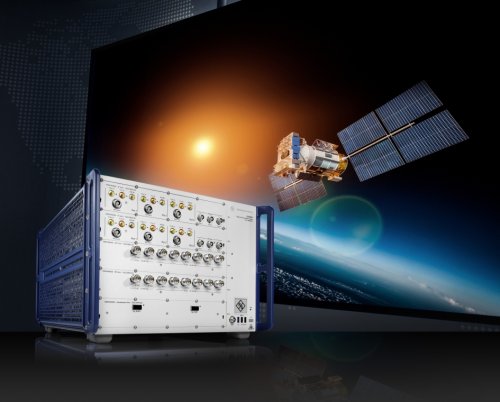
Bangalore, Jan 9: MathWorks, the leading developer of mathematical computing software, today predicted a major shift in the global connectivity landscape, with 2026 expected to be the first year when satellite and 5G networks will start functioning as a unified system, rather than parallel infrastructures. The company said it expects hybrid satellite-5G connectivity to move from pilot projects into real-world deployment with 3GPP Release 17 and 18, enabling deeper integration of Non-Terrestrial Networks (NTN) and Terrestrial Networks (TN). This convergence is expected to unlock a new generation of resilient, globally accessible communication services, reshaping applications in mobility, public safety, IoT, and remote connectivity.

The 3GPP Release 17 standard provides a baseline for NTN-TN interoperability, specifying reliability and latency parameters. Release 18 expands support for NTN-IoT and higher frequency bands, which are critical for scalable, high-throughput architectures.

“2026 is going to mark the moment when satellite links start behaving like a natural extension of existing 5G networks,” said Mike McLernon, Principal Technical Marketing Engineer, MathWorks. “For engineers, this means building systems that can operate seamlessly across sky and ground with critical simulation-led design.”

India is a key market poised to accelerate NTN-TN adoption. With operators exploring space-based coverage for rural regions and emergency communications, the country is expected to play a central role in bringing hybrid connectivity to scale.

This shift will introduce new design challenges for telecom R&D teams, ranging from satellite-cell handovers and multi-band transceiver design to high-mobility user scenarios and real-time coordination between ground and space systems. As telcos race to deliver direct-to-device satellite services, hybrid networks will demand more complex testing, simulation, and system-level validation.

“NTNs will not be replacing TNs; rather, they will be augmenting them, forming a hybrid ecosystem that will define the next generation of global wireless connectivity,” said McLernon. “A major technical focus for wireless engineers is to ensure reliable transitions between satellite and terrestrial links.”

Interoperability between NTNs and TNs is paramount, as handover management and resource coordination will ultimately determine the success of the overall system design. For the RF community, the emergence of NTN-TN networks also signals a growing need for flexible, multi-band transceivers and robust channel modeling across variable propagation environments.