• Bhubaneswar India
  • Contact+ 91-9938772605
  • Mon - Sat : 10:00AM - 6:00PM

Category: technology

Sennheiser Unveils DeviceHub, Cloud-Based Platform for Smarter AV Management

India, Feb 19: Sennheiser today announced the launch of DeviceHub, a secure, cloud-based platform that gives organisations centralised visibility and control of their Sennheiser devices from anywhere in the world. Following extensive internal testing and a private beta phase, DeviceHub is now publicly available in beta, starting with support for TeamConnect Bar Solutions.
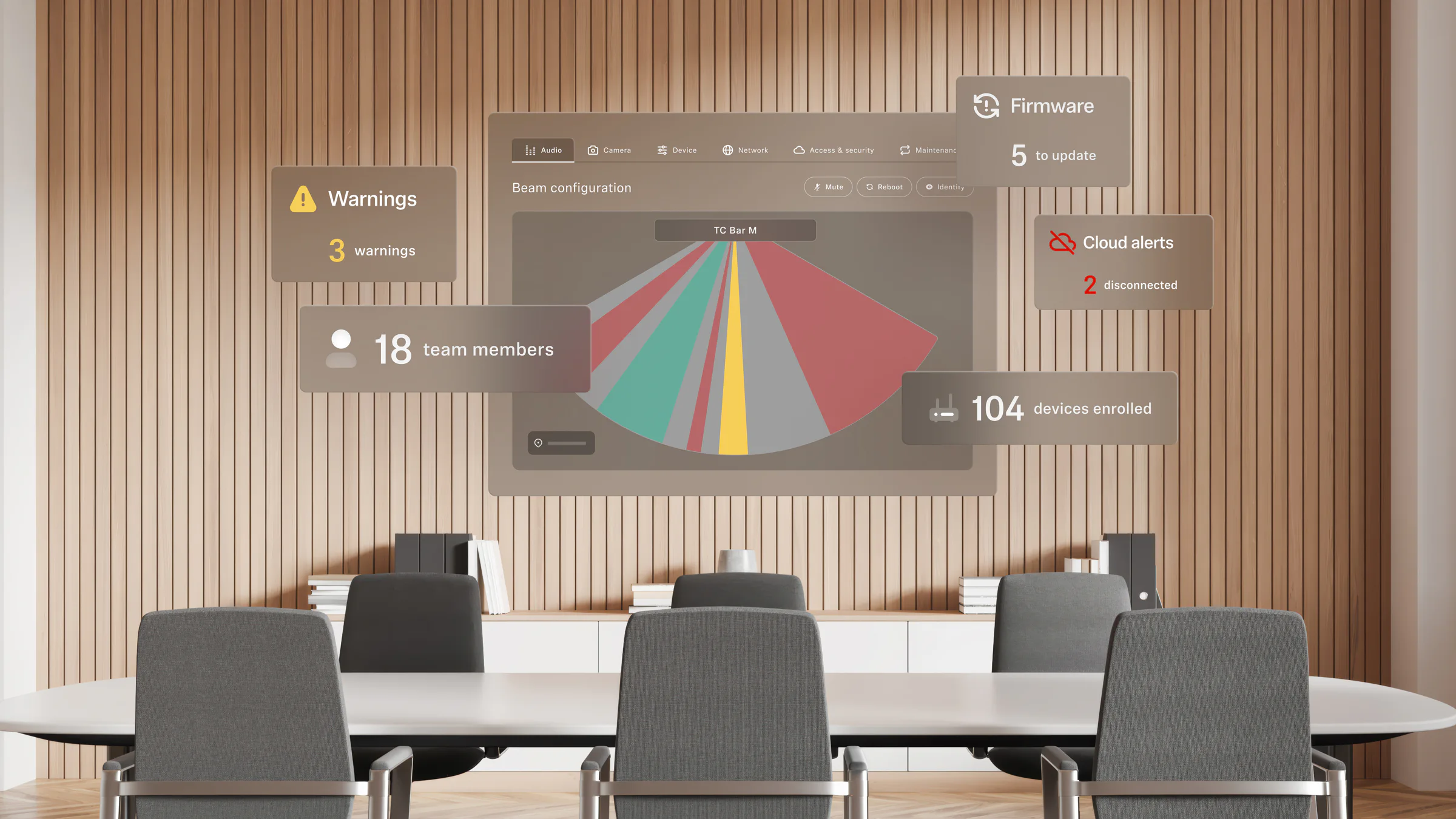
Aligned with Sennheiser’s mission to make collaboration and learning easier, DeviceHub combines remote monitoring, clear oversight, and secure role-based access into one browser-based environment. The launch follows the platform’s initial announcement at InfoComm US in June 2025, marking the next step in a broader DeviceHub roadmap, with additional Sennheiser devices gaining compatibility throughout 2026.

“DeviceHub represents a major step forward in how customers manage their Sennheiser devices,”

said Iain Horrocks, Product Marketing Manager, Software & Security, Sennheiser.

“By bringing secure, cloud-based control to the entire ecosystem, we’re giving IT and AV teams the tools they need to work more efficiently, collaborate more effectively, and support better learning and meeting experiences…and this is just the beginning.”

As a single cloud-based platform, DeviceHub makes management of networked Sennheiser devices accessible through any browser. Real-time monitoring, diagnostics, and alerts provide clear insight into device status and performance, helping teams act before issues disrupt meetings, classes, or collaboration spaces, whether on site or remotely. For IT personnel, DeviceHub simplifies management at scale by organizing devices by room, building, campus, or region in a structure that mirrors real-world environments. This provides a clear view of every space from a single platform, allowing teams to navigate between locations easily, view devices in context, and understand system health at a glance, from a handful of rooms to global estates.

The platform enables teams to collaborate securely across an organization through role-based access, ensuring technicians, administrators, and integrators see and control only what they need, with access limited to the locations and systems relevant to their responsibilities. Support for modern authentication methods reinforces secure collaboration while keeping responsibilities clearly defined, workflows streamlined, and accountability transparent. Built on Microsoft Azure, security and trust are built into DeviceHub from the start. The platform follows industry-recognised IT security standards across authentication, authorisation, encryption, and data handling. Ongoing evaluation and compliance oversight ensure DeviceHub meets the privacy and security expectations of enterprise and education environments.

Built to grow with an organisation’s needs, DeviceHub will support TeamConnect Bar Solutions at launch, with compatibility expanding across additional Sennheiser devices throughout 2026. A streamlined Local Web UI also supports efficient single-device setup through a browser, reducing software dependencies during installation. The platform will continue to evolve with new capabilities that strengthen monitoring, configuration, and collaboration across the ecosystem. Early customers have already provided feedback regarding their experience with DeviceHub, with Guillaume Amaurin, AV Specialist, Sainte-Justine Hospital, Quebec, sharing, “DeviceHub has significantly simplified the management of our infrastructure. A single configuration is enough to onboard a new device, making the onboarding process fast and frictionless. The portal is easy to access and is used daily by the entire team to configure the bars and monitor their usage, wherever we are.”

Alain Lamontagne IT Specialist, Sainte-Justine Hospital, Quebec, added,

“Compared to the previous method based on Cockpit, which was limited to a single computer and required the bars to be re-added whenever the machine changed, DeviceHub represents a major gain in both time and flexibility. We are looking forward to being able to add more devices synchronized with the portal.”


Netcore Honoured in G2’s 2026 Best Software Awards, Cementing Martech Leadership in APAC & India

Mumbai, Feb 19: Netcore a global leader in Agentic Marketing, today announced that it has been recognised on the 2026 Best Software Awards by G2, earning a place on the Best of APAC Software List and Best of India Software List.

The G2 Best Software Awards rank the world’s leading software companies and products based on authentic, timely reviews from real users. With over 2 million verified reviews across categories, G2’s annual lists are widely regarded as one of the most trusted buyer-led recognitions in the software industry.

Netcore’s inclusion in the APAC and India lists reflects strong customer validation across enterprise marketing teams using its Agentic Marketing platform to drive customer engagement, retention, and revenue growth.

Recognition Backed by Customer Voice

Unlike jury-based or nomination-led awards, G2 rankings are driven entirely by verified user feedback, product satisfaction scores, and market presence data. For B2B buyers evaluating technology partners, G2 recognition often serves as a key validation point during the shortlist and vendor selection stages.

“This recognition is especially meaningful because it comes directly from our customers,”

Rajesh Jain, Founder & MD, Netcore Cloud.

As marketing moves toward more autonomous, AI-driven decision-making, our focus has remained clear to deliver measurable business outcomes. Being featured on G2’s Best Software list for APAC and India validates the impact our customers are seeing across engagement, personalisation, and retention.”

Strengthening Global Trust in Agentic Marketing

Netcore has been advancing its vision of agentic marketing systems where agents evaluate context, intent, and orchestrate outcomes in real time to drive the next best action across channels. This recognition further strengthens the company’s positioning among enterprise brands seeking scalable, outcome-focused marketing technology.

With enterprises increasingly relying on peer validation platforms during procurement cycles, the G2 Best Software badge enhances Netcore’s credibility across competitive evaluations, RFP processes, and AI-led discovery environments.

As enterprise marketing shifts toward autonomous, AI-driven systems, trust and proven outcomes are becoming the ultimate differentiators. Netcore’s recognition on G2’s 2026 Best Software Awards signals strong customer confidence in its platform and vision. Leading global and regional brands such as Crocs, Bajaj Allianz, and Hero MotoCorp are already leveraging Netcore’s Agentic marketing capabilities to drive deeper engagement, stronger retention, and measurable revenue impact. The company will continue investing in innovation, customer success, and agentic marketing systems that help brands move beyond campaigns toward intelligent, continuously optimising growth engines built for long-term profitability.

Nihilent Founder L.C. Singh Receives VASVIK Award for AI Innovation

New Delhi, Feb 19: In a milestone moment for the future of responsible, human-centred technology, Mr. Lal Chandra Singh, Founder and Executive Chairman of Nihilent, Pune, has received the prestigious VASVIK Industrial Research Award (2025) in Information & Communication Technology. The 51st Annual Industrial Research Awards, hosted by Vividhlaxi Audyogik Samshodhan Vikas Kendra (VASVIK) at B. J. Hall, Mumbai, celebrated Indian scientists who have made extraordinary contributions to national prosperity. The ceremony was graced by Chief Guests BK Radhika Didi and Lord Dr. Frank Mentrup, Mayor of Karlsruhe, Germany, alongside distinguished leaders including Dr. Mohan I. Patel and Prof. M. M. Sharma.

This recognition acknowledges Mr. Singh’s sustained intellectual leadership in developing human-centred frameworks across technology and organisational systems. Over the years, he has created proprietary models such as MC³, a patented change management tool; 14Signals™, a structured framework for evaluating customer perception, experience, and value association; and PROLICY-D, a design thinking-led holistic product development framework that integrates human-centric principles into the development lifecycle. Building on this foundation of structured, human-centred thinking, his latest breakthrough, Emoscape, has emerged as a defining advancement in medical-grade Emotion AI.

Speaking on the occasion, Mr. L.C. Singh, Founder and Executive Chairman of Nihilent Ltd., said,

“I am deeply honoured to receive the VASVIK Industrial Research Award. This recognition belongs to the entire team at Nihilent, who believed in the vision of Emoscape. Our goal has always been to move beyond data processing and leverage AI to better understand human emotions. I extend my heartfelt congratulations to each recipient for their dedication, perseverance and invaluable contributions to the nation. I sincerely thank VASVIK for underscoring the importance of responsible and ethically driven innovation in the ICT sector”.

Emoscape is a medical-grade Emotion AI platform that detects and calibrates emotional states through a precise one-minute scan, analysing subtle upper-body micro-movements using a standard web camera. By translating these micro-movement patterns into a structured emotional profile, Emoscape introduces an objective and measurable layer to understanding emotional dynamics across healthcare, sports, education, insurance, marketing, corporate ecosystems and more.

At its core, Emoscape is grounded in the nine classical emotional archetypes articulated in the Natyashastra—the ancient Indian treatise on human behaviour and performance. Using three-dimensional motion capture techniques and advanced analytical algorithms, it maps fine-grained body dynamics onto this framework with clinical-grade precision, an approach that has been strengthened through recent peer-reviewed academic publication and continued research.

By bringing together classical behavioural insight with modern Emotion AI, Emoscape reflects Nihilent’s broader philosophy of elevating emotion from abstraction to accountability. It envisions a world where emotion is no longer dismissed as subjective, but recognised as a structured force shaping outcomes across industries, institutions, and societies.

Established in 1973, VASVIK is a non-profit organisation committed to promoting excellence in science and technology in India. Over the decades, it has honoured more than 450 Indian scientists whose research and innovation have directly contributed to national prosperity. The awardees are selected through a rigorous evaluation process led by expert committees and the Board of Advisors, ensuring recognition of individuals whose work significantly impacts industrial growth and societal development.

This recognition marks a defining moment for Nihilent and reinforces India’s growing leadership in responsible and human-centric emotion-AI innovation.

Rackspace and Palantir Partner to Run Foundry and AIP in Production with Governed Managed Operations

Customers to gain accelerated AI-driven business outcomes from implementation expertise, cloud hosting, and data migration support in a governed operating model

 San Antonio, TX – Feb 19– Rackspace Technology® (NASDAQ: RXT), a hybrid multicloud and AI solutions company, and Palantir Technologies Inc. (NASDAQ: PLTR), a global leader in operational artificial intelligence platforms, today announced a strategic partnership to help enterprises rapidly deploy and operate Palantir’s Foundry and Artificial Intelligence Platform (AIP) in production to achieve measurable business outcomes.

 Through this partnership, Rackspace’s governed operating model will provide consistent security, operating controls and compliance from edge to core to cloud enabling customers to deploy AI use cases with Palantir in production in weeks or months versus months or years. The companies are also collaborating to run Palantir software in Rackspace’s Private Cloud and UK Sovereign data centers. This is especially critical for regulated industries where AI deployments must meet strict data sovereignty and compliance requirements. 

 Organizations struggle to extract business value from AI and data platforms because deploying and operating these systems at scale requires specialized expertise they often don’t have in-house. As Palantir’s strategic partner in data migration and global implementation services, Rackspace will help customers prioritize their most high-impact business problems, then deliver implementation, including data readiness, hosting, and ongoing managed operations of Palantir’s platform to realize outcomes. As part of this collaboration, Rackspace has 30 Palantir-trained engineers to provide data migration and apply a forward deployed approach to solving high impact customer problems and is on track to scale to over 250 in the next 12 months.

 “Organizations need AI that works in production, not just in demos,” said Gajen Kandiah, CEO of Rackspace Technology. “Palantir’s platform, combined with Rackspace’s governed cloud operations and our shared forward deployed engineering approach, enables customers to accelerate time to value and drive competitive business impact with governance and security. This is especially important in regulated industries.”

 The partnership combines Rackspace’s 25 years of experience managing mission-critical enterprise workloads across hybrid environments with Palantir’s decision-intelligence platform. Customers can benefit from a turnkey deployment model designed to reduce risk and operational burdens and accelerates time to value. For regulated and data-sensitive organizations, this partnership aims to deliver greater confidence to deploy advanced AI capabilities in a private cloud environment that meets sovereignty, security, and residency requirements.

 “Organizations that adopt our AI Operating Systems fundamentally change their unit economics. In the context of migrating complex data environments, Palantir AIP is taking completion timelines from years to days. Rackspace will help our customers accelerate their pace of adoption and as a result, lead their respective industries,” said Sameer Kirtane, Head of US Commercial at Palantir.

 Integrated Service Delivery Across the Stack

Customers want a consistent way to deploy, govern, and operate AI across their data environments, with accountability and measurable outcomes. Unlike point solutions that require customers to manage infrastructure, data pipelines, and AI operations separately, this partnership is aimed at providing end-to-end infrastructure hosting, data migration, implementation services and ongoing managed operations as an integrated service.


CPDL Refunds Meter Rental Charges to 2 Lakh Consumers Following Regulator’s Directive

Chandigarh, Feb 18 : In compliance with the directions of the Joint Electricity Regulatory Commission and the Order of the Electricity Ombudsman, Chandigarh Power Distribution Limited has credited refunds of meter rental charges to about two-lakh consumers. 

The meter rental charges had been abolished by Hon’ble JERC; however, the same continued to be levied by the Electricity Wing of the Engineering Department Chandigarh between April 1, 2023, and November 5, 2024. As a result, some consumers approached the Consumer Grievance Redressal Forum in November 2024, which directed EWEDC to refund these meter rental charges. 

As the directions were not complied with, the matter was escalated by the consumers to the Ombudsman. Subsequently, suo motu proceedings were initiated by the Joint Electricity Regulatory Commission 

EWEDC was responsible for refunding the amount, while CPDL was required to pass on the credit amount to consumers after taking over electricity distribution operations on February 1, 2025. 

In compliance with the directions of the Regulatory authorities, CPDL, after receiving consumer-wise data from National Institute of Electronics and Information Technology (NIELIT), calculated the refundable amount along with applicable interest and credited it directly to the consumers’ electricity accounts. 

This large-scale transaction was made possible through CPDL’s recently implemented in-house billing system. The refund of meter rental charges has been reflected under “Meter Rental” head in recent consumer bills. 

A CPDL spokesperson stated that the company has ensured timely compliance with the Regulatory directions and remains committed to safeguarding consumer interests and maintaining transparency in billing practices.

GNA Energy Launches ‘Vidyut AI’ at AI Impact Summit Under Ministry of Power Framework

Feb, 18 :Gurgaon-headquartered GNA Energy today launched ‘Vidyut AI’ at the India AI Impact Summit. The platform has been developed as an AI-enabled intelligence layer designed to work in sync with the government’s India Energy Stack (IES) framework.The India Energy Stack is the Ministry of Power’s proposed digital public infrastructure for the electricity sector aimed at enabling seamless data exchange, transparency and innovation across the power ecosystem.

GNA Energy, a Central Electricity Regulatory Commission (CERC)-regulated over-the-counter (OTC) platform, said Vidyut AI will transform structured power-sector datasets into real-time decision support for utilities, generators, traders and regulators.The company said the platform is aimed at accelerating data-driven decision-making across the electricity value chain at a time when India’s power markets are witnessing rapid structural shifts, increasing short-term trading volumes and growing regulatory oversight.

“India’s power sector generates enormous volumes of operational and market data every day. Vidyut AI transforms this complexity into clarity. By enabling instant access to actionable intelligence, we are empowering utilities, generators and market participants to make smarter, faster decisions,”

said Sanjeev Kumar, Managing Director, GNA Energy.

According to the company, Vidyut AI bridges the gap between granular system data and boardroom-level decisions by converting raw data into automated summaries, trend analyses and downloadable reports.For distribution companies (DISCOMs) the platform provides real-time access to procurement data, deviation settlement mechanism (DSM) exposure, open access transactions and demand forecasting analytics. Power generators can track bid performance, plant dispatch patterns, clearing prices and revenue optimisation metrics. Transmission utilities and system operators can gain simplified access to congestion patterns and grid performance analytics while traders and market participants can use natural-language search to compare contracts and track price trends.Regulators and policymakers can also leverage the system for automated trend analysis and faster regulatory impact assessment, the company said.

GNA Energy stated that Vidyut AI is been built on a secure and scalable architecture suitable for enterprise-grade deployment with a strong emphasis on transparency, compliance and market efficiency.The launch comes amid a broader push for technology-led reforms in India’s power sector including digitisation of operations, enhanced market transparency and data-backed governance.GNA Energy is a CERC-regulated OTC platform focused on building next-generation digital infrastructure for India’s electricity markets with expertise spanning market design, utility operations and data management.

Catalyst X Showcases Decision Infrastructure at India AI Summit 2026

New Delhi, Feb 18: Catalyst X a decision infrastructure startup incubated under Catalyst Management Services, launched at the India AI Summit 2026 today. Catalyst X is the people-centric AI platform revolutionizing decision-making in governance, welfare, enterprise, and public systems. By weaving disparate data into an intelligence layer, it empowers governments, funders, corporations, and institutions to deliver clear, defensible decisions amid uncertainty and scale.

At a time when artificial intelligence is increasingly shaping everyday outcomes from welfare delivery and agriculture to health systems and financial access, Catalyst X enters the national discourse with a clear proposition: Decisions, Made Better. As AI adoption grows, Catalyst X emphasises the need to ensure that decisions become more accountable, inclusive, and trusted.

At the launch, Nitish Kumar, Lead, Catalyst X commented,

“Catalyst X builds and operates the intelligence layer that complex systems rely on to act early, consistently and at scale. Designed for governments, funders, corporations, and institutions operating in high-stakes environments, CX enables decision-makers to reason across large, diverse datasets, navigate complex cross-sectoral relationships, and act despite uncertainty. Rather than adding fragmented dashboards or standalone tools, it provides shared decision infrastructure that makes critical choices defensible, repeatable, and scalable across domains such as agriculture, health, climate, and finance.”

Adding to this, Prerak Shah, Co-Lead, Catalyst X said,

“As artificial intelligence rapidly shapes welfare delivery, agriculture systems, credit access, public health, climate resilience, and financial inclusion, Catalyst X focuses on the ecosystem with a distinct emphasis on improving the quality and defensibility of decisions made within complex systems.”

Alongside its launch, Catalyst X is a part of the Jan AI Andolan, a people-led call for ethical, inclusive, and accountable AI decision-making in India. As a rural-first AI movement, Jan AI Andolan focuses on building awareness, access, and practical application of AI among youth, women, farmers, and micro-entrepreneurs, ensuring that India’s AI growth is participatory and grassroots-driven.

Catalyst X is a values-led platform dedicated to enhancing decision quality and fostering public trust. The startup delivers three core capabilities: designing system-aware decision logic rooted in real societal trade-offs; deploying integrated decision layers across institutions for coherent action; and operating with ongoing governance mechanisms that learn from outcomes over time. With its debut at the India AI Summit, Catalyst X signals a new chapter in India’s AI journey, one that places decision integrity, inclusion, and public interest at the heart of technological progress.

ManageEngine Introduces Causal Intelligence and Autonomous AI to IT Operations for Faster Incident Response

Egypt, Cairo, Feb 18 – ManageEngine, a division of Zoho Corporation and a leading provider of enterprise IT management solutions, today added new causal intelligence and autonomous AI capabilities in Site24x7, its full-stack observability platform. These enhancements transform how enterprises handle outages, shifting from firefighting to autonomous resilience. By drastically reducing mean time to recovery (MTTR) and ensuring service-level agreement (SLA) compliance, Site24x7 helps IT teams safeguard the customer experience and retain trust.

Modern IT environments are increasingly fragmented across hybrid clouds, microservices, and dynamic networks, generating massive volumes of telemetry and predictive anomaly signals every second. When an incident occurs, this complexity turns troubleshooting into a needle-in-a-haystack search, often leading to prolonged downtime. IT teams struggle to correlate anomaly signals and events across these layers, delaying the critical fix to restore normalcy, jeopardizing brand reputation.

“Hybrid and cloud-native architectures have made IT operations highly interconnected, while IT managers are under constant pressure to resolve incidents quickly amid growing complexity,” said Srinivasa Raghavan, director of product management at ManageEngine. “By combining predictive anomaly detection, intelligent event correlation, service dependency context, and AI-driven causal insights, Site24x7 cuts through alert noise to show not just what is broken, but what caused it and what it impacts, helping teams identify the true fault faster and significantly reduce MTTR while minimizing service disruption.”

“Triaging and resolving incidents in hybrid environments with growing infrastructure complexity can quickly become a nightmare, especially when SLA commitments are on the line,” said Pravir Kumar Sinha, IT leader at Synechron, a global IT services company and one of the early customers to access the feature. “With Site24x7 AIOps , we’re able to filter out nearly 90% of alert noise, pinpoint issues faster, and accelerate resolution. This helps us achieve stronger SLA adherence, reduce MTTR, and ultimately deliver reliable digital experience for customers.”

The introduction of autonomous AI in Site24x7 represent a practical step toward more autonomous IT operations by analyzing observability data, reducing cognitive overload, and turning insights into clear, actionable guidance. “With MCP providing the control and governance layer, we ensure this intelligence is applied securely and within enterprise guardrails. This empowers IT leaders move toward agentic workflows with confidence, stay ahead of the AI adoption curve, and strengthen the resilience of their critical digital services,” said Raghavan.

Key capabilities include:

  • Domain-aware causal correlation with predictive anomaly detection: Detects anomalies and correlates related signals across applications, infrastructure, and networks into a single, context-rich problem—so teams can quickly understand what is connected and where to start.
  • Customizable AI Agents with governed, task-driven automation: Enables customers to create and tailor AI Agents, set approved guardrails using solution documents, and assign tasks that guide agents from analysis to guided action—making response workflows more consistent across teams.
  • MCP-enabled agentic foundation for customers: MCP provides the enabling layer for customers to build and operationalize agentic use cases on top of observability data—standardizing how agents access data, follow approved guidance, and execute tasks within enterprise-ready controls and auditability.
  • Orchestrated remediation with Qntrl: Co-ordinates downstream actions through structured workflows and repeatable runbooks, powered by Zoho’s workflow and orchestration platform Qntrl, with approvals and traceability built in to support controlled automation.

These AIOps capabilities are now available for all users in Professional and Enterprise plans.

Primus Partners Hosts AI Impact Summit 2026 on India’s Shift from User to Creator

New Delhi, Feb 18: At the AI Impact Summit 2026, Primus Partners hosted a high-level panel discussion titled “From AI User to Creator: The Next Leap of India’s AI Innovation” at Bharat Mandapam, convening leaders from government, industry and the startup ecosystem to deliberate on India’s pathway toward building indigenous and globally competitive artificial intelligence capabilities.

India has rapidly emerged as one of the world’s largest adopters of artificial intelligence, powered by the scale of its data, digital public infrastructure and enterprise digitisation. The session focused on the next strategic shift, moving beyond adoption toward developing home-grown models, infrastructure and applications aligned with domestic as well as Global South requirements. The dialogue connected research, compute, policy and enterprise execution with real deployment challenges and opportunities.

Delivering the keynote address, Shri Jitin Prasada, Hon’ble Minister of State for Electronics & IT and Commerce & Industry, emphasised the urgency of preparing India’s talent ecosystem for the next phase of AI. He stated, “India currently enjoyed a significant demographic and educational advantage, but this window would not remain open indefinitely as other countries rapidly built their AI capabilities. A holistic approach to AI education, one that equipped students with relevant skills while empowering teachers, researchers and institutions, would be critical to ensuring India remained globally competitive in AI over the next five to ten years.”

He further noted,

“The AI Impact Summit marked an important milestone in India’s technological transformation journey. The focus must go beyond expanding access toward making AI scalable and impactful, while bridging the digital divide so that the AI revolution creates inclusive growth rather than ‘haves’ and ‘have-nots.’”

During the discussion, participants highlighted the importance of scalable innovation models, startup enablement and responsible AI governance.

Santosh Vishwanathan observed, “India’s success had always come from its ability to scale technology and innovation at population level. The need of the hour is a ‘Frugal AI’ approach, reimagining digital infrastructure and applications so AI could be efficient, affordable and widely deployable.”

Pratyush Kumar said,

“The first priority should be making AI accessible to everyone, followed by enabling deep-tech innovation and AI startups that could build on that foundation.”

Navrina Singh remarked,

“India’s opportunity lay in leading with trustworthy AI, and governance thinking needed to be embedded from the outset so that responsible AI systems were built, not retrofitted.”

The discussion examined India’s readiness to build indigenous AI systems, identified gaps across talent, infrastructure and data ecosystems, and highlighted sectoral opportunities where the country can lead globally including healthcare, agriculture, governance, language technologies and enterprise use cases. The session generated practical insights on enabling indigenous innovation and strengthening India’s transition from an AI user to an AI creator.