• Bhubaneswar India
  • Contact+ 91-9938772605
  • Mon - Sat : 10:00AM - 6:00PM

Archive: May 2, 2022

Joint Workshop by UGC and AICTE Leadership and Key Officers on Universal Human Values

Joint Workshop by UGC and AICTE Leadership and Key Officers on Universal Human Values

UGC top officials and their team join AICTE for “Incorporating Universal Human Values in Education”. The one-day workshop has been organised by AICTE for all the key personnel of UGC on 30 April 2022. The programme started with a formal inauguration by higher officials of UGC and AICTE.

The apex body of higher education, UGC, is serious not only to improve the education, but also for the holistic development of the students by inculcating Universal Human Values in Education leading to overall societal change ultimately bringing the glory of Bharat as Vishwa Guru.

It was discussed that there is a need for civilizational change and for the same, a holistic, humane world vision is essential. For value-based living, value-based education is required. Starting from Value education to Value-based education and finally, Value-based living is the requirement of the hour. It was emphasised that this change shall be brought in all the stakeholders – Teachers and students, Academic institutions and policymakers, Parents and families, and ultimately in whole society with its systems.

UGC and AICTE have taken the initiative to bring this change through education. This is also aligned with the NEP 2020.

The workshop addressed the issues of “How the development of a holistic, human world-vision can be ensured?”, and “How value-based education can be ensured?”. AICTE is already doing this work through Universal Human Values (UHV), i.e., the UHV-based Student Induction Program (SIP), and other courses at higher levels. Historically, over the past 17+ years, this approach has been naturally accepted and extensively experimented with encouraging results – starting from 1 institution in 2005 to 1 university in 2009, to 40+ universities by 2017, over 10,000 professional colleges from 2017 to date.

Now, in 2022, UGC has accepted to work together on this, and therefore, a strong possibility of experimenting it in the entire higher education in the Nation.

This is a breakthrough in the education system which will bring Value-based living to society and nature.

The views were shared by UGC Chairman, Prof. Mamidala Jagadesh Kumar, and AICTE Chairman, Prof. Anil D Sahsrabuddhe.

The commitments of the participants were also been shared along with the future possibilities of collaborative efforts by the two apex bodies UGC and AICTE.

On this occasion, Prof M. P. Poonia, Vice-Chairman, AICTE, Prof. Rajiv Kumar Member Secretary, AICTE, Prof. Rajnish Jain, Secretary and CVO, UGC, Dr Archana Thakur, Joint Secretary, UGC, Dr. Diksha Rajput, Deputy Secretary, UGC, Prof. Rajneesh Arora, Chairman, NCCIP, Prof. HD Charan, Chairman, NC-UHV, Prof. SK Somani, VC, Oriental University, Indore, Sh. Dhirendra Chaturvedi, Additional Director, DPI, School Education Department, Govt. of Madhya Pradesh, Prof. GP Bagaria, Facilitator UHV, Shri Bhanu Pratap Singh, Coordinator, VE Cell, AKTU, and many academicians were also present.
Heartfulness Meditation

38,000 practitioners physically participate every day 123rd Birth Anniversary Celebrations of Heartfulness Founder

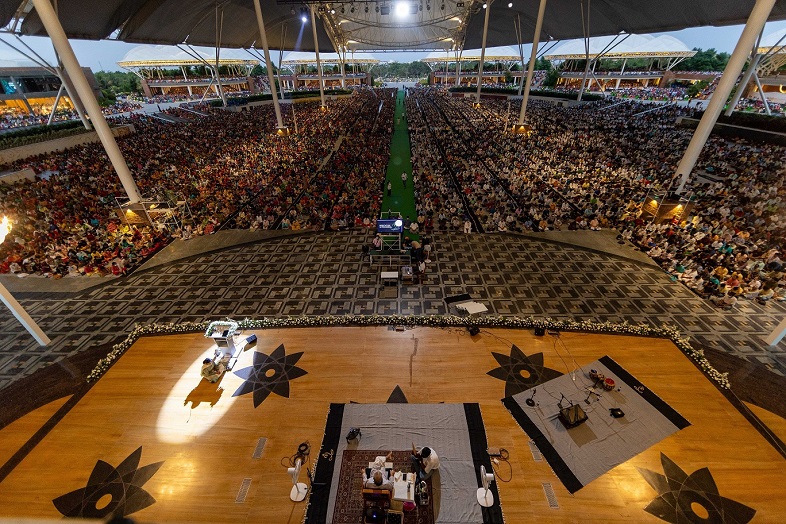
Mumbai, May 2022: A three-day celebrations marking the 123rd birth anniversary of the second Guide of Heartfulness Shri Ram Chandra ji from Shahjahanpur, reverentially called ‘Babuji Maharaj’ was carried out in full swing at the world’s largest meditation centre at Kanha Shanti Vanam, the headquarters of Heartfulness Meditation in the outskirts of Hyderabad. Babuji Maharaj founded Shri Ram Chandra Mission in 1945 to spread the simplistic means of meditation called Sahaj Marg, which through the years is being practiced by the spiritual seekers from across the 160 countries worldwide. Sahaj Marg is also known as Heartfulness Meditation.

This unique heart-based meditative practise is made effective through spiritual transmission or ‘Pranahuti’ wherein the living Guide introduces his subtlest energy of the heart into that of the seeker for inner development. Babuji formalised this meditation practise to be spread through Shri Ram Chandra Mission. Born on 30th of April 1899, in Shahjahanpur (Uttar Pradesh), Babuji attained mahasamadhi on 19th of April 1983. From an early age, he displayed a yearning for spiritual realization. In June 1922, at the age of twenty-two, he met Shri Ram Chandra ji of Fatehgarh, also known as Lalaji Maharaj, whom he accepted as his guru. Lalaji at once identified Babuji as the person who had appeared in his dream years earlier to be his successor. In 1972, he took the Heartfulness method of meditation across the length and breadth of India beyond the limited circles to Europe and America and popularised it in those countries as well.

As part of the 123rd birth anniversary of Babuji, this year practitioners from across 160 countries gathered both physically and virtually to join the celebrations held between 29 April – 1 May 2022. Over 38,000 participants from 62 countries were present at Kanha Shanti Vanam to meditate at the world’s largest meditation centre. Over hundred thousand of the practitioners joined the event virtually.

Babuji’s original works in yogic science have led to books that have brought out the true essence of Yoga in the current times. Recently, the successor of Babuji and the current Guide of Heartfulness Shri Kamlesh Patel, affectionately called Daaji, also launched a book called Authentic Yoga which compounds Shri P. Y. Deshpande’s Patanjali Yoga Sutras. Kanha Shanti Vanam being the headquarters of Heartfulness can host 1,00,000 meditators at one time.

Commenting on the occasion Shri Kamlesh Patel (Daaji), the Guide of Heartfulness said, “ Babuji’s method of subtle meditative practice has been particularly motivating because of the ease of its practice. He had set into motion a form of meditation that draws people from across cultures, religions and backgrounds enveloping all in the spirit of modern humanity. Babuji simplified the otherwise complex yogic process bringing it within the reach of the common man. One does not have to take to austere rituals to understand the true meaning of yogic science and Babuji explained it beautifully. He was to yoga what Einstein was to physics, much akin to being instrumental in path-breaking knowledge.

The spiritual legacy of Babuji is in the fact that he will be looked up to for generations to come by seekers who wish to evolve spiritually. Each passing year we see practitioners joining here with enormous enthusiasm. Even during the pandemic times people were willing to join here. We are certainly blessed to be able join every year under all circumstances to honour Babuji’s legacy and celebrate the treasure-trove of knowledge he left for us to reap.”

The grand virtual celebration included a series of 6 group meditation sessions across 3 days, filling all hearts with love and spiritual charge were also made accessible online at the following link: Live at www.hfn.link/Babuji.

The three days of celebrations concluded with unwinding of minds and rejuvenation of spirits.

Hon'ble Justice Swatanter Kumar at AUH

Amity University Haryana organizes a National Seminar on “Revisiting Women-Centric Laws From The Eyes Of The Judiciary In The North-West Region

To educate the participants about the role that Judiciary plays in empowering women, to enhance the knowledge of the participants regarding the challenges and hurdles faced by women, to sensitize the participants vis-à-vis reproductive rights of women and to deliberate, discuss and elucidate upon the existing legislations, policies and laws to achieve women empowerment, Amity Law School, Amity University Haryana organised a one-day National Seminar, on the topic “Revisiting Women-Centric Laws From The Eyes Of The Judiciary In The North-West Region” on 29th April 2022.

While addressing the gathering Hon’ble Mr Justice Swatanter Kumar said, “Laws alone cannot be sufficient for ensuring respect for women and gender equality. We need to begin at home, teach our children, Education plays an important role in this regard. The theme of the Seminar is very well thought of and outcome of events like this can play an important role in ensuring respect and dignity for women which they so richly deserve. He concluded by saying that “A woman is like a full circle, having within her the power to create and nurture”.

Prof P B Sharma, Vice Chancellor, Amity University Haryana in his welcome address said, “Matra Devo Bhava Pitro Devo Bhava”. Both the genders are equal and cordial relationship become the hall mark of our lives. He also said that Atma Sayyam – Self-discipline is also important.

Prof Padmakali Banerjee, Pro Vice Chancellor, Amity University Haryana in his address quoted words from Swami Vivekanand and said that “If India needs to prosper women need to grow. She further added that Amity believes in gender equality.”

While delivering Vote of Thanks Maj Gen P K Sharma (Retd), Prof & Director, Amity Law School said, Indian Judiciary is playing an important role in ensuring that not only the women centric laws are implemented properly but it has also been their endeavour to lay guidelines in this behalf.

The discussion is divided into four sub-themes, i.e., Role of Judiciary in Empowering Women; Challenges and Hurdles in Women Empowerment; Reproductive Technologies and Rights of Women and Legislation, Policies and Law to Achieve Women Empowerment.

Dr Ravi Manuja, Registrar, Rear Admiral Kishan K Pandey (Retd), HR Director, Maj Gen G S Bal (Retd), DSW, Sq Ldr SK Singh (Retd), Director Administration, Dr Vijaypal Singh, Ms Asha Meena, Ms Monica Yadav, Mr Pranshul Pathak, Mr Atul Jain and Dr Ajay Bhatt were also present with faculty, staff and students.

entrepreneur

Has the pandemic led to new opportunities to create Unicorns

India presently has 83 Unicorns and 50% of them were created just last year in 2021. The year witnessed exponential growth with 42 Unicorns being created at a time when the world was fighting a wave of the pandemic and had just recovered from a previous wave. India has, already, catapulted to become the world’s third-largest startup hub and with the rate of emergence of the Unicorns, it is poised to take the global startup ecosystem by a storm.

When the term, Unicorn, was first introduced by Aileen Lee in 2013, the world could only show a collective meagre number of 39 exclusive startups that had attained this status. The term denoted an elite club that very few had access to! Today, as we speak, India has become a Unicorn hotbed with the numbers in 2021 tripling from 11 Unicorns coming into being the year before in 2020.

It is imperative to understand what caused the bolstering of the sector enough to drive high-scale valuations when businesses across the world were finding it difficult, even to sustain.

Digital adoption 

One of the most critical reasons was that the pandemic made people realize the criticality of technology and consequently, accelerated the pace of digital adoption in India. Startups are usually incepted with the idea of providing a bridge that matches the supply and demand gaps. They have the unique ability to solve existing problems by leveraging state-of-the-art technology as well as create new categories, products, and services. Technology has been at the core of startups across sectors – Fintech, Insuretech, Cleantech, Edutech, Foodtech, Logistics, eCommerce, Social Commerce, Proptech, Agritech, Biotech, the list is endless.

Both retail and institutional customers now started relying more on technology to stay connected in an otherwise disconnected world. Retail merchants started leveraging digital wallet services and customers were increasingly shopping online for all their needs – big or small. The retail audience did not prefer stepping out any longer and food, groceries, toiletries, cosmetics, medicine, and apparel were all ordered online. Sensing the demand, the supply side immediately witnessed an uptick.

Larger marketplace without boundaries 

The increased adoption of technology prompted by the pandemic, coupled with the access to affordable data and smartphone proliferation in India has led to the boom of startups mushrooming the length and breadth of the country. Startups from tier 2 and 3 cities, that did not have access to a large audience base could suddenly leverage the lack of boundaries created by the digital world. Similarly, the startup from metro cities also started gaining foothold beyond the metros. This encouraged them to explore newer markets and target audiences, leading to their expansion in toplines, bottomlines, and overall balance sheets.

These startups know the on-ground reality of the challenges faced by people or businesses from marginalized markets. Unfortunately, they continued to remain underserved despite the fact that a majority of our country’s populace comes from these territories. There lay an immense blue-ocean opportunity that these startups could capitalize on and this helped them enhance their marketshare as well as market valuation, especially during the pandemic.

Increased investor interest and mentorship 

Gone are the days when the investors would wait for an organization to succeed and then invest their money, time, and energy in it. Today, there has been significant growth in the number of early-stage institutional investors who wish to see capital growth over the life cycle of the business. Furthermore, these investors are helping in democratizing investments by guiding retail investors including HNIs and those from tier 2 and 3 markets on lucrative deals.

With the funding raised, investors can now gain access to all elements of the underlying infrastructure that helps in creating a robust ecosystem. Resources – capital, human, technological, operational – can now be utilized for optimum outcomes. Similarly, the startups get access to a large group for networking to scale up. Most importantly, investors can help mentor startups at every stage to help them avoid pitfalls and build on their strengths.

Opening up the startups to the public through uber-successful IPOs is also aiding in the scaling up of these businesses to achieve the Unicorn status.

Today, an increasing number of Unicorns are transforming the way we visualize the world, by making it more empowering and acting as an enabler. They also force existing businesses to reimagine their models, providing best-in-class solutions. Overall, this benefits the end consumers who now have access to the world at their fingertips. With increased investor interest, prompting the growth of Unicorns in India, we can estimate the landscape to expand at a breakneck speed and accelerate India towards a $ 5 trillion economy.

M3M Foundation organizes awareness program for construction workers to help them take benefits of govt schemes (

M3M Foundation organizes awareness program for construction workers to help them take benefits of Govt schemes

Gurugram, May 2022: On the occasion of International Labour Day, M3M Foundation organized an awareness program to make construction workers aware of the benefits of the schemes of the central and state governments. In this program, information was given about the benefits of Aadhar card, PAN card, ration card, bank account, labor card, family card and government schemes for pregnant women, and others. The event was organized at iMpower Resource Center in Sector 67 in which over 100 women construction workers participated. On this occasion, Dr. Aishwarya Mahajan, President, M3M Foundation, team of iMpower and Jan Sahas were present.

In the next 6 months under the iMpower program, about 1000 families will be linked to various schemes and those who do not have Aadhar card, ration card, bank account, labor card, PAN card etc. will be helped in getting them to help them avail benefits of government schemes.

On this occasion, Dr. Payal Kanodia, Trustee, M3M Foundation said, “Government is coming up with many schemes for the construction workers whose benefits they are getting, but there are some workers who are not aware about the scheme. In such a situation, being a responsible organization, we are making the construction workers aware of government schemes through sessions and are also helping them where necessary help is needed.”

Sita, a female labourer from Bihar said,” I do not even have an Aadhar card and necessary documents. Today through this program I learned that all these things have great importance. Once the card is made, after that I will also be able to take advantage of all the schemes of the government and at the same time I will also make more women aware so that they can also take advantage. I thank M3M Foundation for running such awareness programmes.”

M3M Foundation is the philanthropic arm of M3M Group; working towards bringing equitable development that helps in attaining a brighter India. The Foundation envisions growth and development for all through support to government initiatives and proactive steps in the developmental regime. The Foundation is determined to bring development across all sections of society by undertaking projects that ensure holistic growth. The Foundation’s prime focus is on health, education, disaster management, and socio-economic development to transform a rural

Toyota Kirloskar Motor registers 66% growth in wholesales in September 2022

Toyota Kirloskar Motor wholesales 15,085 units in the month of April thereby registering a growth of 57 Percent

Bangalore, May 2022: TKM today announced that the company sold a total of 15,085 units in the month of April 2022, thereby registering a growth of 57% when compared to its wholesales in the corresponding period last year. For reference, TKM had sold 9600 units in April 2021. Last month also witnessed TKM achieving a significant milestone of clocking cumulative wholesales of over two million units since inception.

Expressing his delight, Mr. Atul Sood, Associate Vice President, Sales, and Strategic Marketing, TKM said, “Demand continues to peak in the new Financial year, as we close the month of April with an overall growth of 57% over wholesales in April 2021. Along with the Crysta, Fortuner and the Legender, the Camry Hybrid too has received very encouraging booking orders. The response to the ‘Cool new Glanza’ has also been Awesome and has done very well since the beginning of its deliveries starting March this year, right from Tier I cities to rural markets”.

Overview of TKM

Company name Toyota Kirloskar Motor Private Limited
Equity participation TMC: 89%, Kirloskar Systems Limited (Mr. Vikram S. Kirloskar): 11%
Number of employees Approx. 6,000
Land area Approx. 432 acres (approx.1,700,000 m2)
Building area 74,000 m2
Total Installed Production capacity Up to 3,10,000 units

Overview of TKM 1st Plant:

Established October 1997 (start of production: December 1999)
Location Bidadi
Products Innova, Fortuner manufactured in India. Vellfire imported as CBU
Installed Production capacity Up to 1,00,000 units

Overview of TKM 2nd Plant:

Start of Production December 2010
Location On the site of Toyota Kirloskar Motor Private Limited, Bidadi
Products Toyota Camry Hybrid
Installed Production capacity Up to 2,10,000 units

T.E.A.M (a student-led NGO) in association with Jaipur Foot organized a limb donation drive

T.E.A.M (a student-led NGO) in association with Jaipur Foot organized a limb donation drive

Mumbai, May 2022: T.E.A.M a student-led NGO started in 2015 and this year along with 11 students from various well-known schools across Mumbai organized an iconic prosthetic limb donation drive in their new initiative, “Gift a Foot” for over 150 people living below the poverty line from various parts across Maharashtra. T.E.AM joined hands with Jaipur Foot and Bhagwan Mahaveer Viklang Sahayta Samiti (the world’s largest organization for the disabled) to enable this noble cause at the Orthopedic department at KEM Hospital, Parel.

An eye-watering moment, was when over 150 people gathered at the KEM hospital where they walked inside with a crippled leg and walked out with joy and hope of a better future with a prosthetic leg. The stay and travel arrangements for these people were also covered under this donation drive.

Patients come with the question if they will ever be able to walk or not. The staff strengthens their mental weakness and motivates them to have a never give up attitude and encourages them to use the prosthetic limb. With the prosthetic limb, an individual can comfortably do their chores for over 10 hours. The cost of each leg comes up to INR 10,000/- and the members of T.E.A.M managed to gather a huge sum of approximately INR 14 Lacs to facilitate a better future for these people with disabilities.

Squatting is a very integral part of life, especially in rural India. Various important day-to-day activities include squatting, one classic example would be the usage of Indianised toilets in rural areas. This leg is designed in such a way that it can facilitate activities such as squatting for the usage of Indian toilets and riding a bike, as well as farming activities.

The co-captains for this activity are Arhaan Lulla (Grade 12 from Bombay Scottish School) and Shloka Shah (Grade 11 from Jamnabai Narsee International School). The other praise-worthy students are Rishaan Lulla (Grade 8), Nishhay Nichani (Grade 10), Samara Masand (Grade 11), Aleya Masand (Grade 11), Yuvraj Wadhwani (Grade 11 from Bombay Scottish School), Shanaya Thadani (Grade 8 from Jamnabai Narsee International School), Divya Karnani (Grade 10 from Dhirubhai Ambani International School), Vivaan Sharma (Grade 11 from Hillspring International school), Anandi Sanghi (Grade 12 from The Cathedral and John Connon School) and Shanaya Thadani (Grade 8 from Jamnabai Narsee International School). The current volunteers at T.E.A.M are enabling and mentoring more kids to be part of this initiative and further help more people across the nation.

The T.E.A.M mentorship program has taken off this year with all founder members mentioning the new and current lot of students. Aditi Raheja, Aditya Shah, Ishana Jasani, Shiv Karnani, Aarav Nichani, and Gayatri Sanghi are the founder members who are at different universities around the world but take up mentorship to guide the new lot.

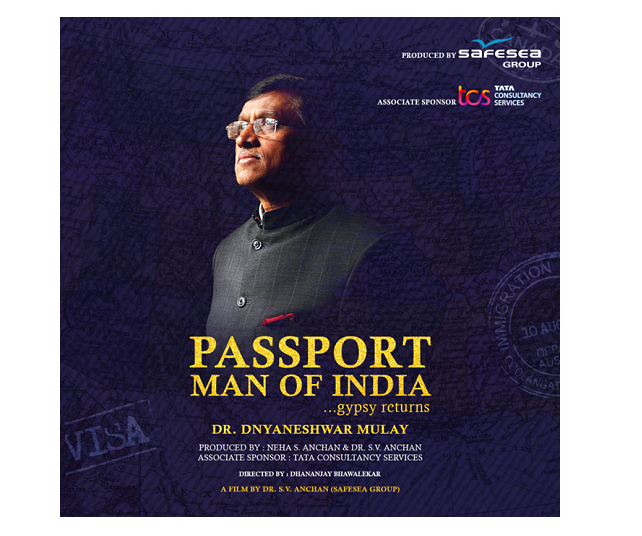
Premiere Show of film Passport Man of India based on Dr.Dnyaneshwar Mulay’s life...

Premiere Show of film Passport Man of India based on Dr.Dnyaneshwar Mulay’s life…

Documentary Film – PASSPORT MAN OF INDIA based on Dr. Dnyaneshwar Mulay’s life. He made passport accessible to everyone who wanted it.

New Delhi, May 2022: The remarkable global journey of an IFS officer, Dr. Dnyaneshwar Mulay, Member, NHRC, was earlier documented in the film ‘Gypsy’ , which received wide recognition in India and abroad. Post-retirement his further work and contribution is filmed in the sequel of the upcoming documentary film, PASSPORT MAN OF INDIA… gypsy returns The film is produced by Neha S Anchan and Dr. S.V. Anchan, Chairman of Safesea Group, co-sponsored by Tata Consultancy Services and directed by Dhananjay Bhawalekar.

The premiere of this film was held on Saturday, 30th April 2022 at 6 p.m. in Banquet Hall of New Maharashtra Sadan, Delhi. Hon. Dr. DY Patil Former Governor of Bihar and Tripura; Chairperson of NHRC Hon. Justice Arun Mishra; Hon. Prince Abaji Rajah Bhonsle, Maratha Royal Family of Thanjavur; Hon Dr. Dnyaneshwar Mulay, Member NHRC; Dr. S.V. Anchan, Producer and Chairman, Safesea Group; Mr. Jagadeswara Rao Maddukuri Founder and President Poland India Business Council and dignitaries from the Ministry of External Affairs and officers and employees from TCS Passport Seva Kendra graced the occasion. Film director, Dhananjay Bhawalekar and the film crew members were present for the premiere.

This film would prove to be an inspiration not only to the youth who aspire to be administrative officers and diplomats but also to those wishing to serve in any field with passion and commitment.

The journey of a village lad – Dnyanu to Ambassador, Dr. Dnyaneshwar Mulay was not an easy one. While serving as a diplomat he contributed immensely to India’s nation-building efforts. As Secretary in the Ministry Of External Affairs, he played a leadership role in transforming the passport system by simplifying procedures and revolutionizing the accessibility by opening over 400 new offices. People have honored him with the title, Passport Man of India to acknowledge his contribution.

After retirement, Dr. Mulay, currently, Member, of NHRC is passionately involved in social transformation in the areas of education, health and village adoption programmes. The founder of the Movement of Positivity, Dr. Mulay has brought people from varied backgrounds on a single platform to create a social order that is based on creativity, constructive approach, and compassion. Dr. Mulay is the founder of REDIO organization which is an active support group of Rescuing Every Distressed Indian Overseas (REDIO).

Besides, he has contributed immensely in the field of literature in his mother tongue Marathi and other languages. His literary works have been acclaimed and are prescribed as textbooks in two state universities. The documentary film PASSPORT MAN OF INDIA…gypsy returns, highlights the contribution of this visionary Ambassador who made people centric service his mission in life.

The felicitations of the dignitaries at the premiere were followed by speeches. Justice Arun Kumar Mishra, Chairperson NHRC, expressed his opinion that how passport process that was challenging and a status symbol was eased by Dr. Mulay. He also mentioned that passport is not only meant for individual progress but also for important to establish an identity for the Indians. He said that Dr. Mulay is an institution of positivity in himself and that such kind of documentaries should be in the country to spread positivity.

Jagdeswara Rao Maddakuri, Founder and President, India Poland Business Council said. ” I was touched by Dr. Mulay’s humility.”

Padmashree Ida Isri Putra Mannuaba from Indonesia praised the initiatives by Dr. Mulay to build friendship between countries.

Prince Abaji Rajah Bhonsle from the Maratha Royal Family, Thanjavur said, ” His service to the nation is truly an inspiration along with his contribution in the field of literature.” He appealed that every citizen should watch the documentary.

Ausaf Sayeed, Secretary, MEA mentioned the strong foundation laid by Dr. Mulay to simplify the passport process. ” Dr. Mulay’s passion for bringing about a change in an acceptable manner is a revolution indeed.”

Dr. D. Y. Patil, Former Governor of Bihar and Tripura gave his blessings to the entire film making team and commented on the revolutionary and progressive work beneficial for every Indian citizen.

Dr. SV Anchan, Film Producer stressed that IFS officers are unsung heroes of India and we should bring them to people at large.

Dhananjay Bhawalekar, Film Director highlighted the importance of documentary filmmaking that remains a preservation for the coming generations. He stressed, “Making a film is easier than reaching out to the audience and the task has been initiated and we have tried to capture different dimensions of Dr. Mulay in the film from local to global.”

The event concluded with the speech of Dr. Dnyaneshwar Mulay, Member NHRC, the Passport Man of India. Giving a few details about the quantitative and qualitative reforms that he had tried to bring about during his tenure he also talked about his current democratic initiatives Movement of Positivity & REDIO for social and cultural progress and its blueprint that would enhance India’s progress.

Mr. Girish Pant, Pravasi Bharatiya Samman Awardee from Dubai; Mr. Raghav Chandra, IAS Officer; Mr. Sunil Sethi, Chairman, Fashion Design Council of India; Mr. Tamta, Former Executive Director, State Bank of Maharashtra; Mrs. Archana Chaudhary, Principal, Chief Commissioner Income Tax, Delhi; Mrs. Sadhana Shanker, Principal Director General, Income Tax, Delhi were also present during the occasion.

SemiconIndia Conference Concludes on High Note, Receives All-Round Rousing Response

SemiconIndia Conference Concludes on High Note, Receives All-Round Rousing Response

Mumbai, May 2022: The inaugural edition of SemiconIndia Conference concluded today with resounding response from participants across industry, academia, research institutions and industry associations.

Day 3 of the conference yielded further progress in concretizing the growth charter defined for the electronics and semiconductor ecosystem. There were 7 MoUs signed today to further drive cooperation between global industry leaders, academia and research and development institutions to provide further impetus to the sector, create new opportunities and develop talent required for a robust and thriving electronics and semiconductor ecosystem.

Shri Rajeev Chandrasekhar, Minister of State for Electronics & Information Technology and Skill Development & Entrepreneurship in his concluding remarks said, “These past 3 days have been supercharged, full of energy and brought many promises. Our mission is to bring Hon’ble Prime Minister Narendra Modi’s vision of making India a major player in global semiconductor supply chain.

The technology ecosystem leading India into the next wave digital innovation will only be possible with all stakeholders coming together and working relentlessly so that soon we will be able to proudly announce “India Inside” in every ubiquitous technology product.”

The three-day conclave covered invigorating discussions and discourse on varied aspects of the ecosystem, addressed by the brightest and the best minds in the domain.

Akarsh Hebbar, Vedanta’s Global Managing Director of Display and Semiconductor Business said, “We are thankful to PM Narendra Modi for creating a conducive environment in the country. We have been offered land by various state governments to set up manufacturing facilities. Our SPV with Foxconn will be key given their expertise and experience”.

Raja Koduri, Executive Vice President Intel said,” I have been traveling to India for the last 15 years, this is the most electric I have seen the sector. The intensity of the government and the entrepreneurs here at SemiconIndia has been amazing. I am confident much of what is being discussed will be achieved by the government. Its exciting times ahead for chip design and manufacturing sector in India and will continue to be in times to come.”

Mr Jayesh Ranjan, IT Secretary, Telangana State said, “Our state has a tremendous track record of fostering technology industry and offering the sector a sustainable ecosystem for the long term. At SemiconIndia, we were able to understand the expectations of the industry in terms of policies and work environment. This conclave will help us work in the right direction to drive our plans to reality for technology ecosystem.”

There were thought provoking sessions on the concluding day of SemiconIndia Conference. The session about Economics of Semiconductors and Next Wave of Innovations outlined the growing demand for electronics, new age technologies like 5G in consumers hands and increasing internet penetration across the country fueling demand for home-grown innovation in microprocessors, chip design and manufacturing. The session about The Global Semiconductor Talent Capital reiterated the need for academia to inculcate the skills required for next gen workforce to excel in the sector. India’s talented and technically adroit workforce will be key to growth and innovation in the semiconductor sector.

After the session with ambassadors of USA, Australia, Japan, Netherlands, Israel, and South Korea on the topic Global Partnerships for Future of Technology, Minister of State Shri Rajeev Chandrasekhar recalled his remarks made during his visit to Japan in 2018. “Way back in 2018, as an MP, I argued for the need to increase co-operation amongst democracies about the future of technology. With today’s session with the Ambassadors at SemiconIndia Conference, I am glad that under the leadership of Hon’ble Prime Minister Narendra Modi, it is finally coming true. “