• Bhubaneswar India
  • Contact+ 91-9938772605
  • Mon - Sat : 10:00AM - 6:00PM

Archive: October 5, 2026

After 8 Years, Student Union Polls Return to Odisha Campuses on October 15

Bhubaneswar, Oct. 5 (UDN): Student politics is set to return to college campuses across Odisha after an eight-year break, with the state government preparing to hold student union elections on October 15.

After 8 Years, Student Union Polls Return to Odisha Campuses on October 15

 Representational Image

The Higher Education Department is expected to issue the official election notification on October 7, setting the stage for the much-anticipated campus polls. Colleges and student organisations are preparing for the return of an electoral process that has remained suspended since 2017.

Election Schedule: Notification on October 7, Voting on October 15

According to the proposed schedule, candidates will file their nominations on October 9, followed by polling across participating campuses on October 15.

The government plans to complete the election process before the Dussehra holidays. Newly elected student representatives are scheduled to take their oath on October 16, a day after voting.

With the schedule taking shape, campuses are expected to witness a flurry of political activity, including student meetings, campaign drives and debates over campus-related issues.

Campus Democracy Returns After Eight Years

The last student union elections in Odisha were held in 2017. Since then, campus polls have remained on hold, with the previous BJD government citing campus-related concerns and the COVID-19 pandemic among the reasons for suspending the exercise.

The prolonged suspension had kept students away from the electoral process through which they traditionally elected representatives to raise academic, administrative and other campus issues.

BJP Fulfils Poll Promise

The return of student union elections also marks the fulfilment of a key promise made by the BJP during the 2024 Assembly election campaign.

The party had pledged to restore campus elections if voted to power. The proposed October schedule now signals a major step towards reviving student representation and electoral participation in colleges across the state.

Campuses Brace for Political Activity

The announcement is expected to energise student organisations and aspiring candidates as they prepare to contest the polls. The elections will provide students an opportunity to elect representatives and bring campus concerns to the forefront.

With the notification expected shortly, attention is now focused on the formal election guidelines and preparations at colleges across Odisha.

Rajnath Singh to Visit HAL’s Sunabeda Unit in Koraput on Tuesday

Bhubaneswar, Oct. 5 (UDN): Union Defence Minister Rajnath Singh is scheduled to visit Odisha on Tuesday, with a key engagement lined up at the Hindustan Aeronautics Limited (HAL) facility in Sunabeda, Koraput district.

Rajnath Singh to Visit HAL’s Sunabeda Unit in Koraput on Tuesday

 Representational Image 

The one-day visit is expected to focus on defence production activities at the strategically important HAL unit and provide an opportunity for the Union Minister to review ongoing operations.

Review of Defence Production Activities

During his visit to Sunabeda, Rajnath Singh is scheduled to attend a programme at the HAL facility and review various aspects of its defence production operations.

He is also expected to interact with senior HAL officials and officers associated with the defence sector and discuss matters concerning the functioning and future activities of the unit.

CM Majhi to Accompany Defence Minister

Odisha Chief Minister Mohan Charan Majhi is also scheduled to be present during the Defence Minister’s visit.

The engagement is being viewed as significant for the state’s defence manufacturing ecosystem, particularly in the context of the role played by the Sunabeda HAL facility in India’s defence production infrastructure.

Visit Holds Significance for Koraput

The Defence Minister’s visit to Sunabeda comes against the backdrop of continued emphasis on strengthening domestic defence manufacturing and production capabilities.

The HAL facility at Sunabeda is an important industrial establishment in Koraput and has a long association with India’s aviation and defence sector.

Following the scheduled engagements, Rajnath Singh is expected to leave Odisha for Delhi in the afternoon via Raipur.

Bharat Petroleum Corporation Limited (BPCL) is proud to sponsor Indian football team’s high-profile international fixtures at the Kolkata matches

MUMBAI, India, Oct. 5, 2026 /PRNewswire/ — Bharat Petroleum Corporation Limited (BPCL), Director (Marketing) Mr. Subhankar Sen said the matches of Indian Football team represent more than just exciting sporting encounters offering an opportunity to inspire millions of young Indians to dream bigger and engage with sport.

Bharat Petroleum Corporation Limited (BPCL), a Fortune Global 500 company and a Maharatna PSU, is sponsoring the Indian football team’s high-profile international fixtures against former FIFA World Cup champions Uruguay and Brazil, scheduled to be played in Kolkata.

Brazil defeated India 4–0 at Salt Lake Stadium after India put up a strong fight in the opening 27 minutes. The Blue Tigers entered the match with confidence after holding 44th-ranked Panama to a 1–1 draw, but Brazil, ranked fifth in the world, gradually took control of the game. Brazil’s superior quality and attacking strength helped them score four goals and secure a comfortable victory over India.

On the sidelines of the game, Mr. Subhankar Sen emphasised that BPCL believes sport has the power to unite, inspire and create pathways for excellence, adding that the company’s association with these landmark fixtures reflects its continued commitment to supporting Indian sport and its athletes.

Speaking about the association, Mr. Subhankar Sen, Director (Marketing), Bharat Petroleum Corporation Limited (BPCL), said, “BPCL is proud to support the Indian football team as it takes on two of the most celebrated names in world football, Uruguay and Brazil. These matches represent more than just exciting sporting encounters; they are an opportunity to inspire millions of young Indians to dream bigger and engage with sport. At BPCL, we believe that sport has the power to unite, inspire and create pathways for excellence, and our association with these landmark fixtures reflects our continued commitment to supporting Indian sport and its athletes.”

The two marquee encounters are bringing some of world football’s most celebrated teams to India, offering Indian football fans an opportunity to witness the national team compete against two globally renowned footballing nations. The fixtures are expected to provide a significant platform for Indian football and contribute to the growing popularity of the sport across the country.

BPCL has always been at the forefront of promoting Indian sports and supporting athletes across disciplines. Bharat Petroleum Corporation Limited (BPCL), a Fortune Global 500 company and a Maharatna PSU, is currently backing Team India as its Principal Partner at the 20th Asian Games. The company was also a Principal Sponsor of the Commonwealth Games 2026, further strengthening its association with Indian sport on major international platforms.

In line with its long-term commitment to nurturing sporting talent, BPCL announced the launch of the BPCL Sports Scholarship Initiative last year. The initiative aims to support and nurture emerging sports talent across India by providing financial assistance to promising young athletes, enabling them to focus on their training and competitive aspirations at both national and international levels.

Over the years, BPCL has been proud to be associated with a galaxy of Indian sporting champions who have brought laurels to the nation through their performances on the global stage. The company’s sporting associations have included Saina Nehwal and R.M.V. Guru Sai Dutt in Badminton; Soumyajit Ghosh and Sanil Shetty in Table Tennis; Atanu Das and Deepika Kumari in Archery; Suryakumar Yadav, Shreyas Iyer and Kuldeep Yadav in Cricket; S.V. Sunil, Harmanpreet Singh, Lalit Upadhyay and Varun Kumar in Hockey; Jerome Vinith in Volleyball; Rishank Devadiga and Vishal Mane in Kabaddi; Vaibhav Suri and Abhijeet Gupta in Chess; Manan Chandra and Shahbaaz Adil Khan in Snooker; and Manasi Joshi and Manoj Sarkar in Para Badminton.

Through its sustained support for athletes, teams and sporting events, BPCL continues to contribute to the development of India’s sporting ecosystem and provide platforms that inspire the next generation of sporting talent.

The upcoming India-Uruguay and India-Brazil fixtures add another significant chapter to BPCL’s association with Indian sport, bringing together the excitement of international football and the company’s enduring commitment to supporting sporting excellence in the country.

About Bharat Petroleum Corporation Ltd. (BPCL):

Fortune Global 500 Company, Bharat Petroleum is the second largest Indian Oil Marketing Company and one of the integrated energy companies in India, engaged in refining of crude oil and marketing of petroleum products, with presence in the upstream and downstream sectors of the oil and gas industry. The company attained the coveted Maharatna status, joining the club of companies having greater operational and financial autonomy.

Bharat Petroleum’s Refineries at Mumbai, Kochi and Bina have a combined refining capacity of around 35.3 MMTPA. Its marketing infrastructure includes a network of installations, depots, fuel stations, aviation service stations and LPG distributors. Its distribution network comprises over 25,300+ Fuel Stations, over 1000+ CNG stations, over 6,250+ LPG distributorships, 440+ Lubes distributorships, 81 POL storage locations, 56 LPG Bottling Plants, 83 Aviation Service Stations, 5 Lube blending plants and 6 cross-country pipelines.

Bharat Petroleum is integrating its strategy, investments, environmental and social ambitions to move towards a sustainable planet. The company has Electric vehicle charging stations at 6800+ Fuel Stations. With a focus on sustainable solutions, the company is developing an ecosystem and a road-map to become a Net Zero Energy Company by 2040, in Scope 1 and Scope 2 emissions. Bharat Petroleum has been partnering communities by supporting several initiatives connected primarily in the areas of education, water conservation, skill development, health, community development, capacity building and employee volunteering. With ‘Energising Lives’ as its core purpose, Bharat Petroleum’s vision is to be an admired global energy company leveraging talent, innovation and technology.

Cision View original content:https://www.prnewswire.com/in/news-releases/bharat-petroleum-corporation-limited-bpcl-is-proud-to-sponsor-indian-football-teams-high-profile-international-fixtures-at-the-kolkata-matches-302898211.html

Dharmendra Pradhan Urges Sambalpur Residents to Join October 10 Cleanliness Drive

Sambalpur, Oct. 5 (UDN): Sambalpur MP and former Union Minister Dharmendra Pradhan has appealed to residents across the district to participate in a mass cleanliness campaign scheduled for October 10 under the Seva Sankalp Abhiyan.

Dharmendra Pradhan Urges Sambalpur Residents to Join October 10 Cleanliness Drive

 Representational Image

In a video message shared on social media, Pradhan called upon citizens, youth, women, elected representatives and members of various organisations to come together and clean their villages, hamlets, wards, neighbourhoods and public spaces.

Call for Cleanliness to Become a Mass Movement

Pradhan urged people to transform the campaign into a sustained public movement aimed at making Sambalpur cleaner, healthier and more attractive.

He said cleanliness should not be viewed merely as a household responsibility but as a broader social value reflected in people’s everyday lives and conduct.

Cultural Traditions Linked to Cleanliness

Highlighting Odisha’s cultural traditions, Pradhan said cleanliness and purity have long held an important place in the state’s social and religious practices.

Referring to the Lakshmi Purana, he said the tradition associates cleanliness with the presence of Goddess Lakshmi and noted that religious rituals in Odia households traditionally place strong emphasis on cleanliness and purity.

According to Pradhan, the values associated with cleanliness have been passed down through generations and carry both social and spiritual significance.

Invokes Gandhi, Modi’s Swachhata Message

Pradhan also recalled Mahatma Gandhi’s emphasis on sanitation and cleanliness, saying Gandhi viewed cleanliness as essential to building a healthy society and improving quality of life.

He also referred to Prime Minister Narendra Modi’s “Swachhata Hi Seva” message, stressing that maintaining clean surroundings is a form of service to society, the nation and future generations.

Sambalpur’s Heritage in Focus

Describing Sambalpur as an important centre of Odia literature, culture, art and tradition, Pradhan said maintaining the cleanliness and beauty of the region was a collective responsibility.

He urged citizens to actively participate in the October 10 campaign and contribute towards creating cleaner public spaces across the district.

The cleanliness drive is expected to cover villages, urban wards, localities and other public places as part of the Seva Sankalp Abhiyan.

Reap and Collinson International Enter Landmark Partnership to Bring Priority Pass Airport Experiences to the Stablecoin and Crypto Ecosystem

The collaboration connects digital asset customers to premium travel benefits, giving eligible cardholders access to Priority Pass’ global network of over 1,900 airport lounges and travel experiences.

SINGAPORE, Oct. 5, 2026 /PRNewswire/ — Reap, a global financial technology company that enables financial connectivity and access for businesses worldwide through stablecoin-enabled infrastructure, has entered a strategic partnership with Collinson International, the global leader in the provision of airport experiences, loyalty and customer engagement solutions, and owner and operator of Priority Pass.

The collaboration enables Reap’s clients in the digital-assets landscape, including leading global crypto exchanges, Web3 neobanks, private banks, and asset managers, to offer premium travel benefits to their customers. This will grant eligible Reap cardholders access to Priority Pass’ global network of over 1,900 airport lounges and travel experiences, including spa, sleep pods, dining, and more.

The partnership comes as meaningful travel benefits take on an increasingly central role in enhancing customer value and engagement. According to Collinson International’s research report, access to airport lounges is ranked as the most desirable travel benefit, while 92% of respondents in Asia Pacific agree that travel rewards and benefits encourage card use for everyday and travel expenses. The findings highlight how travel benefits, including access to airport lounges through Priority Pass, can help drive card use, customer engagement and loyalty.

“As the payments landscape continues to evolve, the ability to provide experiential value is becoming an increasingly important differentiator among financial products,” said Rom Remy, SVP Commercial, APAC at Collinson International. “Travel experiences, in particular, offer payment providers a powerful way to deepen customer engagement, build loyalty and lifetime value. We are delighted to partner with Reap as it expands across high-growth markets. Through access to Priority Pass’ global network of airport lounges and travel experiences, Reap can help its clients to broaden their offerings and deliver more seamless, premium journeys to travellers worldwide.”

The partnership extends Reap’s card issuing offering into lifestyle and travel benefits. By connecting onchain spending to real-world experiences, Reap enables its clients to reward everyday card usage and strengthen their customer retention, bringing the experiential value that has long driven engagement in traditional card programmes to stablecoin-linked cards.

“At Reap, our stablecoin-native infrastructure is built to create real-world value for the businesses we support and the customers they serve,” said Pablo Che Leon, Head of Customer Growth, Reap. “Stablecoins are becoming everyday money for millions of people, and the cards they spend with should carry the same benefits as any premium card. By bringing Priority Pass to Reap-issued cards, a cardholder in Hong Kong or Tokyo can now enjoy the same airport lounge experience as a premium cardholder in London or New York. For our clients, it’s a new way to differentiate their card offerings, reward everyday spending and keep customers engaged.”

For more information, please visit https://reap.global/products/reap-rewards.

About Priority Pass

Priority Pass is the world’s original and market-leading airport experiences programme. We provide travellers with access to over 1,900 lounges and travel experiences in 865 airports in 143 countries. Members can access an ever-growing range of premium experiences – from spas to sleeping pods to dining – that help elevate every journey into something special. By building partnerships with other leading brands, we help to bring a better travel experience to the world.

Priority Pass is owned and operated by Collinson International, part of The Collinson Group, a family-owned business. Formed over 35 years ago, it now has five distinct operating companies that generate a combined annual revenue of £2.1bn, employing more than 2,500 people across 14 countries.

About Reap

Reap is a global financial technology company that enables financial connectivity and access for businesses worldwide through stablecoin-native infrastructure. We transform the financial landscape through more efficient money movement by merging traditional finance with digital assets, bridging disparate economies and connecting key financial markets.

Reap was an early leader in Asia to incorporate stablecoins into our solutions. In 2025, Reap processed billions in stablecoin-funded transaction flows. From stablecoin-enabled corporate cards to cross-border payments, we streamline financial operations and empower companies to scale with our integrated business accounts and embedded finance solutions.

Founded and headquartered in Hong Kong, Reap employs 300 people worldwide.

More information about Reap can be found at reap.global.

Cision View original content to download multimedia:https://www.prnewswire.co.uk/news-releases/reap-and-collinson-international-enter-landmark-partnership-to-bring-priority-pass-airport-experiences-to-the-stablecoin-and-crypto-ecosystem-302898201.html

MathWorks and MapmyIndia Mappls Accelerate ADAS Validation for Indian Roads Using High-Definition Maps

MathWorks and MapmyIndia Mappls Accelerate ADAS Validation for Indian Roads Using High-Definition Maps

New Delhi/Bengaluru, October 05th, 2026: MathWorks, the leading developer of mathematical computing software for designing engineered systems, today announced a collaboration with MapmyIndia Mappls, India’s leading advanced digital maps and deep-tech products and platforms company, to support automotive engineers developing and validating Advanced Driver Assistance Systems (ADAS) for Indian road environments.

By integrating MapmyIndia’s high-definition (HD) maps with MATLAB, Simulink, and RoadRunner, engineering teams can simulate realistic road and traffic scenarios and begin system validation earlier in the development cycle. The integration enables engineers to create digital twins of Indian road environments, simulate complex traffic scenarios, and test ADAS controllers within a Model-Based Design environment.

Developing ADAS for Indian roads presents distinct engineering challenges, including dense and heterogeneous traffic conditions, variable lane behaviour, diverse road infrastructure, and rapidly evolving road layouts. MapmyIndia HD maps address these challenges by providing lane-level road geometry, traffic controls, detailed road attributes, and India-specific features, such as speed breakers, potholes, and faded lane markings, creating an accurate digital representation of real-world road conditions.

“India’s roads present some of the world’s most complex and dynamic driving environments. Developing ADAS solutions for these conditions requires far more than adapting models built for structured traffic ecosystems. MapmyIndia’s HD maps capture the scale and complexity of Indian roads with accuracy and detail — from lane-level geometry and traffic controls to speed breakers, potholes, faded lane markings and other critical localised road attributes. Our collaboration with MathWorks empowers automotive engineers to simulate real Indian driving conditions, validate systems earlier, and accelerate the development of ADAS solutions that are truly built for India.” said, Sapna Ahuja, President Automotive business and Chief Operating Officer, MapmyIndia Mappls.

MapmyIndia Mappls location technologies and HD maps extend the MathWorks ecosystem for automated-driving development by connecting location intelligence with Model-Based Design workflows for simulation, algorithm development, and validation. The resulting solution helps automotive engineering teams accelerate the deployment of ADAS solutions developed specifically for the Indian market.

“As automotive teams expand ADAS development for India, virtual validation is becoming essential to evaluate system performance across diverse driving conditions,” said Vijayalayan R., Senior Manager – Automotive, MathWorks. “By integrating MapmyIndia’s HD maps with MATLAB, Simulink, and RoadRunner, engineers can test ADAS algorithms earlier in development, reduce reliance on costly physical testing, and improve system performance before deployment on Indian roads.”

Successful partnership between TÜV SÜD and BRE

“Implementing sustainability in a way that is measurable, comparable, and economically successful”

Munich. With over a million certifications in more than 80 countries, BREEAM is one of the leading global sustainability standards for property. As National Scheme Operator (NSO), TÜV SÜD has been responsible for the national adaptation, quality assurance, training and market development of BREEAM in Germany, Austria and Switzerland for the past ten years.

BREEAM has become a crucial tool for the sustainable transformation of buildings. As National Scheme Operator (NSO), TÜV SÜD consistently aligns the national adaptation and further
development of the system with the needs of building owners, investors, asset managers, and occupants. The development of independent DACH adaptations, the introduction of new
system versions, and the continuous expansion of the network of auditors and experts have contributed significantly to establishing BREEAM in the DACH region as a recognized standard
for the assessment and continuous improvement of existing real estate.

As real estate markets become increasingly globalized, the comparability of sustainability performance is gaining in importance; transparent assessments based on internationally recognized standards are becoming a key success factor for institutional investors, international users, and global capital markets. “Against this backdrop, our task is not only to adapt the BREEAM standard to national requirements, but above all to strengthen the DACH region in international competition,” says Alexander Rüb, Head of the BREEAM National System Representation at TÜV SÜD. “Our goal is to combine global requirements and best practices with the high-quality standards and unique characteristics of the German-speaking markets.”

Trends in recent years show that the sustainable development of the real estate portfolio is becoming increasingly important. While new construction activity is slowing in many markets, issues such as decarbonization, ESG compliance, taxonomy compliance, and the long-term preservation of value in existing properties are gaining in significance. BREEAM offers a holistic framework that takes environmental, social, and economic aspects into account and covers the entire life cycle of a property.

An important strategic decision

The tenth anniversary of the National System Representation for BREEAM in Germany, Austria, and Switzerland also highlights an important strategic decision: As early as September
2025, the Building Research Establishment (BRE) – as the developer and standard-setter for BREEAM – and TÜV SÜD had agreed to extend their successful partnership, thereby laying
the foundation for the next phase of the sustainability standard in the DACH region. “The contract extension was a clear signal for the future of sustainable construction in Europe,” emphasizes Rüb. “Ten years after assuming the role of National Standards Organization  (NSO), we can see how our shared vision has proven itself in practice. BREEAM has become established as a key tool for the sustainable transformation of real estate, particularly in the existing building stock, and significantly contributes to greater transparency, comparability, and quality in the market.”

BRE and TÜV SÜD will continue to consistently drive the further development of BREEAM in Europe, strengthen the transfer of knowledge between national and international markets, and
further expand the training of professionals. “Together, we are pursuing the goal of providing owners, investors, and project developers with practical tools that enable them to implement
sustainability in a way that is measurable, comparable, and economically successful,” emphasizes Rüb. “At the same time, we want to help ensure that the high quality and innovative strength of our construction and real estate industry remain visible and recognized in the face of international competition.”

TÜV SÜD Is the NSO for BREEAM in the DACH Region

Since 2016, TÜV SÜD Industrie Service GmbH has been the exclusive National Scheme Operator (NSO) for BREEAM in Germany, Austria, and Switzerland. In this role, TÜV SÜD
develops and operates national BREEAM systems, is responsible for the training and licensing of experts, and oversees quality assurance and project certification in the DACH region. With
over one million certifications in more than 80 countries, BREEAM is one of the world’s leading sustainability standards for the entire life cycle of real estate.

For more information on BREEAM services offered by TÜV SÜD, visit us October 5–7, 2026,  at EXPO REAL in Munich (Hall B1, Booth B1.532) or go totuvsud.com/en/services/management-system-certification/breeam-certification-for-green-
buildings.

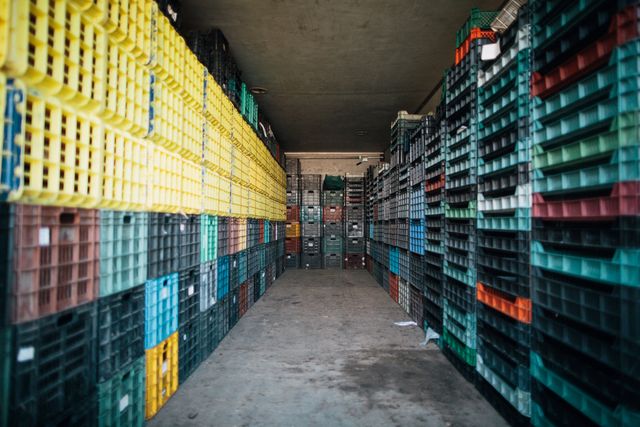
India’s Cold Storage Boom: 40 Million Tonnes Capacity Signals a New Era for Food Business

India’s Cold Storage Boom: 40 Million Tonnes Capacity Signals a New Era for Food Business

Pic Credit: Pexel 

India’s food economy is entering a new phase — one where producing more is no longer the only priority. Increasingly, the ability to store, preserve, transport and deliver food efficiently is becoming just as important.

The country has now crossed the 40-million-tonne mark in cold-storage capacity, representing around 84 per cent of its 2037 target. Government data cited in a 2025 PIB backgrounder showed that India had 8,815 cold storages with about 40.21 million tonnes of capacity, underlining the scale of infrastructure already created across the country.

The milestone is significant not just for agriculture, but also for India’s expanding food-processing, retail, logistics, pharmaceutical and e-commerce industries.

From farm produce to a bigger business opportunity

For years, India’s agricultural challenge was often framed around production. Farmers could grow fruits, vegetables, dairy products, fish and other perishables, but inadequate storage and transportation could leave them with limited time to sell.

Cold-chain infrastructure changes that equation.

Temperature-controlled storage can extend the usable life of perishable products and give farmers, traders and processors greater flexibility in moving goods to markets.

The government’s Integrated Cold Chain and Value Addition Infrastructure scheme is designed around this broader farm-to-consumer approach, supporting infrastructure ranging from farm-level facilities and processing centres to distribution hubs and refrigerated vehicles.

That makes cold storage more than a warehouse business. It is becoming an important part of India’s wider food infrastructure.

Why businesses are paying attention

The opportunity extends well beyond traditional cold-storage operators.

As organised food retail expands, supermarkets, food processors, quick-commerce companies, restaurants and online grocery platforms increasingly need reliable temperature-controlled supply chains.

The Ministry of Food Processing Industries estimates that India’s combined temperature-controlled warehousing and refrigerated-vehicle market was worth around ₹42,600 crore in FY2024, with the sector recording a 5–6 per cent CAGR between FY2020 and FY2024. Temperature-controlled warehousing accounted for roughly ₹37,200 crore, while refrigerated transportation was estimated at about ₹5,400 crore.

These numbers point towards a wider commercial shift: India’s cold chain is gradually evolving from basic storage infrastructure into an integrated logistics industry.

The next opportunity is beyond the warehouse

The biggest business opportunity may not simply be building more cold rooms.

India needs a connected system that can maintain the right temperature from the farm gate to the final consumer.

That includes pack houses, pre-cooling facilities, refrigerated trucks, distribution centres, processing units and technology-enabled monitoring systems.

The cold-chain ecosystem therefore creates opportunities for equipment manufacturers, logistics companies, refrigeration specialists, warehouse developers, food processors and technology providers.

Energy-efficient refrigeration could become particularly important as businesses look to control operating costs and improve sustainability.

A boost for food processing

Cold storage can also accelerate India’s move towards higher-value food products.

Products that might otherwise have to be sold quickly can potentially be channelled into processing, packaging and organised distribution.

This creates room for businesses to develop frozen foods, ready-to-cook products, dairy products, processed fruits and vegetables, seafood and other temperature-sensitive categories.

The Ministry’s cold-chain framework specifically links storage with processing and value addition, reflecting the growing importance of an integrated food-processing ecosystem.

For companies, this means better cold-chain infrastructure can support not only volume growth but also higher-value products and longer market reach.

Export businesses could benefit too

Cold-chain development also has an important export dimension.

International markets often demand strict temperature control and quality standards, particularly for seafood, meat, dairy, fruits and other perishables.

A more reliable domestic cold chain can help exporters maintain product quality from the point of collection to ports and overseas markets.

An earlier MoFPI skill-sector study noted that export-oriented commodities accounted for a significant share of cold-storage usage, reflecting the importance of temperature-controlled infrastructure for India’s global food trade.

For businesses, stronger cold-chain connectivity can therefore mean access to markets that were previously difficult to serve consistently.

Farmers could gain greater bargaining power

The impact is not limited to large companies.

When farmers have access to appropriate storage, they may have more flexibility over when to sell their produce instead of being forced to move everything immediately after harvest.

That can become particularly important during periods of temporary oversupply, when prices can come under pressure.

A more efficient cold chain can also help connect agricultural producers with processors, organised retailers and institutional buyers, creating more structured routes to market.

Technology will shape the next phase

The next generation of cold storage is likely to be increasingly technology-driven.

Real-time temperature monitoring, automated inventory management, energy-efficient refrigeration, data analytics and digital logistics platforms can help businesses reduce spoilage and improve asset utilisation.

This could be particularly valuable as India’s food and retail sectors become more organised.

The business model is gradually moving from simply “store and forget” to “monitor, manage and move.”

A large investment opportunity

The scale of India’s perishable-food economy makes the remaining infrastructure gap commercially significant.

India produces a vast volume of perishables, while losses remain a concern across several categories. An industry assessment cited by MoFPI noted that India produces more than 400 million tonnes of perishables annually, while earlier estimates put the value of agricultural losses at more than ₹92,000 crore a year.

Reducing even a portion of these losses represents a substantial economic opportunity.

It can mean more saleable produce for farmers, more raw material for processors, better utilisation for logistics companies and greater consistency for retailers.

The road ahead

Crossing 40 million tonnes of cold-storage capacity is an important milestone, but the bigger story is what comes next.

India now needs to move from capacity creation to capacity optimisation — ensuring that cold stores are located where they are most needed, connected efficiently to transport networks and used throughout the year rather than only during peak seasons.

The government is continuing to support the sector through programmes such as the Integrated Cold Chain and Value Addition Infrastructure component of PM Kisan SAMPADA Yojana. Recent policy activity has also included proposals for multiproduct food irradiation facilities and registration requirements for cold-storage facilities created under the cold-chain scheme.

For businesses, this signals a market that is moving steadily towards professionalisation and greater integration.

The bigger picture

India’s cold-storage expansion may appear to be an infrastructure story, but its implications are much wider.

It touches the farmer waiting for a better price, the food processor looking for dependable raw materials, the retailer seeking consistent supplies, the exporter meeting international quality standards and the consumer expecting fresher products throughout the year.

The next stage of India’s food economy will therefore depend not only on how much the country produces, but how efficiently it preserves and moves what it produces.

With more than 40 million tonnes of cold-storage capacity already in place and a significant portion of the long-term target achieved, India’s cold-chain sector is increasingly emerging as a business opportunity, a logistics priority and a key pillar of the country’s modern food economy.


EVIDENT Completes Acquisition of CrestOptics S.p.A.

NEEDHAM, Mass., Oct. 5, 2026 /PRNewswire/ — Evident announced today that it has completed the acquisition of CrestOptics S.p.A., a Rome-based developer and manufacturer of advanced optical imaging systems for spinning disk confocal and super-resolution microscopy. The acquisition broadens Evident’s life science imaging portfolio and deepens its capability in high-speed, high-content 3D imaging for research, pharma, and biotech applications.

Crest Optics is now part of Evident

Founded in 2011, CrestOptics designs and manufactures confocal spinning disk and structured illumination microscopy (SIM) modules that integrate with microscope platforms from leading manufacturers worldwide. Its portfolio includes the X-Light family of spinning disk confocal systems, featuring precise optical sectioning and uniform illumination across a class-leading field of view; the compact CICERO widefield and spinning disk solution, which brings highly capable entry-level confocal within reach of any lab; and DeepSIM, a Lattice SIM super-resolution module that delivers sub-diffraction imaging with the accessibility of a widefield system. Used in laboratories around the world, CrestOptics products are built to be universally accessible tools that advance discovery without barriers.

“Researchers are asking harder questions of increasingly complex biological models, and that demands faster, gentler, higher-resolution imaging,” said Wes Pringle, Evident CEO. “Our customers push the limits of science, and our role is to advance the optical technologies that make new discoveries faster and easier than ever. Evident and CrestOptics operate under a shared vision. After partnering with them, it was clear that their mission, their engineering capability, and most importantly their people, complement our own and together we can deliver more complete solutions to the scientists who depend on us.”

Evident and CrestOptics have collaborated as partners for several years, with CrestOptics spinning disk technology already integrated into Evident microscope configurations. The acquisition formalizes and expands that relationship.

“Joining Evident is a natural next step for CrestOptics,” said Renato Giacobbo Scavo, Chief Executive Officer, CrestOptics. “We share a commitment to advancing what microscopy can reveal. With Evident’s global reach, manufacturing strength, and applications expertise, we can accelerate our innovation roadmap and bring our technologies to many more laboratories worldwide. We are grateful to our previous investors, Apposite Capital and Primo Capital, as well as our Chairman, David Martyr, and the board of directors, for their support throughout this journey.”

CrestOptics will continue to operate from its Rome headquarters and R&D and manufacturing facility and maintain its existing partner and distribution relationships, continuing to be a technology provider for the entire microscopy industry.

Learn more about Evident’s confocal and super-resolution solutions. 

About EVIDENT

For over 100 years, Olympus set the industry standard for optical precision in microscopy. Today, Evident carries that legacy forward, helping scientists, physicians, and engineers illuminate the unseen with advanced imaging solutions that combine renowned optics with digital innovation.

Evident’s life science portfolio spans brightfield and darkfield microscopy through advanced fluorescence, 4D analysis, and digital pathology. In industrial microscopy, the company delivers laser scanning, digital, and semiconductor systems for inspection, quality control, and manufacturing analysis.

Evident is headquartered in Tokyo, with R&D and manufacturing centers in Japan, the United States, Germany, and China, and sales and service operations worldwide. For more information, visit EvidentScientific.com.


About CrestOptics

Founded in 2011 in Rome, Italy, CrestOptics develops and manufactures advanced optical imaging systems for life science research. Its spinning disk confocal and super-resolution SIM technologies deliver high-speed, high-contrast imaging with low phototoxicity — enabling work with live cells, 3D models, and thick tissue that conventional techniques cannot resolve.

The portfolio includes the X-Light confocal spinning disk family, the CICERO integrated confocal solution, and the DeepSIM super-resolution module, each designed for broad compatibility with leading microscope platforms. CrestOptics also develops custom optical solutions for OEMs serving research, pharma, biotech, and industrial markets.

CrestOptics operates an ISO 9001-certified R&D and manufacturing facility in Rome and collaborates with research institutions including the Italian Institute of Technology.

For more information, visit CrestOptics.com.

Cision View original content to download multimedia:https://www.prnewswire.co.uk/news-releases/evident-completes-acquisition-of-crestoptics-spa-302897597.html