• Bhubaneswar India
  • Contact+ 91-9938772605
  • Mon - Sat : 10:00AM - 6:00PM

Archive: October 5, 2026

Foreign Investors Withdraw Dollar 15 Billion From South Korean Stocks as Semiconductor Shares Face Profit Taking

Seoul, Oct 5: Foreign investors have pulled more than 20 trillion won (around $15.1 billion) from South Korea’s KOSPI market over the past month, as profit-taking in major semiconductor stocks and growing global uncertainties prompted overseas investors to reduce their equity exposure.

According to data from the Korea Exchange and Yonhap Infomax, foreign investors recorded net sales of 20.31 trillion won between September 1 and October 2. They were net buyers in only seven of the 22 trading sessions during this period, highlighting the strength of the selling pressure.

The heaviest selling came on September 28, when foreign investors sold more than 3 trillion won worth of shares in a single session. Their overall holdings now account for about 39.66% of KOSPI market capitalisation.

Semiconductor Giants Lead the Sell-Off

South Korea’s leading semiconductor companies have borne much of the pressure.

Foreign investors sold a combined 17.2 trillion won of shares in SK hynix and Samsung Electronics during the period. Net selling in SK hynix stood at 12.01 trillion won, while Samsung Electronics saw net foreign sales of 5.19 trillion won.

The selling has also reduced foreign ownership in both companies. Foreign ownership of SK hynix fell to 49.76% on October 2, its lowest level in more than three years. Samsung Electronics’ foreign ownership ratio declined to 46.40% on September 30 and stood at 46.41% thereafter.

Market analysts said investors appear to be booking profits after the strong performance of semiconductor stocks earlier this year. The broader investment environment has also become more challenging, with concerns over global interest rates and geopolitical tensions adding to market volatility.

Foreign Selling Begins to Slow

There are, however, some early signs that the selling spree could be losing momentum.

Foreign investors returned as net buyers on October 1, purchasing about 243 billion won worth of KOSPI shares. On October 2, their net selling was limited to around 190 billion won, significantly lower than the large outflows seen during September.

Market participants see the moderation as a potentially positive development. A stabilisation in long-term interest rates and an improvement in global risk sentiment could help bring greater balance to the market’s supply and demand.

Earnings to Provide the Next Major Signal

The upcoming third-quarter earnings season is expected to play an important role in determining whether foreign investors return to South Korean equities.

US chipmaker Micron Technology’s stronger-than-expected results on September 30 have already provided some encouragement to the semiconductor sector. Investors are now looking ahead to Samsung Electronics’ preliminary third-quarter results, due on October 8, for further evidence on earnings strength and chip-sector demand.

Analysts believe foreign buying could return once macroeconomic uncertainty begins to ease and corporate earnings offer greater confidence.

Kiwoom Securities researcher Han Ji-young expects foreign demand to improve as major economic risks become clearer and earnings visibility strengthens. Yuanta Securities researcher Lee Jae-won also pointed to the recent reduction in selling during market rallies as a sign that supply-demand conditions could gradually improve.

For South Korea’s stock market, the focus now shifts from the recent foreign selling wave to earnings, interest rates and global risk factors. If these pressures begin to stabilise, the latest moderation in outflows could mark the early stages of a more balanced market environment.
Odisha Caps Student Election Spending at ₹5,000, Bars Political Party Funding

Bhubaneswar, Oct. 5 (UDN): The Odisha Government has capped election expenditure at ₹5,000 per candidate for the upcoming college and university student union elections, while prohibiting candidates from receiving financial support from political parties.

Odisha Caps Student Election Spending at ₹5,000, Bars Political Party Funding

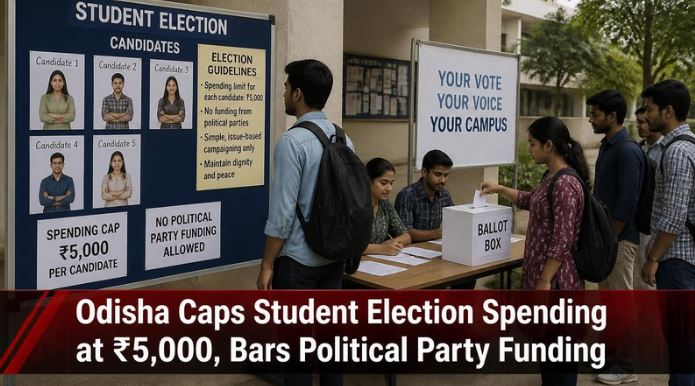
 Representational Image 

The rules, issued on Monday, are aimed at ensuring transparency and keeping campus elections within a prescribed spending limit.

Candidates Must Submit Expense Accounts

Under the new guidelines, every candidate will be required to maintain a detailed account of expenses incurred during the election process.

The expenditure statement must be submitted to the concerned college or university authorities within two weeks of the declaration of election results.

Institutions will then publish the submitted expense details on the HIMS Portal within two days of receiving them.

Exceeding Limit May Lead to Cancellation

Candidates have been instructed to strictly adhere to the ₹5,000 expenditure ceiling.

The rules state that exceeding the prescribed limit could result in cancellation of the concerned candidate’s election, making financial compliance a key requirement for contestants.

Political Funding Prohibited

The government has also barred candidates from accepting financial assistance from political parties for campus elections.

While candidates may receive voluntary contributions, the rules restrict them from accepting funds from other sources.

The funding restrictions are aimed at keeping student elections focused on campus issues and preventing direct political financing from influencing the electoral process.

Student Polls Return After Eight Years

The latest guidelines come ahead of the return of student union elections in Odisha after an eight-year gap.

Student elections had remained suspended during the previous BJD government, with campus-related issues and subsequently the COVID-19 pandemic cited among the reasons for the prolonged suspension.

The BJP had promised during its 2024 Assembly election campaign to restore student union elections after coming to power.

With the elections now being revived, the government’s expenditure and funding rules are expected to provide a framework for a more regulated and transparent campus electoral process.

Macsen Energy’s Sodium-Ion Cell Crosses 1500 cycles in testing, retains 90% capacity at 1000 cycles

UDAIPUR, India, Oct. 5, 2026 /PRNewswire/ — Macsen Energy Private Limited has reached a milestone in its sodium-ion battery research. A cell made with the company’s proprietary Prussian White cathode material has crossed 1,500 charge-discharge cycles while retaining 90% of its initial capacity at 1,000 cycles in laboratory testing.

Macsen Energy Private Limited Logo

The result marks progress in Macsen Energy’s work to develop Prussian White cathode material and sodium-ion cells for applications where long operating life is important. It follows three years of research into the synthesis, refinement and electrochemical testing of the material.

“Crossing 1,500 cycles with sustained capacity and high coulombic efficiency, and retaining 90% of the cell’s initial capacity at 1,000 cycles, is an important result for our team,” said Achal Agrawal, CEO of Macsen Group, who also works as a researcher on the project. “This result comes from cycling an actual sodium-ion cell in our battery research lab. It validates the promise of our cell technology for long-life energy storage and supports the potential of our Prussian White cathode material to deliver sustained performance over repeated cycles.”

Macsen Energy’s research began within Macsen Labs Group, a manufacturer of specialty chemicals and niche pharmaceutical ingredients. While working on Prussian Blue as an active pharmaceutical ingredient used in the treatment of radioactive contamination, the team began exploring its reduced and sodiated form, Prussian White, as a cathode material for sodium-ion batteries. The initiative has since been established as a separate company, Macsen Energy Private Limited.

Prussian White offers strong potential for large-scale manufacturing using commercially established raw materials produced in India, Europe, China and other countries. Its production can be scaled to thousands of tonnes using existing chemical manufacturing infrastructure. The upstream raw-material supply chain draws on abundant industrial feedstocks, including natural gas, nitrogen, oxygen and caustic soda.

However, producing it consistently at the quality needed for battery use requires careful control of its composition, sodium content, water content, crystal structure and other material properties. Macsen Energy has developed a proprietary synthesis process designed to produce high-quality, battery-grade Prussian White in high yields, with fewer processing steps, cost-efficient production and reduced environmental impact. The company has also filed a patent application relating to this manufacturing process.

“Prussian White may appear straightforward to synthesize, but producing a material that approaches its theoretical capacity and maintains strong electrochemical performance over repeated charge-discharge cycles is a much more demanding task,” Agrawal said. “We see it as an engineered battery material, and our work spans chemical synthesis, material characterization, cell fabrication and testing.”

Macsen Energy is continuing its work on cathode and anode materials development, coin-cell and pouch-cell testing, complementary battery materials and sodium-ion full cells. The company has also allocated 10,000 square metres of land for a proposed Prussian Blue Analogue cathode-material scale-up facility and sodium-ion cell fabrication pilot line.

About Macsen Energy Private Limited

Macsen Energy Private Limited develops materials and cell technology for sodium-ion batteries. Originating from research within Macsen Labs Group, the company brings together chemical synthesis, battery cell fabrication and electrochemical testing to advance Prussian Blue Analogue materials and sodium-ion technology.

Contact Details:

Apoorv Acharya 

Email: info@macsenenergy.com


Cision View original content to download multimedia:https://www.prnewswire.com/in/news-releases/macsen-energys-sodium-ion-cell-crosses-1500-cycles-in-testing-retains-90-capacity-at-1000-cycles-302898240.html

Joyalukkas Completes First Batch of Gold Rings for Tamil Nadu Government’s ‘Thai Maaman Thanga Mothiram Thittam’

CHENNAI, India, Oct. 5, 2026 /PRNewswire/ — Joyalukkas Group has completed the first batch of 89,955 one-gram, 22K gold rings entrusted to the company under the Tamil Nadu Government’s ‘Thai Maaman Thanga Mothiram Thittam’ by honorable Chief Minister of Tamil Nadu C. Joseph Vijay.

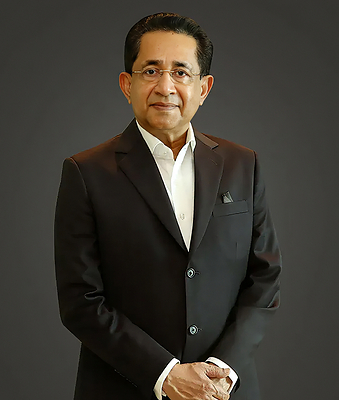
Dr. Joy Alukkas, Chairman and Managing Director, Joyalukkas Group

Under the initiative, eligible newborn children delivered at government hospitals across the State will receive a one-gram gold ring. Approximately 4.41 lakh newborn children across Tamil Nadu are expected to benefit from the initiative.

Joyalukkas emerged as the lowest bidder (L1) for the procurement, quoting just one paisa towards making charges, BIS hallmarking, insurance, transportation and packing, excluding the cost of gold.

The first batch of 89,955 rings will be supplied to 107 designated government hospitals, primarily high-load CEmONC centres. The rings are being manufactured as per the prescribed one-gram weight and 22K purity specifications, with each ring carrying the required BIS hallmark and six-digit HUID (Hallmark Unique Identification) number for authenticity and traceability.

The rings are packed in exclusive packaging developed specifically for the initiative, ensuring secure handling and transportation to the designated government hospitals. Packing and dispatch of the first batch are currently underway from Joyalukkas’ dedicated hubs in Chennai and Coimbatore.

Dr. Joy Alukkas, Chairman and Managing Director, Joyalukkas Group, said: “We are deeply honoured to be associated with the Thai Maaman Thanga Mothiram Thittam and grateful to the Government of Tamil Nadu and Hon’ble Chief Minister C. Joseph Vijay for giving us the opportunity to be part of this meaningful initiative. The birth of a child is a deeply special moment for every family, and gold has always had a unique place in our traditions as a symbol of blessings and auspicious beginnings. Tamil Nadu has given us immense love and support over the years, and this initiative gives Joyalukkas an opportunity to contribute in a meaningful way to the people of the State.”

Joyalukkas has a strong presence across Tamil Nadu, with more than 30 showrooms serving customers across the State. The brand has been popularly known as the ‘Rasi Kadai’ among families in Tamil Nadu


Cision View original content to download multimedia:https://www.prnewswire.com/in/news-releases/joyalukkas-completes-first-batch-of-gold-rings-for-tamil-nadu-governments-thai-maaman-thanga-mothiram-thittam-302898247.html

Government of Maharashtra and Hindustan Coca-Cola Beverages Expand Maha r-PET Abhiyaan in Thane with Dedicated Collection Infrastructure for Used PET Bottles

~Thane PET Collection Centre, retailer participation initiatives and collection support systems aim to improve used PET bottle recovery and recycling~

THANE, India, Oct. 5, 2026 /PRNewswire/ — The Government of Maharashtra, Thane Municipal Corporation (TMC) and Hindustan Coca-Cola Beverages (HCCB) have expanded the Maha r-PET Abhiyaan in Thane with the inauguration of the Thane PET Collection Centre and the launch of a series of initiatives aimed at strengthening the collection, segregation and recycling of used PET bottles across the city.

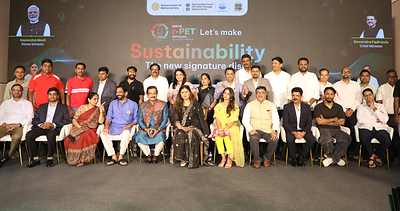
L2R: Shri. Harishchandra Patil - Additional Collector; Shri. Rahul Rekhawar - IAS – MPCB; Madhavi Naik - BJP MLC; Mr. Niranjan Davkhare - BJP MLC; Actor Prasad Oak; Pankaja Munde - Minister of Environment and Climate Change; Actor Shivani Surve; Mr. Himanshu Priyadarshi - VP and Chief Public Affairs – HCCB; Actor Amit Sial; and Rapper Dino James

The programme included the launch of dedicated used PET Collection Bins, the introduction of the Maha r-PET Abhiyaan Participation Certificate and Green Cool Dukaan Sticker for retailers, the flagging off of three electric vehicles to support collection operations, and the unveiling of benches made from recycled PET plastic collected through the initiative.

The programme was graced by Smt. Pankaja Munde, Hon’ble Minister for Animal Husbandry, Environment & Climate Change, Government of Maharashtra; Sanjay Kelkar – MLA; Mr. Niranjan Davkhare – MLC; Ms. Madhavi Naik – MLC; Shri. Rahul Rekhawar – IAS and member secretary MPCB; Shri. Harishchandra Patil – Additional Collector, Thane Municipal Corporation; Mr. Himanshu Priyadarshi – Chief Public Affairs, Communication and Sustainability Officer– Hindustan Coca Cola Beverages; and Actors – Prasad Oak, Shivani Surve, Amit Sial and Rapper – Dino James along with community partners, retailers and hotel owners associations and stakeholders from across the PET collection and recycling ecosystem.

The newly inaugurated Thane PET Collection Centre will serve as a dedicated aggregation and collection facility for used PET bottles recovered through the initiative. Supported by a network of collection partners and retailers, the centre is designed to strengthen the recovery and channelisation of used PET bottles into authorised recycling streams.

Dedicated collection bins introduced under the programme will encourage residents to segregate used PET bottles at source, while the Green Cool Dukaan initiative and participation certificates will recognise retailers who actively contribute to the collection effort. The electric vehicles flagged off during the programme will support efficient last-mile collection across Thane.

The programme also showcased benches manufactured using recycled PET plastic collected through the initiative. These installations demonstrate how used PET bottles can be transformed into valuable products through recycling, bringing to life the principles of a circular economy.

Underscoring the importance of community participation, Smt. Pankaja Munde, Hon’ble Minister for Animal Husbandry, Environment & Climate Change, Government of Maharashtra, noted, “I am extremely delighted that the environment-friendly project, Maha r-PET Abhiyaan, is being launched in Thane district in collaboration with Hindustan Coca-Cola Beverages. The days of ‘use and throw’ are behind us; the time has come for ‘use and collect’.  We are beginning this exceptional concept today right here in Thane. Following this, the initiative will be implemented in Chhatrapati Sambhajinagar, Nashik, and since I am from Beed myself, it will be carried out there as well.

As Environment Minister, protecting our environment is my responsibility, but it is equally a collective responsibility. I congratulate HCCB for taking this initiative and look forward to seeing it create greater awareness and participation across Maharashtra.”

Avinash Kant Kumar, Head of Integrated Supply Chain, Hindustan Coca-Cola Beverages (HCCB) said, “Building a robust used PET bottle recycling ecosystem requires strong collaboration across the entire value chain, from collection and segregation to processing and end-use. The Thane Collection Centre is an important step towards creating a more organised and traceable supply chain for recyclable materials, enabling segregation at source and the identification of food-grade PET for high-value recycling applications. This model demonstrates how industries can work alongside public systems to improve resource efficiency, support the availability of quality recycled material, and build resilient, sustainable supply chains for the future. Through our partnership with the Government of Maharashtra under the Maha r-PET Abhiyaan, and in collaboration with the Thane Municipal Corporation (TMC), we are helping strengthen the systems and infrastructure needed to improve the recovery of used PET bottles.”

Launched by the Government of Maharashtra, Maha r-PET Abhiyaan is a first-of-its-kind statewide movement focused on improving the collection, recovery and recycling of used PET bottles through awareness, source segregation, community participation and collection infrastructure. The initiative seeks to ensure that used PET bottles are collected separately and remain suitable for recycling, helping reduce landfill burden while supporting circular economy objectives. The initiative brings together dedicated collection infrastructure, retailer participation, consumer awareness and collection support systems to improve the recovery of used PET bottles and channel them into the recycling value chain.

About Hindustan Coca-Cola Beverages (HCCB):

Hindustan Coca-Cola Beverages (HCCB), one of India’s leading FMCG companies, was incorporated on 14th February 1997. Since then, HCCB has come a long way in being able to serve over 20 lakh retailers, ~2,000 distributors, and 5,200+ employees. 2,50,000 farmers grow the agricultural produce that HCCB uses in making its products. The company is headquartered in Bengaluru and its operations are spread in 10 states, and 236 districts in South and West India. With 14 factories across India, the company has a significant footprint in Maharashtra, operating two state-of-the-art manufacturing plants at Pirangut, in Pune district, Wada, in Palghar district, and an upcoming manufacturing plant at Lote Parshuram in Ratnagiri district. HCCB manufactures and sells 37 different products across 8 categories. Its products include some of India’s most loved beverages – Coca-Cola, Thums Up, Sprite, Minute Maid, Maaza, SmartWater, Kinley, Limca, Fanta, and a lot more.


Hindustan Coca-Cola Beverages Logo

Cision View original content to download multimedia:https://www.prnewswire.com/in/news-releases/government-of-maharashtra-and-hindustan-coca-cola-beverages-expand-maha-r-pet-abhiyaan-in-thane-with-dedicated-collection-infrastructure-for-used-pet-bottles-302898251.html

Riyadh to Host Sixth Edition of Future Minerals Forum in January 2027

RIYADH, Saudi Arabia, Oct. 5, 2026 /PRNewswire/ — Saudi Arabia’s Ministry of Industry and Mineral Resources has announced that the sixth edition of the Future Minerals Forum (FMF) will be held under the patronage of the Custodian of the Two Holy Mosques from 12–14 January 2027 in Riyadh, with the theme “Global Collaboration for Resilient Mineral Supply.”

The sixth edition of the Future Minerals Forum will be held in Riyadh from 12 to 14 January 2027, under the theme "Global Collaboration for Resilient Mineral Supply."

The fifth edition, held in January 2026, welcomed government representatives from 91 countries and more than 64 governmental and non-governmental organizations, alongside 21,500 participants from 175 countries. It saw the signing of 132 agreements and MoUs worth more than USD26.7 billion (SAR100 billion), bringing the total across five editions to 398 agreements and MoUs valued at over USD75.2 billion (SAR282 billion).

FMF 2027 will focus on mobilizing finance, accelerating project development and shortening time to production, to increase mineral supply and develop value chains in the Kingdom and emerging supplier regions, including the Super Region spanning Africa, West and Central Asia, and Latin America.

The Forum will be headlined by its government-led Ministerial Roundtable, convening governments, industry leaders, multilateral organizations, and financial and academic institutions. Expanded ‘Gateway to Funding’ activities will connect investors with scalable projects, while ‘State of the Sector’ sessions, an extension of the Future Minerals Barometer, will offer commodity outlooks and market insights. Leadership Roundtables and Knowledge Exchange meetings will develop solutions to strengthen supply chains.

FMF has helped move discussions on the future of minerals from ambition to partnerships, investment and projects, while connecting Saudi Arabia’s mining and industrial opportunities with international capital, technology and expertise.

The Forum has grown alongside the Kingdom’s mining sector. Saudi Arabia’s exploration expenditure rose from USD 54.7 million (SAR 205 million) in 2020 to USD 362.7 million (SAR 1.36 billion) in 2025 and active exploration companies grew from six to 191.

His Royal Highness Prince Abdulaziz bin Salman bin Abdulaziz, Minister of Energy and Minister of Industry and Mineral Resources, also recently announced that studies at the Jabal Sayid Rare Earth Elements Project in the Madinah Region had revealed estimated resources of 114 million tons of ore with high concentrations of rare earth elements, particularly heavy rare earth elements.

FMF advances the objectives of the Comprehensive Mining and Mineral Industries Strategy. FMF2027 will issue a global call to diversify mineral supply, develop mining capabilities and build a more resilient minerals ecosystem.

For registration and information, visit futuremineralsforum.com

CONTACT: Mustafa Al Refaie, mustafa.alrefaie@omc.com, +966 55 725 1006

Cision View original content to download multimedia:https://www.prnewswire.co.uk/news-releases/riyadh-to-host-sixth-edition-of-future-minerals-forum-in-january-2027-302898273.html

5 Foods That Pack Vitamins, Minerals and Antioxidants Into Every Bite

What if improving your everyday nutrition didn’t require expensive supplements or a complicated diet? Sometimes, the answer is already sitting on your plate.

5 Foods That Pack Vitamins, Minerals and Antioxidants Into Every Bite


Our bodies need a wide range of nutrients to function properly. Vitamins and minerals support essential processes, protein helps maintain and repair tissues, healthy fats contribute to normal brain and heart function, while fibre supports digestive health. Antioxidants and other plant compounds add another layer of nutritional value.

The challenge is not necessarily finding one “perfect” food. It is creating enough variety in the diet to give the body access to different nutrients.

The World Health Organization (WHO) recommends a diverse diet that includes fruits, vegetables, legumes, nuts, whole grains and suitable sources of protein. For people over the age of 10, WHO recommends consuming at least 400 grams of fruits and vegetables each day.

India’s ICMR–National Institute of Nutrition (NIN) takes a similar approach. Its 2024 Dietary Guidelines for Indians encourage a varied diet containing vegetables, fruits, pulses, nuts and seeds, eggs or other protein-rich foods, cereals and millets, and dairy or suitable alternatives.

So, which foods can help make everyday meals more nutrient-dense?

1. Leafy Greens: The Everyday Nutritional Heavyweights

Spinach, amaranth, moringa leaves and other leafy vegetables are easy to overlook because they are such familiar foods. Yet they can contribute an impressive range of nutrients.

Leafy greens provide vitamins including A, C and K, as well as folate and minerals such as iron, calcium and magnesium. They also contain naturally occurring plant compounds with antioxidant properties.

They don’t need to be complicated. Add them to dal, stir-fries, curries, soups or traditional vegetable preparations.

For many Indian meals, leafy greens can be one of the simplest ways to increase the nutritional variety of the plate.

2. Eggs: A Convenient Nutrient Package

An egg is often thought of simply as a source of protein. Its nutritional profile is considerably broader.

Eggs provide high-quality protein along with vitamin B12, riboflavin, selenium and phosphorus. They are also a source of choline, a nutrient involved in normal brain and nervous-system function.

For people who eat eggs, they can be a convenient addition to breakfast or a simple protein option at lunch or dinner.

And they don’t need an elaborate preparation. Boiled, scrambled, poached or cooked into a traditional dish, eggs can easily fit into everyday meals.

3. Colourful Fruits: More Than Just Natural Sweetness

A colourful fruit bowl is not just visually appealing. Different fruits contain different combinations of vitamins, minerals, fibre and naturally occurring plant compounds.

Amla and guava are well known for their vitamin C content, while fruits such as berries and pomegranate contain a variety of polyphenols and other antioxidant compounds.

Rather than searching for one “best” fruit, variety is the better strategy. Rotate seasonal fruits and choose different colours throughout the week.

This makes the diet more interesting while increasing exposure to a wider range of nutrients and plant compounds.

4. Nuts and Seeds: Small Additions With Big Nutritional Value

Almonds, walnuts, pumpkin seeds, flaxseeds and chia seeds may occupy only a small space on the plate, but they can contribute healthy fats, protein, fibre and several minerals.

They provide nutrients such as magnesium, zinc and calcium, while walnuts, flaxseeds and chia seeds also provide the plant-based omega-3 fatty acid ALA.

A small portion can be added to breakfast, yoghurt, salads or eaten as a snack. Because nuts and seeds are energy-dense, moderation is important.

Their biggest advantage may be convenience: they require little preparation and can easily be incorporated into meals.

5. Fatty Fish: Bringing Omega-3s to the Plate

For people who eat seafood, sardines, mackerel and salmon are particularly nutrient-rich choices.

They provide high-quality protein and nutrients such as vitamin B12 and selenium, while fatty varieties are important dietary sources of the omega-3 fatty acids EPA and DHA.

These fatty acids have important roles in the body, including supporting normal heart, brain and eye function.

For those who don’t eat fish, flaxseeds, chia seeds and walnuts can provide ALA, a plant-based omega-3 fatty acid, although the body handles these different omega-3 forms differently.

The Bigger Lesson Is Variety

It can be tempting to look for a single food that contains every vitamin, mineral and antioxidant the body needs. But there is no need to put that pressure on one ingredient.

The WHO identifies diversity, along with adequacy, balance and moderation, as key principles of healthy eating. The ICMR-NIN’s 2024 dietary guidelines similarly emphasise combining different food groups.

That could mean pairing leafy vegetables with pulses, adding an egg to a meal, choosing seasonal fruit, including a modest serving of nuts or seeds and incorporating fish where appropriate.

The result is not one miraculous meal. It is a pattern of eating that brings together different sources of nutrition.

Making Better Choices Without Making Life Complicated

Healthy eating doesn’t have to mean completely changing the way you eat.

A few simple habits can help. Add greens to a familiar meal. Keep seasonal fruit available. Choose nuts or seeds in sensible portions. Include a good protein source. Rotate vegetables rather than buying the same ones every week.

Most importantly, think about what you can add to your diet rather than only what you need to remove.

The Takeaway

The search for a “superfood” may make nutrition sound more complicated than it really is.

Leafy greens, eggs, colourful fruits, nuts and seeds, and fatty fish can each contribute different nutrients. When combined with whole grains, pulses, vegetables and other foods, they can form part of a varied and balanced eating pattern.

The real nutritional advantage comes from diversity, consistency and balance.

Because when it comes to everyday nutrition, the goal isn’t to find one food that does everything. It is to build a plate that gives your body a little more of what it needs, meal after meal.

Odisha Braces for Thunderstorms, Lightning and Gusty Winds From October 7

Bhubaneswar, Oct. 5 (UDN): Several parts of Odisha are likely to experience thunderstorms, lightning and gusty winds from October 7, with the India Meteorological Department (IMD) issuing a yellow warning for multiple districts.

Odisha Braces for Thunderstorms, Lightning and Gusty Winds From October 7

 Representational Image 

The weather office has forecast light to moderate rain or thundershowers at isolated places over the next few days, with weather activity expected to intensify in northern, coastal and southern districts from October 7.

Rain Expected in Several Districts

During the next 24 hours, isolated light to moderate rain or thundershowers are likely in Baleshwar, Mayurbhanj, Koraput and Malkangiri, while dry weather is expected across most other parts of the state.

On October 5, rainfall activity may occur in Baleshwar, Kendujhar, Mayurbhanj, Rayagada, Koraput, Gajapati and Ganjam. On October 6, isolated showers are likely in Baleshwar, Bhadrak, Jajpur, Kendrapada, Jagatsinghpur, Cuttack, Sundargarh, Kendujhar and Mayurbhanj.

Yellow Warning Issued for October 7

The weather system is expected to become more active from October 7.

The IMD has issued a yellow warning for Baleshwar, Bhadrak, Jajpur, Kendrapada, Jagatsinghpur, Cuttack, Sundargarh, Kendujhar, Mayurbhanj, Gajapati, Ganjam, Puri, Khordha and Nayagarh.

Thunderstorms accompanied by lightning and gusty surface winds of 30-40 kmph may occur at one or two places in these districts.

Weather Activity to Continue on October 8

The adverse weather conditions are likely to persist on October 8, when thunderstorms, lightning and gusty winds may affect Baleshwar, Bhadrak, Jajpur, Kendrapada, Jagatsinghpur, Cuttack, Sundargarh, Deogarh, Angul, Dhenkanal, Kendujhar and Mayurbhanj.

Light to moderate rain or thundershowers may occur at a few places across northern and central Odisha, while isolated rainfall activity is also expected in Boudh, Kandhamal, Rayagada, Koraput, Malkangiri, Gajapati, Ganjam and Puri.

Rain Forecast Through October 10

The IMD has forecast isolated rain or thundershower activity in several coastal and adjoining districts on October 9 and 10. The districts likely to see such activity include Baleshwar, Bhadrak, Jajpur, Kendrapada, Jagatsinghpur, Cuttack, Kendujhar, Mayurbhanj, Gajapati, Ganjam, Puri, Khordha and Nayagarh.

Temperatures Likely to Dip

Maximum temperatures are expected to remain largely stable over the next three to four days before falling by around 2-3 degrees Celsius thereafter.

Minimum temperatures are likely to remain broadly unchanged during the next six to seven days.

In Bhubaneswar and adjoining areas, partly cloudy conditions are expected over the next 24 hours, with the maximum temperature likely to remain around 35°C and the minimum near 25°C.

The IMD has not issued any weather warning for fishermen along the Odisha coast between October 4 and 8.

One Killed, Six Injured as Family’s Puri Pilgrimage Ends in Road Accident in Bargarh

Bargarh, Oct. 5 (UDN): A pilgrimage to Puri turned tragic for a family travelling from Indore after their vehicle crashed into a roadside tree near Madhupur in Bargarh district on Monday, leaving one person dead and six others injured.

Vehicle Crashes Into Tree

According to reports, the accident occurred under Sohela block when the driver reportedly lost control of the vehicle while the family was travelling towards Puri to visit the Jagannath Temple.

The impact was severe, killing one person at the spot and leaving six others injured.

Three Shifted to Bargarh

Following the crash, the injured were rushed to hospitals for treatment. Three of them were admitted to a private hospital in Sohela, while the remaining three, who were reportedly in critical condition, were shifted to a private hospital in Bargarh for advanced treatment.

Police Begin Probe

Police have seized the vehicle involved in the accident and launched an investigation into the circumstances leading to the crash.

Officials are examining the cause of the driver losing control and the sequence of events preceding the collision.