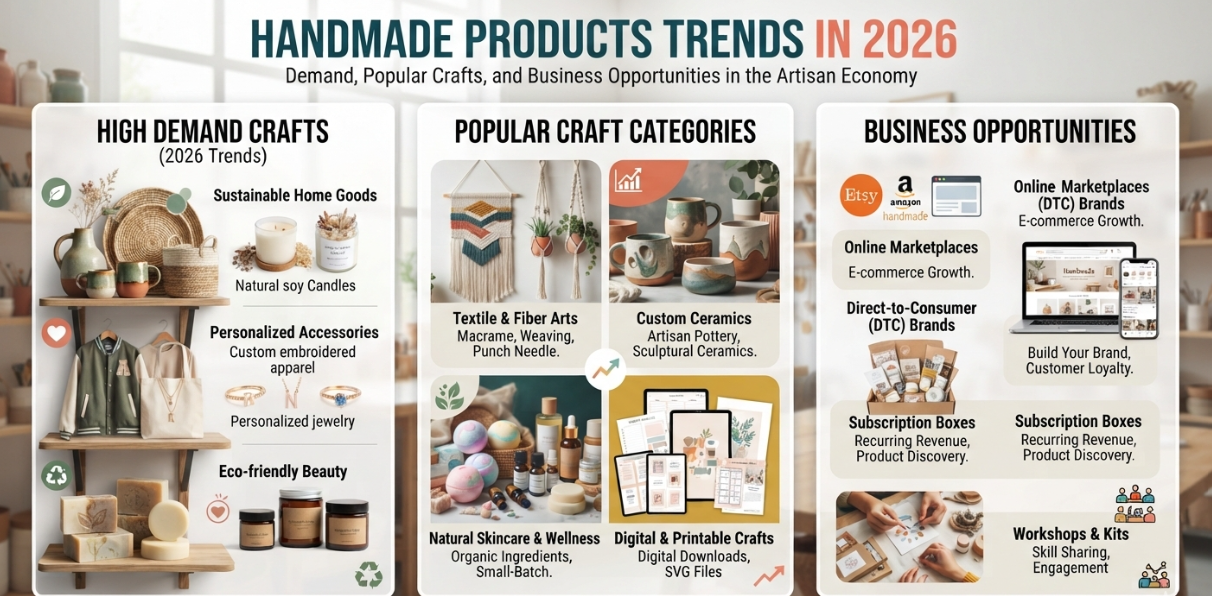
Oct 14: Handmade products are gaining attention in 2026 as consumers look for distinctive designs, personalised gifts and products that reflect individual tastes. From handcrafted jewellery and embroidered accessories to crochet clothing, ceramic tableware and handmade home décor, these products are creating opportunities for artisans, independent designers and small businesses.
The growing interest in creative hobbies and customised goods is also changing how people shop. Instead of choosing only mass-produced items, some consumers are exploring products that offer a personal touch, distinctive craftsmanship or a closer connection to the maker.
For entrepreneurs, the handmade products trend in 2026 presents opportunities to build specialised businesses, reach customers through digital platforms and develop products for specific occasions and lifestyle preferences.
Why Handmade Products Are Trending in 2026
Personalisation, creativity and product differentiation are among the factors supporting interest in handmade goods. Consumers can often choose colours, materials, designs and custom details, making these products suitable for individual preferences and special occasions.
Research also points to renewed interest in hands-on creativity. Michaels’ 2026 Creativity Trend Report described the year as the “Year of Creative Living” and reported a 136% increase in online searches for analogue hobbies, including knitting, crochet, embroidery, journaling and painting, over a six-month period.
Although interest in creative hobbies does not directly translate into purchases of handmade products, it suggests that more consumers are exploring activities and products connected with creativity and craftsmanship.
Handmade Jewellery and Accessories Attract Individual Buyers
Handmade jewellery continues to offer opportunities for designers who want to create distinctive collections. Beaded necklaces, polymer-clay earrings, fabric jewellery and accessories made with natural materials allow makers to experiment with colours, textures and designs.
Embroidered bags, crochet accessories and personalised charms are also attracting attention. Etsy’s Spring and Summer 2026 Seller Trend Report highlighted interest in handcrafted textures and individual expression, including a sharp rise in searches for embroidered straw bags.
For small businesses, the opportunity lies in developing a recognisable style rather than offering a large number of similar products. Limited-edition collections, custom colour combinations and occasion-specific designs can help brands distinguish themselves in a competitive market.
Handmade Home Décor Adds Character to Living Spaces
Handmade home décor is another area worth watching. Woven baskets, ceramic tableware, macramé wall hangings, hand-painted planters, embroidered cushions and handcrafted lighting can add texture and individuality to residential and commercial interiors.
The interest extends to products made using traditional techniques and natural materials. Small businesses can explore collections featuring clay, wood, cotton, jute and other materials, provided they communicate their sourcing and product characteristics accurately.
Michaels’ 2026 report also recorded a 79% increase in searches for DIY home décor. While this figure reflects interest in do-it-yourself projects rather than sales of finished handmade products, it reinforces the appeal of personalising living spaces through creative choices.
Personalised Gifts Create Opportunities for Small Businesses
Personalised gifts remain a practical category for makers because customers often want something meaningful for birthdays, weddings, anniversaries, festivals and other milestones.
Custom nameplates, hand-painted keepsakes, embroidered clothing, personalised stationery and made-to-order accessories allow businesses to serve customers looking for alternatives to standard gifts.
However, customisation requires careful planning. Sellers need to establish clear ordering deadlines, confirm design specifications and communicate how long production will take. A well-managed custom-order process can improve the customer experience and reduce costly revisions.
Sustainability and Craftsmanship Influence Buying Decisions
Handmade products can appeal to consumers who value durability, thoughtful design and the use of reclaimed or responsibly sourced materials. Reusable textile products, upcycled accessories and repairable home décor may also attract buyers interested in reducing unnecessary consumption.
Nevertheless, handmade products are not automatically sustainable. Their environmental impact depends on material sourcing, production methods, packaging, transport and product lifespan.
Businesses can build credibility by explaining how products are made, identifying the materials used and providing care instructions that help customers extend product life. Transparent claims are more persuasive than broad promises about being environmentally friendly.
Online Marketplaces Expand the Reach of Handmade Products
Digital marketplaces and social media have made it easier for independent makers to showcase products beyond local exhibitions and craft fairs. Online stores allow artisans to connect with customers who are specifically searching for customised gifts, distinctive accessories and handcrafted home products.
Etsy’s 2025 annual report offers an indication of the role personalisation plays in online commerce. The company reported that approximately 30% of marketplace gross merchandise sales came from custom or made-to-order goods. Its buyer research also found that 85% of surveyed buyers associated shopping on Etsy with supporting small businesses, while 81% said Etsy offered items they could not find elsewhere.
These findings relate to Etsy and should not be treated as figures for the entire handmade-products market. However, they illustrate the potential value of product uniqueness and customisation within an established online marketplace.
For sellers, high-quality product photographs, informative descriptions, transparent pricing and reliable delivery estimates are essential. Short videos showing the making process can also help potential buyers appreciate the work involved in producing an item.
How Entrepreneurs Can Build a Handmade Products Business
Starting a handmade business does not necessarily require a large product range or substantial initial investment. Entrepreneurs can begin with a focused collection, test customer interest and expand after identifying products that sell consistently.
Pricing is particularly important. Makers need to account for raw materials, labour, packaging, shipping, platform fees and the time required to complete custom orders. Prices that fail to cover these costs can make a business difficult to sustain, even when sales volumes appear encouraging.
Businesses can also explore complementary revenue streams, including beginner craft kits, workshops, seasonal collections and corporate gifting. Collaborations with boutiques, interior designers, event planners and local retailers may provide additional routes to market.
Consistency in product quality, realistic production schedules and responsive customer service can help build trust and encourage repeat purchases.
Opportunities for India’s Artisans and Craft Businesses
India’s rich craft traditions include handloom textiles, embroidery, pottery, metalwork, woodcraft, jewellery and regional decorative arts. These skills provide a foundation for products that can appeal to domestic customers and international buyers when presented through contemporary designs and accessible digital channels.
Artisans and entrepreneurs can develop collections around regional techniques while explaining the origin, materials and methods behind each item. This helps customers understand the craftsmanship involved and can create a stronger connection between the product and its maker.
Businesses should also pay attention to fair compensation, responsible sourcing and the respectful use of traditional designs. Collaborations with craft communities can support more sustainable commercial relationships while helping preserve specialised skills.
The Future of Handmade Products in 2026
The handmade products trend in 2026 reflects a combination of personalisation, creative expression, distinctive design and growing digital access. Research from Michaels and Etsy points to continued interest in creative activities and customised goods, although demand varies by product category, market and customer group.
For small businesses, success will depend on more than the appeal of handmade products alone. Original designs, realistic pricing, reliable fulfilment and a clear understanding of customer preferences are essential to building a sustainable business.
As consumers continue to seek products that reflect their identities and interests, handmade goods can occupy a distinctive place in the retail market. For India’s artisans and emerging entrepreneurs, combining traditional craftsmanship with thoughtful design and effective digital marketing offers a practical route to reaching new customers.
