New Delhi, Nov 27: As preparations gather pace for the Union Budget 2027-28, industry leaders, economists, financial institutions and other stakeholders have called for a series of policy measures aimed at accelerating economic growth, boosting employment and strengthening India’s manufacturing and technology sectors.
Representational Image
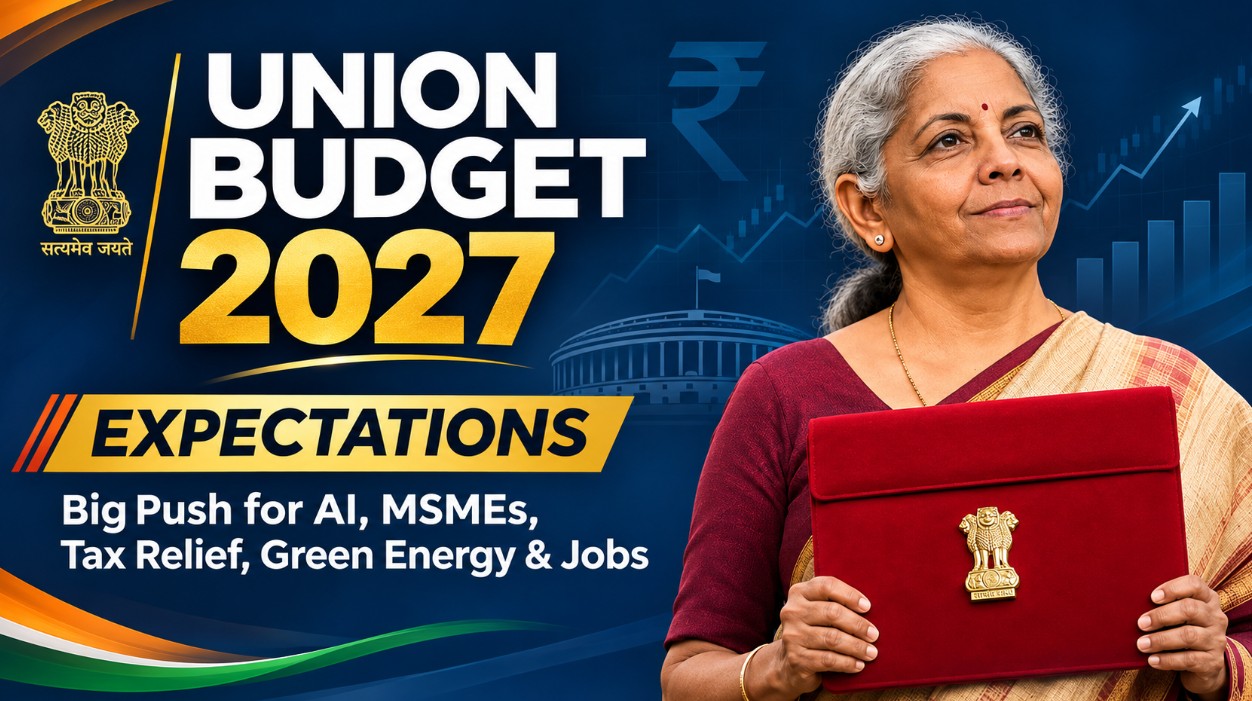
From incentives for artificial intelligence (AI) development and easier credit for micro, small and medium enterprises (MSMEs) to tax concessions, renewable energy investments and affordable housing, a wide range of expectations has emerged from the Finance Ministry’s pre-Budget consultations.
The ministry completed 13 rounds of consultations between November 16 and 26, engaging more than 200 stakeholders. Their recommendations reflect growing demands for a policy framework that encourages private investment while addressing employment, rural development and the country’s long-term infrastructure needs.
Manufacturing sector seeks easier credit and policy support
Improving access to finance for domestic manufacturers and MSMEs has emerged as a major priority. Industry representatives have called for affordable credit, simplified compliance procedures and greater assistance for technology adoption to help smaller businesses expand and become more competitive.
The proposed National Enterprise Graduation Mission is expected to support informal enterprises in transitioning into the formal economy without exposing them to sudden regulatory pressures.
The Federation of Indian Chambers of Commerce and Industry (FICCI) has estimated that India will need more than Rs 100 lakh crore in additional credit over the next decade to increase manufacturing’s share of GDP to 25 per cent.
Among its key recommendations are the creation of a dedicated development finance institution for manufacturing and a Rs 12,000-crore production-linked incentive scheme for advanced chemistry cell battery components.
AI and technology emerge as major Budget priorities
The technology industry is looking for stronger government backing to establish India as a competitive global hub for artificial intelligence and indigenous innovation.
Nasscom has proposed a three-year AI Services Transformation and Innovation Scheme to help domestic technology companies develop, scale and commercialise AI-driven products and services.
The industry has also sought stronger intellectual property protection, a more favourable tax framework for data-centre investments and changes to employee stock option taxation.
Other recommendations include developing sector-specific AI models designed to operate on locally available hardware and improving cybersecurity awareness among MSMEs.
These demands underline the growing importance of domestic technology capabilities as India looks to expand its presence in the global digital economy.
Tax concessions and clean energy incentives on agenda
Financial market participants have urged the government to reconsider the taxation of investments, including long-term capital gains (LTCG), securities transaction tax (STT), debt mutual funds and alternative investment funds.
The PHD Chamber of Commerce and Industry (PHDCCI) has also proposed reductions in personal income-tax rates across higher income brackets to improve disposable incomes and encourage consumption.
Meanwhile, renewable energy stakeholders have sought significant tax incentives to accelerate clean energy adoption. One key proposal is to reduce the Goods and Services Tax (GST) on battery energy storage systems from the existing 18 per cent to 5 per cent.
The sector has also called for raising the depreciation rate on eligible assets to 40 per cent from the general rate of 15 per cent applicable to plant and machinery.
Continued support for the PM Surya Ghar and PM-KUSUM schemes, along with stronger electricity distribution infrastructure, has also featured among the recommendations.
Employment, education and rural economy demand attention
Job creation has remained a common theme across consultations involving economists, labour representatives, educationists and youth groups.
Stakeholders have emphasised the need to expand vocational training, make educational curricula more relevant to industry requirements and strengthen the PM Internship Scheme. Creating additional non-farm employment opportunities in rural areas has also been identified as an important priority.
Agricultural representatives, meanwhile, have called for an increase in PM-KISAN assistance, complete procurement of pulses, incentives for indigenous cattle and stronger support for organic farming and agricultural processing.
In the education sector, one notable recommendation is the launch of a nationwide reading movement to ensure that children develop the ability to read and understand newspapers by the end of Grade 5.
Affordable rental housing and faster infrastructure development in Tier-II and Tier-III cities have also emerged as important demands, reflecting the need to make urban growth more inclusive and geographically balanced.
Fiscal discipline remains a key challenge
The extensive list of recommendations presents the government with the challenge of balancing demands for tax relief, subsidies and higher public spending against the need to maintain fiscal stability.
Economists have stressed the importance of sustaining capital expenditure, improving productivity and directing resources towards employment generation and long-term economic development.
The Union Budget 2027-28 will therefore be closely watched for the government’s approach to supporting private investment, strengthening domestic manufacturing and expanding opportunities across sectors.
While the pre-Budget consultations provide an indication of the priorities of industry and other stakeholders, the proposals are not confirmed policy decisions. The government’s final announcements will determine which of these demands translate into concrete measures.
