• Bhubaneswar India
  • Contact+ 91-9938772605
  • Mon - Sat : 10:00AM - 6:00PM

Category: interview

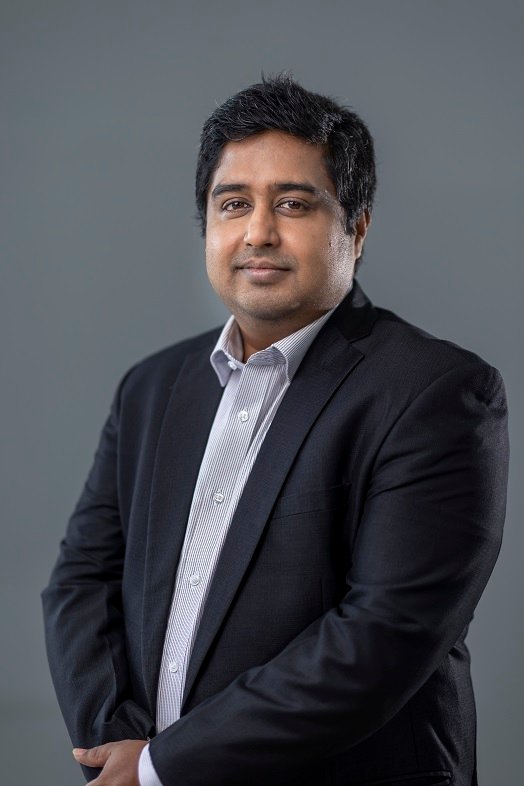
Bhavyen Bhandari

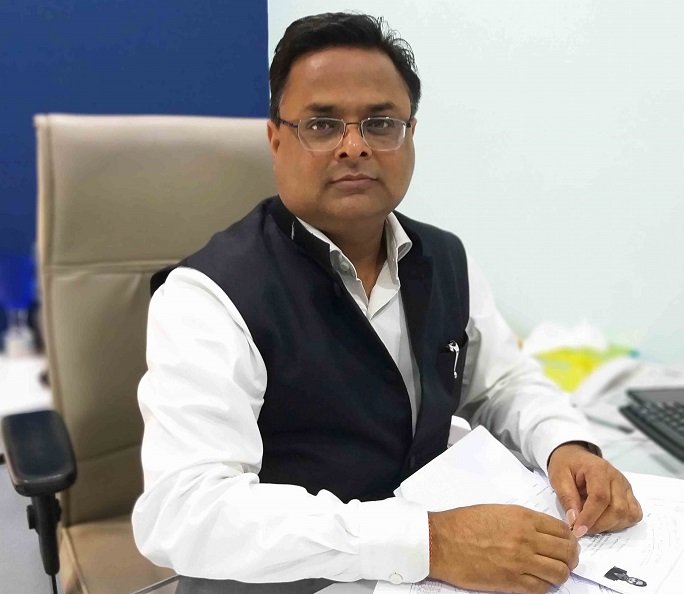
Interview with Bhavyen Bhandari , Co-founder of Mantra Softech…

Mr. Bhavyen Bhandari, co-founder, Mantra Softech, a global hi-tech manufacturer of biometric and RFID-based products and solutions heads the projects division of the company. He is one of the few renowned entrepreneurs in biometric manufacturing and R&D capabilities having vast expertise in handling projects of several reputed corporate giants.

Let us know more about his views and plans

Q1. Mantra offers a host of security solutions to businesses from different sectors; could you brief us about your key offerings?

A.  Our offerings are related to identity solutions for men and vehicles based on valid identity, access authorization, and checking of valid credentials for accessing premise. It covers all business applications such as attendance, workers management, visitors, canteen, vehicle, drivers by integration of face, finger, IRIS and RFID etc technology together.

Q2. Covid pandemic has taken a toll on most businesses. How has this scenario impacted your business and offerings?

A. Quick innovations and rapid implementation was required during post Covid and majority of typical industrial applications are turned into contactless identifications requirements. Industries are fully ready to implement innovative ideas and that helps us to do innovations in technology.

Q3. With many startups coming up, the last ten years have remained very dramatic in terms of companies giving huge weightage to security-related technology. In your experience, what security solutions are demanded the most in today’s day & age?

A.  Industries are focusing to protect digital data and using logical security, we can prevent and protect digital data and data storage device is going to help industries whereas physical security is required to convert into intelligent system to manage and automate men and machines.

Q4. DigiYatra initiative is in its first phase and is set to revolutionize passenger onboarding in the aviation sector. Being a leading biometric company, how do you envision the opportunity this initiative has created?

A. Electronic gates for passenger boarding system is huge potential market for biometric industries and that can provide hassle free and self – sufficient boarding experience to passengers.

Q5. Mantra has a long history of providing solutions for government-led schemes, and the role of Aadhaar has remained pivotal in it. We’d like you to throw some light on how things became better and more transparent for the commoner with Aadhaar coming into the picture.

A. Aadhaar is one stop solutions for all direct benefit transfer and Government funded scheme that provides subsidized items directly in hand of beneficiaries. This makes huge impact and provide social economic security to beneficiaries that Government backed schemes are directly benefitted to citizens and residents of India.

Q6. What are some of the critical parameters you keep in mind while opting in for a project?

Ans: We are focusing on three major aspects:
1. Successful On-field delivery and Implementation
2. Resolving use cases required for business and subject
3. Solutions to address pain areas of end users whosoever is using technology
If, solution design and technology is not able to suffice above three requirements then Mantra is not opting project.

Q7. What are some of the benefits your clients derive when they partner with Mantra for their security needs? And, what is that one major USP that gives your brand a competitive edge over the others?

Ans: Mantra is providing all varieties of product and solutions that anything related to identify and biometric technology. Its expertise into not only manufacturing of identify based hardware and software but also into implementations, delivery and commitments towards services makes most reliable and affordable identity solution provider.

Mantra’s 360 degree offerings and inclusion of local contents for all identity solutions are preferred by partners and offering “One Window” for all identity related requirements.

Q8. In the upcoming times, what should we expect from Mantra that redefines business solutions?

Ans: Mantra is investing heavily into research and development to provide design excellence, quality excellence and next generation identity technology including Software as Services, portability and mobility in hardware, long distance authentication gadgets, intelligent biometric platform that provides better security, automation and fulfil all business needs related to identity requirements.

Mr.-Rakesh-Goyal-Director-Probus-Insurance-Broker-Limited-scaled-1

Exclusive Interview with Mr. Rakesh Goyal, Director, Probus Insurance

-Editorial Team SWS

We at Shreyas WebMedia Solutions (SWS) thank Mr. Rakesh Goyal, Director, Probus Insurance for the exclusive interview opportunity. Mr. Rakesh Goyal (RG) discussed various aspects such as the company’s expansion plans,  tech stack upgrading with contemporary AI and ML technologies, the local distribution network, and many more.

Let’s know more about his success story and his vision. 

SWS: Could you explain how the company evolved from a regular insurance brokerage to a well-known tech-enabled platform?

RG: Integration of new technologies while enabling Artificial Intelligence and the development of process-oriented ethos have been the key area. Our cohesive approach with unified tech, while developing required skill sets and creating a thorough data strategy for the processes have been our hit approaches. Technological infrastructure has helped us evolve from a regular insurance brokerage to a well-known tech-enabled platform, taking the high-tech road with the wellspring of technology innovation. 

SWS: How do you want to establish a name for yourself?

RG: Insurance not only benefits policyholders, insurers and aggregators but also supports society as a whole. Policyholders buy insurance to avoid financial hardship in the case of unprecedented situations or to build up a monetary reserve for a specific purpose while attempting to reduce mortality, deprivation, and endurance risks. Probus Insurance Broker’s fundamental goal is to serve society as a whole and to provide a financially equipped & safer community for both rural and urban populations. Not only do we want to provide the optimum insurance plan to our customers, but we also want to provide a haven for all of our insured’s family/dependents. We aim to provide the finest insurance plans for all families, as well as ensure to be a huge helping hand in any crisis for our customers and support them at every step of preventative care. We wish not just to generate profits or revenue, but also to give back to society by supporting all kinds of families by insuring them.

SWS: Yours is the only broking firm in India that has successfully balanced its online and offline presence. Can you shed some light on this?

RG: As customers across the different domains are considerably migrating and looking for online options, Probus too wanted to be a part of this ever-increasing evolution by embracing digitization. Our online platforms (website & applications) have been at the forefront along with the social media/digital media presence that has balanced the online presence. Talking about the offline presence, our quick step-in services, as well as POSP, have majorly contributed to the offline area. In addition to this, our user-friendly online platform is designed with the self-service concept along with inclusion of new technology which enables the users to browse through the various products and find the optimum suit for themselves, thereby ensuring enhanced and satisfying customer satisfaction.

SWS: Probus Insurance is the country’s second FDI beneficiary, and you recently raised $6.7 million from BlueOrchard Investment Managers in Switzerland. Would you like to expand on this? 

RG: We have been the only InsurTech company in the country who have been profitable since day 1. But at a certain point in time, the support factor and the expertise of the big players who are well versed in the InsurTech industry stand essentially more significant than the money. Having said that, with the expertise of BlueOrchard which has invested in more than 91 countries in this space. The funds are undeniably necessary but the most critical thing that we will be receiving from them is their expertise in expanding business and taking everything at Probus to the next level. With their knowledge and learnings of different countries, their support would take us to new statures. Through this funding, we have not just received the capital, but have received an array of distinct critical things which are highly essential for growth. Their investment is indeed a big support to help us serve society with our services in a more reformed way. Moreover, it would also help us expand in the industry as a whole with their expertise and tactics. It has been extremely rewarding and exciting to learn and comprehend from a more seasoned perspective, and to collaborate for the good of the organization. This investment definitely ensures the smoothest flow of work possible, as well as a healthy balance of profit and service to society along the way. 

SWS: What do you think the variables are that contribute to the company’s constant growth over the last four years?

RG: Getting smarter through technology adoption, implementing a coherent strategy, executing a comprehensive data strategy and creating the right talent & technology infrastructure have been the key variables that have contributed to the company’s constant growth over the last four years. 

SWS: Why did you decide to upgrade your existing tech stack with contemporary AI and ML technologies?

RG: The idea of upgrading the existing tech stack for distribution, claims, underwriting & pricing could be enhanced using these technologies. We are looking forward to identifying the required modifications and new technologies to support the next normal. By upgrading and investing in the right digital tools, we are aiming to further enhance the efficiencies in the policy management process for insurers.

SWS: Can you inform us about your local distribution network and footprint? 

RG: We have been radically evolving by incorporating several improvements through the implementation of various processes so as to meet the expectations of the customers. So far, we have offices in 20 different cities and with around a team of 375 spread across 40 cities. In addition to this, we have sold policies in 14500 pin codes in the previous year and we are aiming to expand further. 

SWS: In the following four years, how many cities you intend to cover and how many insurance beneficiaries you plan to reach?

RG: We are expecting to have our presence all over the country, thereby covering all the cities & rural areas in the existing pin codes. This will enable us to serve people from every corner of the nation. We are also looking forward to stay profitable without burning the capital by just investing, as they say shrewd investments are necessary with proper planning and strategy. Without planning and building the right strategy there are no chances of achieving this goal. Our strategic plan will help us penetrate different localities thus considering the interest of different people who lay their interest in Probus. It’s not only about profitability but being competitive, consistent and balancing. Our goal is the collective growth of all our stakeholders with the right business ethics and transparency. Over five years, we want to reach out to rural parts of the nation. Our POSPs are available to assist all whosoever come in contact with us, with the right knowledge & awareness of the insurance coverage. This will help customers to not only choose and customize their requirements of policies requirements in a more informed manner but also help them understand the importance of having a policy for them and their families. We attempt to make insurance available to everyone in a more quick and hassle-free manner.

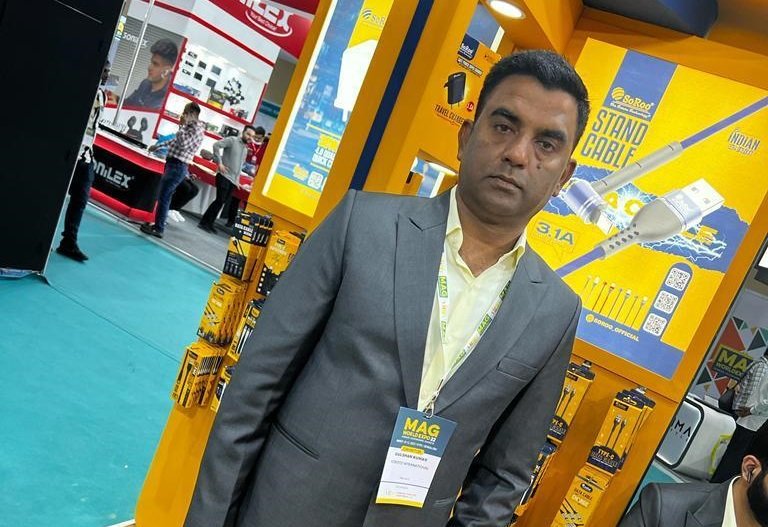
Mr. Gulshan Kumar Ahuja, CEO, Soroo

Interview with the founder of Soroo: The future of technology


-Editorial Team, Shreyas WebMedia Solutions  

We at Shreyas WebMedia Solutions (SWS) thank Mr. Gulshan Kumar Ahuja, CEO of Soroo for the exclusive interview opportunity. Mr. Gulshan Kumar Ahuja (GK) discussed the motive behind the initiation of soroo, his vision and many more.

Let us know more about his success story and his thoughts

SWS: What inspired you to be where you are today?

GK: My main inspiration comes from providing the best service to every customer.

SWS: How was Soroo established and in which year?

GK: Soroo was established in the year 2003 with a motive to provide optimum satisfaction to consumers. We started our work with just a joystick that one uses for playing games. Slowly, we expanded and till 2013 we began selling mobile accessories.

SWS: What is the vision behind Soroo?

GK: Our vision is to become one of the best Indian brands that sell mobile accessories.

SWS: What are you working on right now?

GK:Answer: We are planning to start an e-commerce platform for mobile accessories.

SWS: What were the obstacles you faced when you first started your journey?

GK: Starting your own business is never easy. The corporate world is definitely fierce. Hiring suitable candidates, financial management, winning the trust of customers were among the key obstacles that we faced at the start of our journey.

SWS: Where would you like to see yourself in the next 5 years?

GK: In the coming five years, we’d like to have a nice customer base who have faith in our products.

SWS: Who is your target audience?

GK: Teenagers and adults who are tech-savvy and non-tech-savvy as well.

SWS: What is your goal?

GK: Our brand’s goal is to become more than just an e-commerce platform. We wish to boost our network and target a large range of customers.

Mathew Joseph, CEO & Co-Founder, Sleepyhead

Exclusive Interview with Mr. Mathew Joseph, CEO & Co-Founder, Sleepyhead

-SWS editorial Team

We at Shreyas WebMedia Solutions (SWS) thank Mr. Mathew Joseph- CEO & Co-Founder, Sleepyhead for the exclusive interview opportunity. Mr. Mathew Joseph (MJ) discussed Sleepyhead’s expansion plans, D2C brand trends, and many more.

SWS: Can you tell us about Sleepyhead’s founders and the motivation for the company’s formation?

MJ: Sleepyhead was launched in 2017 to address the unmet needs of mattress shopper in India. Mattress purchases traditionally come with many pain points, such as dependency on retailers for the right information, high logistical costs resulting in high prices for the customer, poor shopping experience and no return option. 

We solved this by introducing the revolutionary ‘bed-in-a-box’ concept in India that allowed us to send a full-sized mattress roll packed into a nifty box. This gave way for massive benefits to the customer like doorstep delivery and attractive prices. 

Sleepyhead’s products are created for customers seeking design differentiation at accessible prices without compromising on quality and service. We ensure that our designs are contemporary and our service delightful. 

Before starting Sleepyhead in 2017, I was the primary shareholder and the Marketing Director of Duroflex, an industry leader in the mattress category. My knowledge of the category and understanding of the need gaps in the way India shopped for mattresses motivated me to launch Sleepyhead – a revolutionary and intelligent d2c brand, built for the digital native young India. 

SWS: Could you tell us about the products and services you provide? 

MJ: With our first product launch of ‘Bed-In-A-Box’, Sleepyhead broke all category norms and became India’s fastest-growing D2C mattress brand with 100K+ customers. Today, Sleepyhead is a home lifestyle brand focused on making everyday living fun and fabulous with its thoughtfully designed products. We also introduced the much loved 100-nights trial concept for our mattresses, this takes off the stress on the customer to choose instantly, lets them try it for long and commit to it only when it suits their comfort requirements. 

Apart from mattresses, Sleepyhead offers beds, sofas, sofa-beds, recliners and other bedding accessories like pillows, protectors and comforters. We will focus on scaling our furniture and home décor business next fiscal year. 

SWS: What can you tell us about Norwest Venture Partners and plans for expansion? 

MJ: In total, we have raised 200 Cr from two rounds of funding, initial funding from Lighthouse Ventures and growth funding from Norwest Venture Partners. We have found great partners who understand our brand vision in both Norwest Ventures and Lighthouse. We will be focusing on strengthening our furniture and home décor portfolio, bolstering production and distribution, technology, brand marketing, and investing in the right people as part of our expansion plan. 

SWS: Can you tell us about the increase in your product portfolio, which includes beds, sofas, recliners, and sofa beds? 

MJ: Our furniture range is designed to elevate the home lifestyle with stunning aesthetics and make everyday living more comfortable. Our brand’s uncompromising commitment to quality ensures that the products are made from high-quality materials and are long-lasting. The products are designed to keep customer needs at the centre and solve the multiple new-age home living requirements like work, study, leisure, relaxation and much more. Sleepyhead’s furniture range has the potential to transform any space into a comfy, trendy nook perfect for chilling. The furniture range comes in a DIY format and can be assembled without any tools with great ease.

SWS: After the United States, India is the second-largest income source in terms of mattresses—a rapidly changing scene in India your thoughts on this? 

MJ: India is seeing massive growth in the mattress category accelerated by new-age d2c brands like us. People spent a lot of time at home during the pandemic and that has had a direct impact on home furniture buying.

Mattresses went from a place to sleep to a multi-purpose space for working, lounging, sleeping and chilling. This lifestyle change made people aware of the importance of a good night’s sleep and subsequently realize the value of good quality, comfortable mattress. A D2C brand like ours gave them access to good quality mattresses at attractive prices with the added conveniences of shopping at home and doorstep delivery. We extended our customer-centricity through the 100-nights trial concept. This lets the customer feel reassured about their purchase and try the mattress for a longer duration and make a well-informed decision. 

SWS: There is a lot of room for D2C brands to grow in India. What are your thoughts on this? 

MJ:D2C brands are revolutionizing the way India shops. D2C brands are able to provide solutions that were underserved by the traditional players and uphold customer-centricity. We are also able to solve for specific customer needs and preferences and focus on customer delight. The pandemic has also accelerated the growth of e-commerce in India, giving room for more D2C brands to play. Sleepyhead leveraging the D2C play is able to focus on providing the complete shopping experience to customers and improvise with ongoing trends and requirements. 

SWS How do you explain the entire journey? From a mattress manufacturer to a fast-growing lifestyle brand?  

MJ:The success of our mattress segment inspired us to take a step forward and create comfortable, stylish and ergonomic furniture that resonates with the lifestyle of our millennial and GenZ customers. The range aims to make everyday life easy and fun through creatively designed products. Sleepyhead comes in a DIY format and can be assembled without any tools with great ease.

We are focusing on expanding our portfolio in the furniture category and planning for 2x growth, this financial year. We have many more exciting products lined up for launch and were also featured as India’s fastest-growing furniture start-up brand by INC 42 recently!

SWS: Can you explain the concept of the 100-Night Trial? 

MJ: Comfort is a very personal experience. According to studies, it takes at least 30 days for our body to get used to a mattress. In traditional mattress buying a customer barely gets to try the mattress for a minute or so as is expected to make a binding decision. This speed dating approach to mattress buying is not very reassuring for the customer.

Our unique 100 nights trial allows for customers to fully experience the mattress for 100 full nights before committing to it. If they feel that it is not for them, we understand and fully refund the money. It is a testament to the quality of our product and has helped build trust. 

SWS: What are your accomplishments and awards in the industry so far?

MJ: Our steadfast growth story is getting recognised in the industry. Inc 42 featured us as the fastest-growing furniture start-up brand and we were ranked No 7 in growth category for the d2c brand in India. We are also the preferred e-marketplace emerging unicorn for the groundbreaking and innovating technology by IWPS (Integrated WorkPlace Solutions). We have also been awarded as Gold Seller Status on Flipkart consecutively for the last three years. We strongly feel that a great brand is built by a strong team, our efforts to build a collaborative work culture have been recognized and we were awarded the Great Places to Work certification last year.

About Sleepyhead

Sleepyhead is a D2c lifestyle home décor brand made for the digital native Indian millennial & Gen Z headquartered in Bengaluru. Launched in 2017 with the unique Bed-In-A-Box concept, Sleepyhead broke all category norms and became India’s fastest-growing D2C mattress brand. Today, Sleepyhead is a home lifestyle brand focusing on making everyday living fun and fabulous with its thoughtfully designed products. The brand caters to the underserved needs of the new-age Indian customer by making great designs accessible without compromising on quality and service.

Mr. Serge da Motta Veiga

Exclusive Interview – Serge Da Motta Veiga, Professor of HRM, EDHEC Business School

– SWS editorial Team

We at Shreyas WebMedia Solutions (SWS) thank Serge Da Motta Veiga, Professor of HRM, EDHEC Business School for the exclusive interview opportunity. Serge Da Motta Veiga discussed the importance of Artificial Intelligence in HR recruitment and in new technologies and tools, workplace diversity and inclusion, and many more. 

What criteria do firms use to select the top candidates? 

The selection criteria will depend on the type of company, the industry, and the position they are hiring for (entry-level vs senior-level). For most jobs and companies, though, the rule of thumb is that HR managers seek candidates who fit the company in terms of the position (skills and expertise) and the organisation (its culture).

Could you provide any advice on how to go about networking for career opportunities?

Networking starts with the people you know best – your colleagues, your former colleagues, and your friends and family. Never rule out relatives or schoolmates. When you find the company (or companies) you want to work for, think about who in your circle might have a contact there, and then go to that person and ask how best to get an interview or at least an introduction. As an HR management professor and researcher, I study the job search, and I encourage job seekers to reach out to a potential employer, ask questions, and show their interest. Nowadays, with social media (e.g., LinkedIn), the reach of networking is much broader than in the past. 

What is the best way to seek a job and make a career plan?

At EDHEC Business school, where I am a professor, I teach a course where I challenge students to consider their future careers carefully and how those careers will line up with their personal goals and interests. Surprisingly, many young people don’t take the time to figure out what they truly want out of life and what will make them happy. Instead, they run after a job with a high salary or an impressive title. This often leads to burnout at a young age. Research shows that the average age of burnout is now 32. Instead, young professionals should evaluate the different career options in front of them, which ones align best with their interests, and which ones offer the skills and competencies that will help them succeed in the future. 

Could you tell us about the importance of Artificial Intelligence in HR recruitment and new technologies and tools?
Artificial Intelligence is being used more and more in the hiring process. The use of AI to analyse an applicant’s resume, voice, facial features, or social media activities is gaining acceptance in business, but that doesn’t mean that everyone agrees that it is the best way to select an employee. There are still ethical questions around using these technologies, and I advise that HR managers take a balanced approach to using AI. Specifically, when AI is used for more intrusive purposes, such as analysing job applicants’ social media profiles, this may be perceived by job applicants as violating their privacy. That said, AI can expedite certain stages of the recruitment process, such as resume screening, but human interaction is critical. Research shows that automated interview videos, for example, can be challenging for underrepresented categories of job seekers. There is also evidence of gender and race bias in these technologies, so HR managers must be vigilant or miss worthy candidates.

How to maintain composure during a job search and how to deal with one’s feelings after a rejection? 

Looking for and securing a new job can be emotionally draining. As rejections mount, job seekers can begin to feel that their skills and experience don’t have value in the job market. But this isn’t true, and so job seekers need to take time to psychologically detach themselves from their search as often as possible. By taking time away from the search and participating in other activities such as sports, entertainment, or family time, job seekers will feel more energised and motivated, and they will be more likely to stay focused on their search. Research I have conducted shows that job seekers who take time out tend to receive more interviews and, therefore, more opportunities.

Can you shed some light on workplace diversity and inclusion? 

It is more important than ever to take diversity seriously in the workplace. Research shows that a diverse team is a more productive and creative team. I encourage company leaders to be transparent about their own diversity—a parent who is an immigrant, a physical handicap, a hardship they overcame, etc.—and ask them to encourage their teams and job applicants to be transparent about who they are and where they came from. By telling our true story, we spotlight our unique talents and strengths. Furthermore, companies should invest in training employees to understand differences in the workplace and how they can all work together to make their workplace more inclusive.

What advice would you provide to young people regarding a career? 

I encourage students in my career development course at EDHEC to carefully consider how they want to live their lives. Where do they want to live? How much time do they want to spend travelling for work? What kind of work makes them the happiest? Do they want to have a family, and how much time are they willing to be apart from their family? I am often surprised by how little some students plan for their careers and how many of them charge ahead with a degree and job because of pressure from society, their families, or peers. In my course, students discuss their career plans with their peers, who often push back and tell them they need to reassess their goals. It’s an activity that helps some students rethink their future and make completely different plans. I also ask students how they would like to measure their life when they are older; what do they want to see when they look back at their career and life experiences? 

Exclusive interview with Bahruz Asgarov, Deputy CEO, Azerbaijan Tourism Board

Shreyas WebMedia Solutions team thank Bahruz Asgarov, Deputy CEO, Azerbaijan Tourism Board for this exclusive interview. We also thank Malak Mammadova, Communications specialist, Azerbaijan Tourism Board for the opportunity & for his support in making this happen.

1. Please let us know about Azerbaijan Tourism Board

Azerbaijan Tourism Board (ATB) is a national promotion body established under the State Tourism Agency of the Republic of Azerbaijan in 2018. It has been bringing the country to the global stage of in-demand tourism destinations through the global marketing campaign “Take Another Look” unveiled the very same year.

Its main objectives are to support the growth of Azerbaijan’s tourism industry and encourage visitors to explore the country’s rich cultural offerings and experience its ancient heritage. The country is being positioned in core markets as a destination of new travel experiences full of distinctive flavours, colours, monumental heritage, and natural beauties, providing a range of accommodation options from luxury hotels to affordable hostels.

2. What is your plan to boost tourism in 2022?

As part of our recovery strategy from the pandemic, we have been focusing on building sustainable tourism in the country, catering to the needs and expectations of today’s travellers. To do this, ATB has been putting a strong emphasis on reinforcing the existing assets of Azerbaijan, which it has in abundance, from ancient cultural and historical heritage to breath-taking landscapes, organic produce, and delicious cuisine. Thanks to this strategy, we have been able to develop new experiences that are both environmentally friendly and suitable to the health and safety measures implemented because of the pandemic.

Flame Towers

One such experience is Slow Food Travel – a concept that has been developed within an EU-funded project. This project was jointly implemented by ATB and Slow Food International, and it was successfully completed in 2021.
The SFT model brings local producers and gastronomic communities in certain regions and multiple parts of the tourism value chain together. It allows travellers to enrich their experience through farmers, cheesemakers, herders, winemakers, and other local producers by learning about different types of food which have been produced since ancient times. This experience is now planned to be expanded to the subtropical south of Azerbaijan where citrus and tea plantations, as well as distinctive flavours, will create a different vibe within Slow Food Travel.

Another important development in sustainable experiences is that there are now 16 new hiking trails across the northern and north-western routes of Azerbaijan, passing through remote mountain villages, forests, lakes and waterfalls. We are also cooperating with the Transcaucasian Trail Association, which is developing a long-distance hiking trail through the Greater and Lesser Caucasus Mountains, and a 97-km hiking route through the lush, forested mountains of the Sheki and Zagatala regions of Azerbaijan has recently been added to this project.

Heydar Aliyev Centre

The opening of the Mud Volcanoes Tourism Complex is also planned for this year. This centre is expected to increase the already-high interest in the amazing collection of mud volcanoes in Azerbaijan and facilitate a combination of experiences from quad biking and zip-lining to workshops for children. It is also located in close proximity to the UNESCO-protected Gobustan Rock Art Cultural Landscape where an astonishing collection of ancient petroglyphs can be explored and thus will allow travellers a doubly memorable visit.

Among other new experiences are safari tours in Shamakhi surrounded by the Caucasus Mountains for eco-tourists and wildlife lovers, the Alpine Coaster at Shahdag Mountain Resort, the world’s first oil tanker museum, and the reconstructed zoo in the capital city, Baku. We are working on interesting thematic routes as well.

Other plans for 2022 include continuing research on how best to develop tourism offerings in Karabakh, where major restoration work continues at full speed. With one airport – Fuzuli International Airport – opened and two more under construction, this region has great potential to develop multiple experiences across outdoor activities, health and wellness, cultural routes, and other directions.

3. Any mega business event on the cards? If yes, please provide us with the details.

The pause during the pandemic allowed the Azerbaijan Convention Bureau (AzCB), which is the main body in charge of developing the business events industry in Azerbaijan and operates under ATB, to expand its research database of possible association events which could be attracted to the country.

Together with local partners, AzCB had already managed to win the bid for the International Astronautical Congress which will be held in Baku in 2023. This event is expected to bring together over 6,000 representatives of the space industry.

Baku, Azerbaijan

That very same year will be a series of events that Azerbaijan won the right to host, such as the conference of the European Association for Cranio Maxillo Facial Surgery, and the 99th Session of the European Youth Parliament. As for 2024, Baku will be preparing for the Leadership Symposium of the University Scholars.

Speaking of the business events industry, I would also like to mention the importance of incentive travel to Azerbaijan from India. Along with interesting experiences, a lot of new hotels have opened, including Courtyard Baku by Marriott and InterContinental while Ritz Carlton and Hotel Indigo will soon open too. There are also interesting types of accommodation that are fast becoming popular, such as runaway houses surrounded by perfect landscapes.

All in all, Azerbaijan has a lot of opportunities to attract incentive travel, and we would be more than pleased to welcome back Indian travellers from this segment too with even more to offer.

4. Which are the most attractive tourist destinations?

The pandemic has certainly caused a tremendous shift in traveller behaviour and choices. I think those who can adapt to the changes observed in travel trends will be among the winners. Here we are talking about those destinations that are actively working on building sustainable and responsible tourism while developing unique experiences.

However, it is not going to be enough. Empowering local partners and communities is more important than ever. It is now not only about what tourism destinations can offer in the short term, but also about how to make it work in a way that they are stronger with all local partners involved in the long term as well.

5. How was the impact of Covid?

The pandemic presented unprecedented challenges for the whole world, and the tourism industry suffered a great deal from the travel restrictions. The very first concern for all of us was the health and safety issue. In fact, Azerbaijan was one of the very first destinations to introduce nationwide health, safety, and hygiene standards through the SAHMAN programme (Sanitation and Hygiene Methods and Norms), which was designed for local industry players to improve hygiene and sanitation across accommodation, F&B, and touristic transportation providers.

Early on we prepared a four-phased recovery plan, beginning with closed borders and lockdown in phase one and returning to a “new normal” with international travel restrictions lifted in phase four, which we are in at the moment.

Mud volcanoes

In the first phases of this recovery plan, the ATB team designed an e-learning platform, Azerbaijan 101, for travel agents and representatives across the global tourism industry to provide them information about Azerbaijan’s offerings across health and wellness, gastronomy, wine tours, and cultural heritage. Also, the highest number of people who got certificated as an Azerbaijan travel experts was from India. These training continue to this day so that our international stakeholders can access relevant information from anywhere in the world, and there are courses added regularly on different themes, such as filming in Azerbaijan, birdwatching, hiking, etc.

What is more, we developed the website salambaku.travel for visitors to go on a virtual tour of Baku, from the UNESCO-listed Old City and Flame Towers to world-class museums and other tourist attractions.

Another issue the pandemic brought was obviously the restrictions on international travel. However, this created an opportunity too, as we have witnessed an increasing demand for domestic travel among citizens and residents of Azerbaijan. To address this and support the industry, we launched a domestic tourism campaign called “Macəra Yaxındadır” (“Adventure is Near”) to encourage locals to re-explore the beauties Azerbaijan has to offer.

Now, with the vaccines rolled out, the daily number of cases going down, and the number of countries from where travellers are allowed increasing, we find ourselves in the fourth phase, where our borders are currently open to 87 countries for travel by air. The situation with the pandemic in Azerbaijan is getting much better and we have a positive outlook on the future of the tourism industry.

6. How many Indians visited last year and what are the measures you are taking for promotion in India?

In 2021, our borders with India were still closed. However, as of this year, India has been added to the list of countries from where air travel is allowed. For this, passengers aged over 18 need to submit both an official document confirming complete vaccination or immunity certificate following recovery from COVID-19 and a negative PCR test was taken within 72 hours before the flight, while for minors only the latter needs to be provided within the indicated period of time.
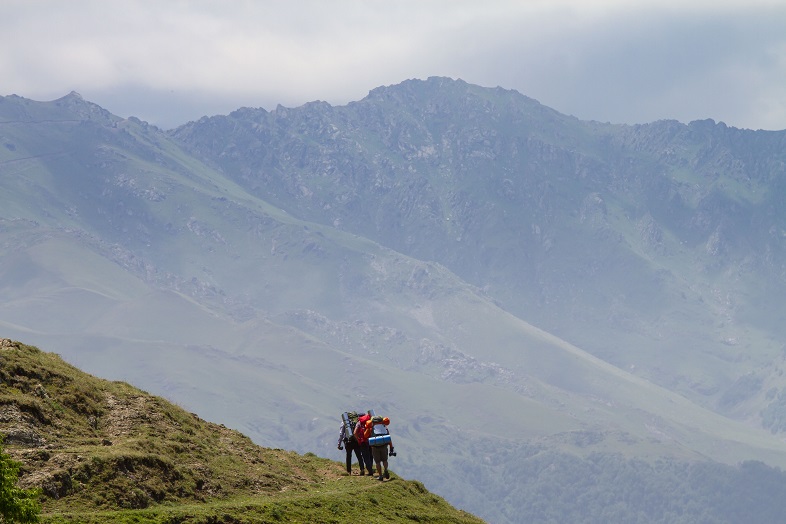
Hiking in Azerbaijan

Despite the long pause, India remains an important market for us. I would like to specifically mention that when we reached an all-time record of 3.2 million arrivals in 2019, the most remarkable markets were Central and South Asia with substantial growth of about 67%, with 65 thousand Indian travellers visiting. We are confident that India will soon return to the list of countries with the most arrivals in Azerbaijan just like before the pandemic with easy e-visa procedures and interesting offerings in place.

As for the measures to promote Azerbaijan in India, I would like to mention that we had quite extensive activities here before the pandemic. We participated at OTM and SATTE and organised a nice media dinner in Mumbai. There were also cover photo shoots arranged for Brides India and Harper’s Bazaar. We have also been communicating with wedding planners from India. We hosted fam trips for wedding planners from Delhi and Mumbai, both virtually and physically. In particular, we are present on the platform of ‘wedding sutra’ with our own destination profile. We also participated in the World of Wedding 2020 virtual event in India.

As soon as the borders opened with India, we decided to participate at OTM as a first step to restarting our promotional activities in this beautiful country. We are looking forward to exploring new collaboration opportunities to bring India back to our top source markets just like before the pandemic.

7. Any message you would like to give to the business fraternity in India?

As I mentioned earlier, we are delighted about finally being able to welcome Indian travellers back to Azerbaijan, be it for pleasure or business. We are also looking forward to reconnecting with our esteemed counterparts in India face to face at OTM in Mumbai after such a long time. India is a very important source market for the inbound tourism of Azerbaijan, and we look forward to working together with multiple parties from this beautiful country to redefine our strategic connection in this new normal at the highest level possible.

8. Do you feel the war situation is going to affect tourists from Russia and Europe?

It is quite early to predict anything at this point, but all we can say is that peace and order are essential for the development of the tourism industry. As Azerbaijan Tourism Board, we wish that this conflict will be resolved soon, and peace will come, not only for the sake of the tourism industry but also for all humanity.

Slow Food Azerbaijan

Rimo Bose, PR Manager, TCL India

Interview with Rimo Bose, PR Manager, TCL India

Interview with Rimo BosePR ManagerTCL India on the occasion of Women’s Day.

  • How has your journey been?

My journey has been pretty inspiring given each hurdle, be it personally or professionally has made me the person I am today. My mother and father have been a great source of inspiration. Being part of the media industry has its own pros and cons but I have been guided by good leaders, sometimes in my earlier days there were incidents that questioned the fact how one survives this rat race, but then every challenge is an opportunity. Recently, after losing my mother I have realized that so much depends on a woman when it comes to family, and following her footsteps my aim is to strike a balance between my home and work. We need to understand we can only empower ourselves and push ourselves.

  • Who has inspired you and how do you inspire your team?

I would like to give the credit of my success to my mother who has always inspired me. She was the one who encouraged me to pursue Public Relations and excel in the field even when the odds were against me. One thing that I have learnt from her is that no matter what situation you are in, you should not lose hope and stay self-motivated. As far as inspiring my team is considered, I always make it a point to communicate with my team, incorporate their suggestions while making or taking critical decisions. Apart from that, one major thing that I think all leaders should do is to be empathetic towards their team, because if you will try to understand the team, they will certainly put in their 100% which will in turn impact the performance of the company.

  • Your thoughts on Empowerment of Women?

Women empowerment for me is not only a term. I strongly believe that women empowerment should be executed strongly across industries. Women should be encouraged and empowered for a better future. As a part of the society we should ensure that the women around us feel safe at home and work and they should be given equal opportunities to grow and prosper. Also let’s practice giving equal respect to both men and women, we are first human beings, let us not forget that.


Rimo Bose, PR Manager, TCL India

Rimo Bose is currently heading the PR & Communications department of TCL India. She has 6 + years of experience in the field of corporate communications. She joined TCL in the year 2020, and continues to be the lead for all PR and media related activities. As the spokesperson of the company, Rimo believes that TCL brings an array of technologies that the Indian audience will highly appreciate. Her aim is to bring the brand communications closer to the audience via strategic PR techniques; she also believes that TCL as a product brand gives an open door to branding professional to create wonders.

Previously Rimo has worked with Continental Automotive, where she managed both internal and external communications, has worked both in India and Germany, also supported US market. She has also worked at Akshaya Patra Foundation in marketing communications. Additionally, she has also worked in agencies for clients such as – Bosch, 3M & Scania. Also, started her career as member of press board for Kolkata Film Festival and enjoyed working at Silicon India as a tech editor.

Rimo is a Masters in Mass Communications from Calcutta University and has a PGDM in Public Relations from Bharatiya Vidya Bhavans. Apart from being a communications professional, she is an avid reader, enjoys sketching and practices classical dancing.

Rimo’s mantra: “A good communicator can tell you the difference between noise and news.”

Siddharth Chaturvedi - AISECT

Exclusive Interview with Mr. Siddharth Chaturvedi- Executive Vice President of AISECT

We at Business News This Week (BNTW) thank Mr. Siddharth Chaturvedi- Executive Vice President of AISECT for the exclusive interview opportunity. Mr. Siddharth Chaturvedi (SC), discussed various aspects such as AISECT’s mission and vision, collaborations, and also about AISECT’s skill development courses with our Chief Editor, Mr. Neel Achary, BNTW.

BNTW: Could you tell us about AISECT’s origins and founders?

SC: AISECT is the brainchild of Mr. Santosh Choubey. While in the Civil service, continuing his work at Delhi Science Forum in the ’80s, Mr Choubey realized that the need of the hour was to communicate in the local language on key subjects like general science, electronics, agriculture, environment, water and soil management etc. Under his leadership, AISECT was established in 1985 and has been steadily reaching out to the remotest corners of the country to empower people, generate employment for the youth and unfold entrepreneurial initiatives.

It reflects the larger vision of Mr. Choubey to build a social organization aimed at disseminating science and technology (S&T) knowledge, services, and solutions to underserved rural areas in India and generating job opportunities for rural youth.

Over the past three decades, AISECT has grown to become India’s leading Social Enterprise that is working in the areas of Skill Development, Higher Education, Financial Inclusion, e-Governance and other ICT-based services to bring about an inclusive change in the semi-urban and rural areas of the country.

BNTW: What services do you provide and to whom do you provide them?

SC: AISECT has various pillars across Higher Education, Skilling, Financial Inclusion and ICT based education, directed at the youth of our nation.

The AISECT Group of Universities has established five premier universities at locations that were that required a quality higher education ecosystem. These include the Dr. C.V. Raman University in Bilaspur (Chhattisgarh), the Rabindranath Tagore University in Bhopal (Madhya Pradesh), the AISECT University in Hazaribag (Jharkhand), Dr. C.V. Raman University in Vaishali (Bihar) and the Dr. C.V. Raman University in Khandwa (Madhya Pradesh).

Under financial inclusion scheme, AISECT works as a National Business Correspondent for three nationalized banks and two Regional Rural Banks. The AISECT Banking Kiosks also offer a host of services under Government schemes such as the Pradhan Mantri MUDRA Yojana, Pradhan Mantri Suraksha Bima Yojana, Pradhan Mantri Jeevan Jyoti Bima Yojana, Atal Pension Yojana, etc.

In terms of ICT based services, the group has carved a strong presence in 475 Districts, 1500 Blocks and 7200 Panchayats across 29 States and 3 Union Territories through over 20,000 Centres, 12 State Offices and 28 Regional Offices. Till date, it has imparted skills-based training to over 20 lakh people, created employment opportunities within the network for more than 75,000 people and empowered the lives of over 50 lakh people through various innovative products and services.

AISECTMOOCS.com is India’s largest free online open learning platform while RojgarMantra.com addresses the entry level manpower requirements of private and public sector enterprises at the small town, district and block levels.

BNTW: What is AISECT’s mission and vision?

SC: Our collective vision is to be recognized as India’s preferred Skilling and Training organization creating sustained livelihood opportunities for millions of people.

Our larger mission is to deliver a variety of skill development programs to semi urban and rural youth to ensure they become employable.

BNTW: Could you tell us about your collaborations? 

SC: AISECT is successfully executing a number of skill development projects of the Central and State Governments ministries like Rural Development Ministry, Ministry of Skill Development and Entrepreneurship, NIti Ayog, Ministry of Minority Affairs, Ministry of Education, Ministry of Housing and Urban Poverty Elevation, Ministry of New & Renewable Energy. We are also the affiliated partners of 15+ state skill development missions like (MPSSDEGV, UPFDM, BSBM, RSLDC, GLPC, OSBA, ASBM, PSDM).

We are the implementation partners for Pradhan Mantri Kaushal Vikas Yojana (PMKVY), Pradhan Mantri Kaushal Kendras (PMKKs), Deen Dayal Upadhyay Grameen Kaushalya Yojana (DDU-GKY), National Rural Livelihood Mission (NRLM), National Urban Livelihood Mission (NULM), National Skills Qualification Framework (NSQF), Agriculture Technology Management Agency (ATMA) Project, etc.

We have also collaborated with some of India’s leading corporates and multi-national companies like (SBI, Airtel, Microsoft, Arcellor, IBM, NTPC, Power Grid, JSW and more) Bilateral Agencies like UNDP Educational Tie-ups – Microfocus, Wadhwani Foundation, TCS ion, HP, Dell, to set up Centres of Excellence and provide on the job learning experience for our students.

BNTW: What are some of the accomplishments and awards that you’ve received thus far?

SC: Over the years, my areas of interest have been in the welfare of the rural population of India through various initiatives across different domains. The innovations brought by the organization have yielded great results and have been widely acknowledged as well as awarded by renowned international and national organizations such as World Bank, Schwab Foundation, SKOCH, Manthan, NASSCOM, ASSOCHAM, NSDC, SBI.

In our quest to improve access to financial services in the semi-urban and rural regions the ICT centre model, has contributed significantly towards improving the access to banking in the unbanked and underbanked regions across the country. The scheme has enabled the setting up of over 4500+ banking kiosks and 95 lakh bank accounts that have carried out transactions worth over 35000 crores.

BNTW: What areas have you expanded your services to so far, and what are your future plans?

SC: With a keen focus in the areas of skilling and development, AISECT has forged strong industry relations with corporates and policy makers to provide inroads to the youth. In the years to come, the focus will continue in the areas of job creation and upskilling, especially in the Tier 2 cities that are home to a vast pool of talent. We have been instrumental in parting skills-based training to over 20 lakh people, created employment opportunities within the network for more than 75,000 people and empowered the lives of over 50 lakh people through various innovative products and services. We would like to broaden our horizon to build entrepreneurial opportunities for women and create opportunities to further empower them.

AISECT is developing its online learning portal. In the next few years, AISECT aims to bolster learning in regional languages in addition to offering courses in fields such as health care and humanities. AISECT students, as well as students from India and abroad, can enroll for the courses. There is already keen interest from countries like Ghana for online training on retail, banking and other subjects. The portal is set to go live in April 2022.

BNTW: What kind of skill development do you believe India’s youth require?

SC: India is at the cusp of innovation and entrepreneurial growth as we speak. While there is a large pool of talent in areas like science and technology, bio-tech and information sciences, the need of the hour is to hone soft skills and communications. In order to help students achieve their dreams, the need of the hour is to focus on ‘on-the-job’ training and build overall business acumen to thrive in a highly competitive landscape.

BNTW: Are your skill development courses focused on future or current needs?

SC: The AISECT Model is a multi-purpose, self-sustainable, scalable and entrepreneurial model designed to cater to the industry requirements, while preparing the youth to stay abreast with changing times. With inputs from industry veterans and key policy makers, our curriculum has a keen focus on innovation and skill sets required for the next few years.

BNTW: Is your training practical and certified?

SC: All our Vocational and Skill based training programs are practical. We also provide blended mode of training. All our programs are NSQF aligned and certified by respective government bodies like AICTE, NAAC.

BNTW: Is there anything you’d like to say to the youth to encourage them to prepare for a good future?

SC: The world today is a canvas of opportunities. There are plenty of opportunities for the youth of our nation to explore and create a niche for themselves. Students need to focus on the latest trends of technology and innovation along with working on their communication skills. It is only when the youth is well-educated; the country can prosper and reach new heights.

Adil Meraj Founder and CEO of Gurucool

“I was my inspiration” says, Adil Meraj Founder and CEO of Gurucool

Here’s an exclusive interview of Mr.Adil Meraj, Founder and CEO of Gurucool only on Business News This Week (BNTW). He shared his insights on the prospects of Edtech sector on many more aspects with BNTW.

Let’s know more about his success story and his vision.

Tell us about Gurucool? What was the inspiration behind Gurucool?

Upon being presented with this question, Mr Adil Meraj says, ‘I was my inspiration.’ He recounts his experience as a high schooler, when he created a confession page on Facebook for his fellow Hamdardians but later realised that the page became more of a space for slanders and rumours than the intended constructive connecting platform for students. Consequently, he closed the page but his quest for doing something towards establishing a purposeful community, continued. Later, while pursuing his civil engineering, he felt out of place. Feeling very disengaged from his classroom, he realised the passion in him to initiate something that would bring actual and significant changes in society. And finally, in 2019, he had his eureka moment. Over a random discussion in a cafe with his schoolmates, he came up with the idea of Gurucool – an Educational Networking Platform for Educators and Learners, where people come together purposefully, and empathetically. The vision of this project, though, boils down to providing an academic space for learning and making quality education accessible for the underprivileged that began with ‘The Parking Kids Project’ and is currently being ensured and advocated through the ‘Padhaai’ Initiative of Gurucool. 

What were the challenges faced while setting up the company? 

Gurucool was set up from ground zero and up. Stepping foot into the venture, the CEO and other core members were new and naive to entrepreneurship and the start-up community. Consequently, the first challenge was to build a skilled, motivated and supportive team to execute the idea of Gurucool. This was overcome with great ease as Mr Adil’s very own friend circle took lead and paved for the Gurucool we know today. 

Secondly, finance is a big aspect of starting a company. The team needed a work-place and renting one initially was quite costly. However, Gurucool now has an established centre to its name and is set to launch many more.

Being an edtech platform, Gurucool required a skilled technical team that could work closely with the interests of the core members and create a platform accessible for all. The search for technically skilled persons proved to be a great challenge initially too. 

Another challenge faced by the team was fluidity in the system. For a new team that is struggling to establish a name and place in the edtech community, coming to a unanimous decision can be a struggle. But it’s all made easier by a common goal and motive. And that defines Gurucool today ~ in our own space and time.

How did the name Gurucool come about?

Gurucool, the name comes about from the past custom of guru (teacher) and shishya (student). The name emphasises the pure, unhindered relationship between a teacher and a student that highlights a transactional bond over knowledge and experience. With the name Gurucool, we hope to invoke similar intimate, and meaningful relationships between our educators and learners, but with an added pinch of coolness. Keeping this in mind, the name Gurucool was coined- a mixture of traditional integrity with some newfangled coolness.

A Coolguru, at Gurucool, aims to pass their patrimony to the CoolLearners’ facilitated by empathetic learning and evolving approach. So, this was the inspiration behind naming the company Gurucool. 

What do you think is the future of Edtech?

Undeniably, education has now become a basic necessity much like food and clothing. And history bears witness to civilizations adopting new educational techniques to cater to different social requirements. With the pandemic, the pace of education has only accelerated. Education clubbed with technology may be a new norm, but is here to stay for long. From schools adopting smart teaching techniques to various skill e-courses available, edtech is facilitating accessibility and availability of quality education for all.

However, the challenge of many edtech platforms is imperative, and it is possible that the sellers outnumber consumers. In such a case, edtech platforms are furthermore challenged to evolve and improve to cater to their learning audience. This positive competition only goes on to prove how much education has progressed and will continue to progress.

Another challenge that edtech platforms face is commercialising. With investments from VCs, edtech platforms are expected to give profitable results. And this takes away from the essence of quality education for all. We, at Gurucool are working to make education digital and democratised to enhance the learning experience for all.

What are the future plans for Gurucool?

Speaking firstly about the short-term plans for Gurucool, we aim to launch 15 centres in 6 different cities pan-India. Gurucool is looking to collaborate with various state governments under the Padhaai venture, and will soon launch an improved version of Paadhai- Padhaai 2.0. The new version will include better features and improved learning resources to facilitate a healthy learning environment.

Gurucool, recently launched its first YouTube channel, and is aiming to launch a few more over the span of the next few months. The upcoming Youtube channels will include Gurucool for Coding, Gurucool for Commerce, Gurucool for Graphic Designing etc, all set for launch shortly. Additionally, Gurucool aspires to achieve one lac learners on the Padhaai platform over the coming 3 months.

As for the long-term goals, Gurucool is planning to become a unicorn venture in terms of valuations and hopes to achieve a user base of 200 million learners by 2025. 

Summing up his entrepreneurship venture with Gurucool so far, Mr Adil concluded with quoting Sultanpuri,

‘ maiñ akelā hī chalā thā jānib-e-manzil magar
log saath aate ga.e aur kārvāñ bantā gayā’.