Cinema has always been an art of imagination, emotion and storytelling. From the earliest black-and-white films to today’s high-definition digital productions, technology has continuously transformed the way filmmakers capture and present stories. Now, a new technological revolution is reshaping the film industry: Artificial Intelligence (AI).
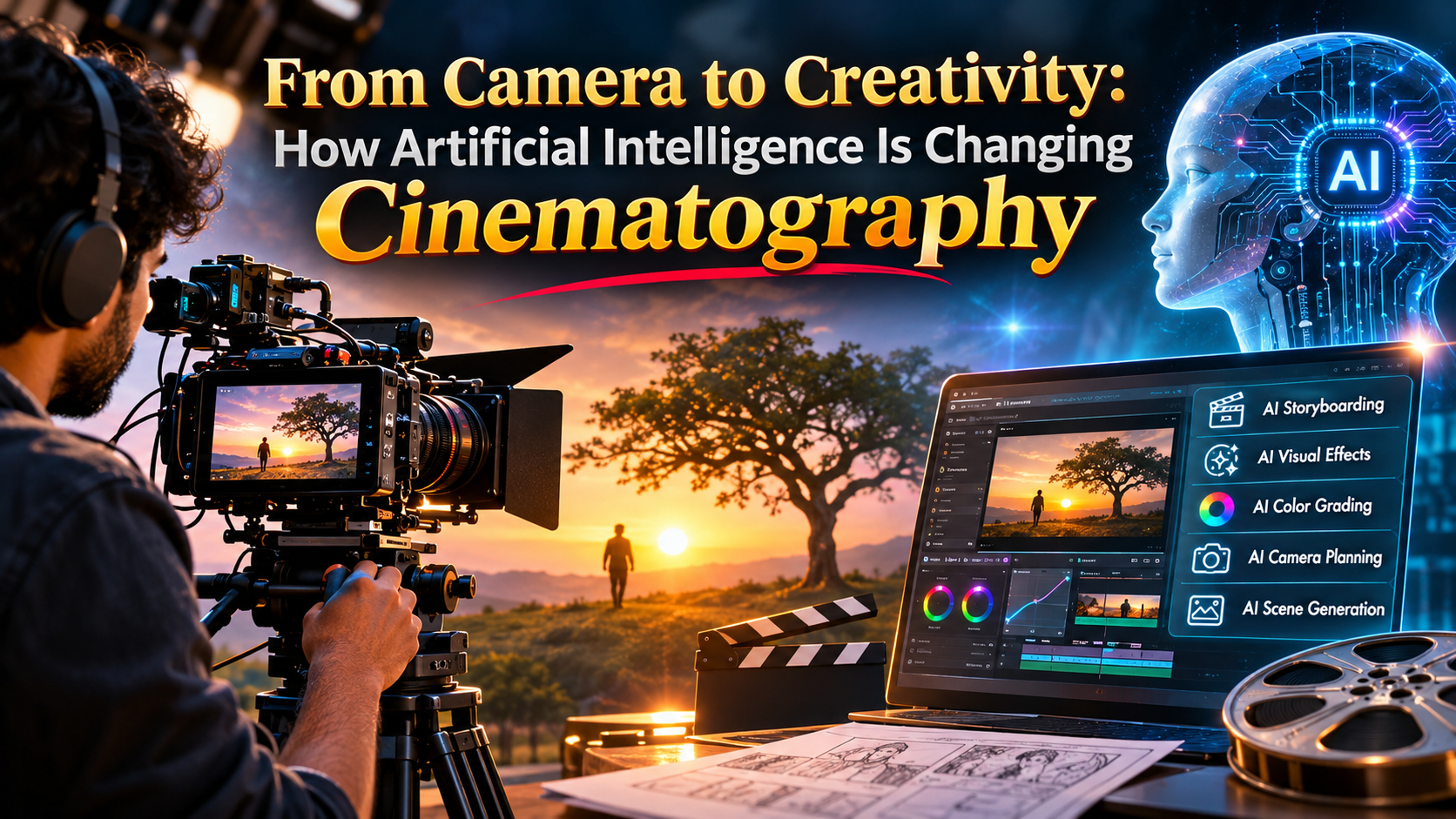
Artificial Intelligence is no longer just a futuristic concept. It has become a powerful creative tool that is changing how cinematographers, directors, photographers, editors and visual effects artists work. From generating realistic cinematic scenes to enhancing camera footage, automating editing and creating virtual environments, AI is opening new possibilities for visual storytelling.
The traditional camera remains an essential part of filmmaking, but AI is expanding what filmmakers can achieve with it. The combination of human creativity and intelligent technology is creating a new era of cinematography.
The Rise of Artificial Intelligence in Cinematography
Cinematography is the art and technique of capturing moving images to communicate a story visually. Traditionally, it requires technical knowledge of cameras, lenses, lighting, composition, exposure and camera movement.
However, AI is introducing smarter and faster ways to manage these creative processes. Modern AI systems can analyze images, recognize objects, track movement, assist with framing and support visual production.
AI-powered technologies are helping filmmakers:
-
Analyze scenes and suggest suitable camera compositions.
-
Improve image quality and reduce visual noise.
-
Create realistic digital environments.
-
Generate cinematic visuals from text prompts.
-
Automate repetitive editing and production tasks.
-
Improve colour correction and visual effects.
These developments do not simply make filmmaking faster; they also allow creators to experiment with ideas that were previously difficult or expensive to achieve.
AI-Powered Cameras: Making Photography Smarter
One of the most noticeable changes in modern visual technology is the integration of AI into cameras and imaging systems.
AI-powered cameras can recognize subjects, detect faces, track moving objects and adjust certain shooting settings automatically. Intelligent autofocus, subject detection and computational photography help photographers capture clearer and more detailed images.
In cinematography, AI-assisted camera systems can also support object tracking, camera calibration and scene analysis. These features are particularly useful when shooting fast-moving subjects, action sequences, documentaries and complex production scenes.
Instead of spending all their attention on technical adjustments, cinematographers can focus more on composition, lighting and the emotional impact of a shot.
Generative AI: Turning Imagination into Visual Reality
Generative AI is one of the most exciting developments in the creative industry. It allows users to generate images, video and other visual content using written prompts, reference images or existing footage.
Imagine a filmmaker who wants to create a cinematic scene featuring a futuristic city, a dramatic sunset or an imaginary world. Traditionally, producing such scenes might require expensive locations, elaborate sets, large production teams and advanced visual effects.
With generative AI, creators can explore visual concepts and develop creative references much more quickly.
AI video generation technologies are also making it possible to transform creative descriptions into moving images. Filmmakers can use these tools for concept development, pre-visualization, experimental films and selected production shots.
However, generated footage still requires careful artistic direction, quality control and editing to achieve professional cinematic results.
AI in Video Editing and Post-Production
Video editing is one of the areas where AI is making a significant difference.
Traditional post-production involves reviewing hours of footage, selecting the best takes, synchronizing audio, adjusting colours, removing unwanted elements and creating a final sequence. These processes can take considerable time.
AI-powered editing tools can help automate many repetitive tasks, including:
Automatic footage organization: AI can analyze video clips, recognize scenes and identify important visual elements, making footage easier to search.
Smart editing: AI can assist with selecting clips, identifying suitable moments and creating initial edits.
Background removal: Intelligent tools can separate subjects from backgrounds without always requiring traditional green-screen techniques.
Audio enhancement: AI can reduce background noise, improve dialogue clarity and help separate different audio elements.
Automatic subtitles: Speech recognition can convert spoken dialogue into text and generate subtitles.
Colour correction: AI-assisted colour tools can help balance exposure, adjust colour temperature and create consistent visual appearances.
These technologies allow editors to spend less time on repetitive technical work and more time shaping the story.
The New Era of AI-Powered Visual Effects (VFX)
Visual effects have always played an important role in modern cinema. From science-fiction worlds to imaginary creatures and spectacular action sequences, VFX helps filmmakers bring impossible ideas to life.
AI is taking this process to another level.
AI-assisted visual effects can support object removal, image restoration, background generation, digital compositing, facial animation and the creation of complex visual environments.
Machine-learning technologies can also help artists with rotoscoping, motion tracking and other time-consuming processes.
This means that smaller production teams may be able to experiment with visual effects that previously required larger budgets and specialized resources.
Nevertheless, professional VFX still depends on artistic judgment, detailed refinement and technical expertise. AI is a creative assistant, not a complete replacement for skilled visual effects artists.
Virtual Production: Blending Real and Digital Worlds
Virtual production is transforming the way films and television programmes are made.
Instead of relying entirely on physical locations or traditional green screens, filmmakers can use large LED screens, real-time rendering and digital environments to create immersive backgrounds during filming.
When combined with AI, these technologies can support faster visualization, environment development and creative experimentation.
Directors and cinematographers can preview how a scene might look before or during shooting. They can explore different backgrounds, lighting conditions and visual styles while keeping greater control over the production environment.
Virtual production can be especially valuable for science-fiction films, fantasy stories, advertisements and productions involving complex environments.
The future of cinematography may increasingly combine physical cameras, digital environments and intelligent creative systems.
AI Tools Transforming the Film Industry
Several creative platforms are helping filmmakers explore new possibilities through artificial intelligence.
Some notable examples include:
Adobe Premiere Pro and Firefly: AI-powered features support video editing, generative media, audio enhancement and creative workflows.
Runway: Provides AI-powered tools for video generation, visual experimentation and creative editing.
Google Veo: Enables generative video creation from text and visual references.
OpenAI Sora: Demonstrates how text and visual inputs can be used to generate cinematic video content.
DaVinci Resolve: Offers intelligent features such as neural-engine-powered tools for image processing, tracking and post-production.
Luma AI: Provides generative visual tools and technologies for creative video and 3D workflows.
These platforms are not identical, and each offers different capabilities. Their growing role demonstrates how AI is becoming part of the modern filmmaking toolkit.
The Role of Human Creativity in AI Cinematography
Although AI can generate impressive images and automate technical tasks, filmmaking is much more than producing visually attractive footage.
A powerful film depends on emotion, storytelling, imagination, cultural understanding and human experience.
A camera operator understands how a particular movement can create tension. A cinematographer knows how lighting can communicate loneliness, happiness or suspense. A director understands how performance, framing and timing influence the audience.
AI can assist with technical execution, but creative decisions still require human understanding and artistic sensitivity.
The most successful filmmakers of the future may not be those who simply use the most advanced AI tools, but those who know how to combine technology with a distinctive creative vision.
Challenges and Ethical Concerns of AI in Filmmaking
Despite its advantages, AI also introduces important challenges for the film industry.
Copyright and ownership: Questions remain about the ownership of AI-generated content and the use of copyrighted material in AI training.
Deepfakes and digital identity: AI can create realistic representations of people, raising concerns about consent, identity and misuse.
Employment concerns: Automation may change traditional roles in editing, animation, visual effects and other creative professions.
Authenticity: Excessive dependence on generated content may reduce originality and weaken the connection between real human experiences and visual storytelling.
Quality and consistency: AI-generated scenes can contain visual errors, inconsistent characters, unrealistic movements or continuity problems.
To address these challenges, filmmakers need responsible AI practices, proper permissions, transparency and respect for the rights of actors, artists and creative professionals.
The Future of Cinematography: What Can We Expect?
The future of cinematography will likely be shaped by the collaboration between traditional filmmaking techniques and intelligent technologies.
We can expect further developments in:
-
Real-time AI-assisted camera operations.
-
More advanced AI-generated cinematic environments.
-
Intelligent editing and automated post-production.
-
AI-supported virtual production.
-
Improved visual effects and digital character creation.
-
Personalized and interactive storytelling experiences.
-
More accessible filmmaking tools for independent creators.
As AI technology continues to evolve, filmmakers may gain the ability to create ambitious visual experiences with smaller teams and more flexible production workflows.
However, technology alone will not define the future of cinema. The emotional connection between a story and its audience will remain at the heart of filmmaking.
Conclusion
Artificial Intelligence is changing cinematography in ways that were once difficult to imagine. From intelligent cameras and generative video to automated editing and advanced visual effects, AI is expanding the creative possibilities of modern filmmaking.
But the real transformation is not about replacing cameras or eliminating human creativity. It is about giving filmmakers new ways to express their imagination.
The camera captures the image, technology enhances the process, and creativity gives the image meaning.
As we move towards a future where artificial intelligence and traditional filmmaking work together, one thing remains certain: the greatest cinematic experiences will continue to come from powerful storytelling and human imagination.
