• Bhubaneswar India
  • Contact+ 91-9938772605
  • Mon - Sat : 10:00AM - 6:00PM

All posts by Gouri

Real Estate Sector on Repo Rates

ICRA upgrades Aptus Value Housing to AA- Stable from A+ Stable

Aptus Value Housing Finance India Ltd, a leading Housing Finance company has seen a rating upgrade for its long-term instruments from ICRA A+ Stable to ICRA AA-Stable. The rationale behind the rating action factors the company’s strengthened capital profile and track record of maintaining healthy profitability and asset quality

Commenting on the rating upgrade, Mr.P. Balaji, Executive Director and Chief Financial Officer stated “We have managed to keep our return on managed assets in the range of 6.3% to 6.5% over the last 3 years. The infusion of fresh equity through the IPO proceeds has strengthened our net worth that will support our portfolio growth over the medium term. Though there was a drop in collection efficiencies in the months of April and May 2021 like any other company due to pandemics, both disbursements and collection efficiencies have reached pre covid levels.

DISCLAIMER:

Certain statements that are made in the Press Release may be forward-looking statements. Such forward-looking statements are subject to certain risks and uncertainties like significant changes in an economic environment in India and overseas, tax laws, inflation, litigation, etc. Actual results might differ substantially from those expressed or implied. Aptus Value Housing Finance India Ltd. will not be in any way responsible for any action taken based on such statements and discussions and undertakes no obligation to publicly update these forward-looking statements to reflect subsequent events or circumstances.

Ficus Fine Living Side Tables Image (3)

Ficus Fine Living Side Tables can add a pop of colour to your space

Ficus Fine Living will add personality to any room, whether it’s in the corner of your bedroom or the main living room. Ficus Fine Living side tables are multifunctional and convenient flat surfaces that are usually coupled with the sides of sitting such as couches, armchairs, or beds. They are often used as functional tables in living rooms and bedrooms to hold glasses, remote controls, books, and other objects. At Ficus Fine Living, you can easily discover side tables in a variety of sizes, shapes, colours, and designs, making it simple to pick one that will work well in your environment.

Any space can benefit greatly from the addition of a Ficus Fine Living side table. They can also be used as decorative accents in any area, providing just the appropriate amount of colour or texture. Ficus Fine Living side tables are a stylish addition to any room, boosting the style factor by several levels. A side table for every home may be found at Ficus Fine Living.

Price: On Request

Address: The New Great Eastern Mills,
Inside Salsette 27, 25-29,
Dr Baba Saheb Ambedkar Rd, Byculla East,
Mumbai, Maharashtra 400027

Mr. Puneet Chhatwal, MD & CEO - The Indian Hotels Company Ltd and Mr Vin... (1)

New Ginger Hotel Is Being Constructed By All-Woman Team In Santacurz, Mumbai

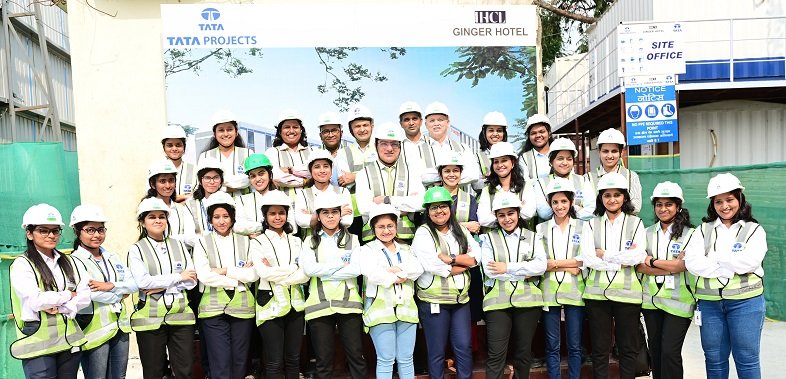
Committed to driving women empowerment and creating an equitable workplace across industries, Indian Hotels Company (IHCL) has collaborated with TATA Projects Limited for the construction of the new Ginger hotel at Santacruz, Mumbai by an all-woman engineering team. This marquee project is a significant step forward in promoting varied opportunities for women in otherwise traditionally male-dominated industries such as construction.

Mr. Puneet Chhatwal, Managing Director and Chief Executive Officer, IHCL, stated, “At IHCL, we are committed to providing equal opportunities for all. Today, the world is marching towards a future where women are continuing to push the boundaries across sectors. This partnership with Tata Projects Limited reiterates this belief. We are proud of the all-woman team helming the construction of the all-new Ginger Santacruz.”

The 371-room hotel with a built-up area of over 19,000 sq. m will be constructed over a course of 19 months. The building process will incorporate the latest construction techniques and technologies. Located at a prime location in close proximity to Mumbai Airport and Western Express Highway, this will be a flagship Ginger hotel and is being constructed by one of India’s leading construction companies – Tata Projects Limited.

Mr. Vinayak Deshpande, Managing Director – TATA Projects Limited, said, “The Ginger hotel project is progressing well under the leadership of an all-woman team. This is reflective of the culture of the Company, which encourages women to embrace diverse roles in the workplace. The success of this team is important for motivating more women to build their careers in the construction and engineering sector. Another key feature is that new technologies such as BIM and 3D is also being deployed to ensure on-time and quality construction.”

IHCL has been on a continuous journey of empowering women including the recently launched all-woman run luxury residences in Chennai. The company has implemented various other industry-leading practices such as ‘Extended Maternity Leave’, compulsory crèche facilities, medical reimbursement for family expansion including IVF treatments, amongst others. Tata Projects’ policies have created platforms for women employees to participate in different functions of the business at all levels, gain experience in their fields, and achieve their career aspirations.

Phani Pattamatta

Chicago, USA based Bourntec appoints Phani Pattamatta as its COO in India

Chicago, USA headquartered in Bourntec Solutions, with offices in Dubai, Hyderabad, Kochi and Bhubaneswar has appointed Phani Pattamatta as its chief operating officer in India.

27-year-old Bourntec Solutions is a trusted name for global IT management, technology advisory & strategy consulting partners, offering technology transformation solutions.

An alum of XLRI, Phani has most recently served as the Executive Director (ED) at The Indus Entrepreneurs (TiE), the world’s largest, go-to network for entrepreneurs based out of Silicon Valley, USA. In 2020 he was recognised as the best ED in TiE amongst 61 cities and 14 countries for his exemplary work in innovation and start-up ecosystem development.

Phani is excited to join Bourntec Solutions, as we expand our footprint into Middle-east and Indian markets by fostering agile right-shoring capabilities to strengthen global delivery operations. “I look forward to enabling exceptional customer experiences while enhancing value for the company. Bourntec is rightly positioned to provide the best business value to clients through time-tested technology transformation solutions, well poised to meet the rapidly evolving market demands,” he said.

As a seasoned senior-level leader with experience in building successful companies and scaling up businesses, he mentors many start-up CEOs and advises emerging enterprises on growth strategies.

Srujana Gudur, President, Bourntec Solutions, Inc, is elated to welcome Phani to the leadership team as COO at Bourntec India

Blood Sanders - The Great Forest Heist

Blood Sanders – The Great Forest Heist’ by Sudhakar Reddy Udumula, spill the beans of criminal politician nexus to turn Seshachalam bald

Blood Sanders – The Great Forest Heist, is a maiden book of Sudhakar Reddy Udumula, a senior journalist with over three decades of crime reporting. He donned the author’s cap, to expose the nefarious criminal network and operations associated with the Red Sanders smuggling from the dense forests of Seshachalam in South India, which culminates in the cosy homes in China and Japan. Hon’ble Mr Justice N.V. Ramana, Chief Justice of India; E – Launched the book. Later an eminent panel comprising of M.V. Krishna Rao, IPS, Former DG SSB; P. Raghuveer, IFS, Retired Principal Chief Conservator of Forests; Prof. Madabhusi Sridhar, Dean, School of Law, Mahindra University & Former CIC; participated in a panel discussion moderated by Uma Sudhir, Executive Editor, NDTV; today at Bhaskara Auditorium.

The author drawing upon his immense exposure of reporting on the Red Sanders smuggling network strongly felt the need to spill the beans about the criminal, politician, bureaucrat nexus in annihilating the forests and depriving the country of its rich resources. The book is pertinent today more than ever, as the forests are witnessing an unprecedented upsurge in smuggling. Even during the Covid-19 pandemic that shook the world, smuggling went about unhindered. The incessant ringing of alarm bells harbingers the extinction of the endangered Red sanders species unique to the South of India, a decade from now.

The current plight of Red Sanders or ‘red gold’ is due to it being the source of funding political and criminal deeds in and around Rayalaseema of Andhra Pradesh, Tamil Nadu and Karnataka in South India. It is believed to have turned many into millionaires while claiming the lives of the illegal woodcutters who form the frontline of this organised crime syndicate. The book is the first step in understanding the complex network that drives this illegal trade across borders and the number of players involved from top to bottom.

The book comprises ten chapters, each dealing with a different facet of the organized crime syndicate that is red sanders smuggling. In the opening chapter, the book explores different reasons why red sanders is considered valuable; it also briefly looks at the wood’s significance to Indian and different world cultures. The next three chapters provide a detailed insight into the inception of the world of red sanders smugglers, along with vignettes of their popular scandals. Focusing on the smuggling process at the ground level, the fifth chapter fleshes out structures, stages, and the logistics involved in carrying out this international racket. The two subsequent chapters dive into countermeasures initiated by the State to curtail red sanders smuggling, including the formation of a Special Task Force, and how these measures fared over time.

Included in it is also an interesting firsthand experience of the author who journeyed with the police and forest forces that protect red sanders species. ‘Chittoor Encounter’ narrates the horrible incident that took place in April 2015, along with an objective commentary at points on the same. A racket that is as huge in scope and extent as red sanders smuggling cannot have been carried out without accomplices, so the next chapter explores the details of the intricate connections among elections, politicians, and smugglers. Since all roads, in this case, lead to China, the penultimate chapter cuts through to the source of the reasons why China is obsessed over red sanders and what factors lead to the demand that is quenched only by a global racket. In the last chapter, the book enumerates the measures that need to be observed in letter and spirit to ensure zero felling and to protect, as well as to conserve, the endangered species of red sanders.

Full text of the speech delivered by Hon’ble the Chief Justice of India Shri Justice N V Ramana at the launch of book “Blood Sanders: The Great Forest Heist” authored by Shri Sudhakar Reddy Udumula, Senior Journalist.

The book ‘Blood Sanders’ that we are holding in our hands today is the result of diligent research and a great amount of hard work put in by Sri Udumula Sudhakar Reddy. He has been tracking this subject as a professional news reporter for nearly two decades. He travelled extensively in the habitat of red sanders which is a difficult terrain to walk through. He had first-hand interaction with the key players of the smuggling racket and also those who struggled to enforce the law. I think he is the most qualified person to deal with this subject.

When he first approached me for this event, I had no choice but to say yes for more than one reason. Firstly, I knew him as a journalist from his formative days as a crime reporter. I am happy to note that he rose to the rank of Editor in a leading English daily. Secondly, I and his uncle Udumula Joji Reddy were together as students in S V V N Degree College, Amaravathi. His father, Sri Udumula Rayapa Reddy Garu, a few years senior to me, is an agriculturist who hailed from Jagannadhapuram village which is adjacent to my native village Ponnavaram.

మా ఊరూ వాడా గుర్తొస్తొన్నాయి. ఆ మంచి రోజులూ, ఆన్నటి మిత్రులు గుర్తొకొస్తొన్నార్త. ఊరికి వెళ్లాలని ఎప్పటినండో అనకంటున్నాన. త్వరలో వీలు చేస్తకోవటానికి ప్రయత్నాస్తొన్నాన. (I am reminded of my village, good old days and great friends. I have been longing to visit my village. Hope to do so very soon).

As described by Sudhakar, his father Rayapa Reddy Garu is well known in our area for his integrity and resilience. I couldn’t have said no, to this worthy son of a worthy father. Sudhakar Reddy is an award-winning journalist. He has won national and international laurels for his work.

His book gives insights into what all has gone wrong with the fragile ecosystem spread over Chittoor, Nellore, Prakasam, Kadapa and Kurnool districts of Andhra Pradesh. Red Sanders thrived in this habitat till a few decades ago. Now it is facing the threat of extinction. Like all good things in this world, Red Sanders also fell prey to the greed of man. Sri Sudhakar explains how the high and mighty fuelled this project of destruction. The destruction, not only of the Red Sanders species but of the ecosystem as a whole. This species is known for preventing forest fires from spreading in the vulnerable forests of Seshachalam hills. The consequences of this ecological destruction are there for us to see globally. The need of the hour is to address these issues locally.

According to an estimate presented by the author, in the last two decades, nearly 60 lakh Red Sanders trees were cut. Smuggling from the forest area spread over 5,30,097 hectares resulted in the arrest of over 2000 persons from the neighbouring state alone. Many have lost lives. Lawbreakers as well as enforcers of the law suffered fatalities. The author rightly named the book ‘Blood Sanders’, as smuggling of this high-value timber has led to unprecedented bloodshed. It is second only to sandalwood smuggling, perhaps.

As the author mentions, ‘The AP Forest Act’ was amended in 2016 to deal sternly with the smuggling of Red Sanders. However, what is lacking is the necessary will to enforce these laws. This is where the media needs to play its role. The collective failures of individuals and institutions entrusted with the role of protectors need to be highlighted by the media. People need to be made aware of deficiencies in the process. This job can only be done by the media.

As a person whose first job was that of a journalist, I am taking the liberty to share a few thoughts on present-day media. The concept of investigative journalism is, unfortunately, vanishing from the media canvas. It is true at least in the Indian context. When we were growing up, we eagerly looked forward to newspapers exposing big scandals. The newspapers never disappointed us.

In the past, we have witnessed newspaper reports on scandals and misconduct creating waves leading to serious consequences. Barring one or two, I don’t recall any story of such magnitude in recent years. Everything in our garden appears to be rosy. I leave it to you to arrive at your own conclusions.

I am reminded of what Gandhi Ji said about newspapers, I quote:

“The newspapers should be read for the study of facts. They should not be allowed to kill the habit of independent thinking.”

I hope the media introspects and tests itself against these words of Mahatma.

Coming back to the book that we released today, Sudhakar Reddy made some very good suggestions for the protection and conservation of Red Sanders and the Seshachalam Forest Ecosystem. It includes creating a conducive atmosphere for the cultivation, harvest and trade of Red Sanders.

I have a suggestion to make. Locals, if involved in conservation efforts, will make a huge difference. Tiger reserves and wildlife sanctuaries have benefitted from engaging tribals who are forest dwellers as forest guards. With this approach, prospective poachers of wildlife were turned into wildlife protectors as they found dependable livelihood. The authorities here can try this method in Seshachalam by way of employing tribals and other forest dwellers as forest guards. Possibly, the smugglers may then find it difficult to attract them for the job of tree felling.

Let me not come between you and the panel of experienced and knowledgeable experts who are going to enlighten the gathering about the wide gamut of issues involved. I wish Sudhakar Reddy all the very best in his future endeavours. Keep up your good work.

I thank Sudhakar Reddy and the organisers for giving me the opportunity to take part in this event. Namaskaram.

Some excerpts from the book

The data collated from the past two decades indicate government machinery seizing over 15,000 MT of Red Sanders and arresting over 30,000 persons involved in the illegal trade of the wood. Since smugglers are interested only in the heartwood, it is seen that in most of the cases, for each tree felled, they extract only one Red Sanders log, which is then carried manually to the loading point by the smugglers. On average, if each log weighs 25kg, it would mean 40 logs per metric tonne of wood seized. Thus 15,000 MT indicates six lakh logs were seized, through which we can infer that 6 lakh Red Sanders trees have been felled illegally in the past two decades in Andhra Pradesh. It is estimated that the seizures account for only 10 per cent of illegal felling. That would indicate that a staggering 60 lakh Red Sanders trees, mostly of higher gift classes, have been felled. If we assume even a 30 per cent efficiency in seizures, it would amount to illegal felling of 20 lakh Red Sanders trees in the past 20 years.


The impact of the selective felling (since the coveted heartwood is found in Red Sanders trees which have a girth of above 70 cm only) can be seen in the skewed girth class distribution of Red Sanders in Seshachalam Hills. Less than 10 per cent of the Red Sanders trees in Seshachalam forests fall in the high girth class. If the current trend of smuggling goes unchecked, it will be in a matter of a decade be impossible to spot a Red Sanders tree with a girth of 70 cm or over.

It is said that this brand of woodcutters from ‘Veerappan forest’ is used as leverage by middlemen to seek more labour wages while also labelling an entire section of migrants as ‘criminals’. This only gives an excuse to the police to hunt the illegal woodcutters down in the name of Veerappan. Reports state that more than 2,000 Dalit and tribal labour migrant woodcutters from Tamil Nadu have been jailed. The majority of the people arrested during operations by the security forces are woodcutters, who are branded as smugglers and put in jails for a long time even if they are unable to provide any information about the kingpins. The same doesn’t apply to the key operatives who get bail quickly. There have been several instances of these. Many smugglers, including Dawood Shahul Hameed, have fled the country after obtaining bail.

The Kingpin

The kingpin of the business is Dawood Shahul Hameed, one of the most wanted fugitives for India. The rest of the smugglers, who remain now, are working for him under some direction. Many of them are Chennai or Bengaluru-based, and most of the negotiations are done in UAE and such countries. Most of the smugglers from India run regular businesses, such as shopping complexes, in Dubai too.

Then there is the issue of how multi-crore smuggling operations can get away with it more often not. There are suspicions that those within the larger political structures in Andhra Pradesh and Indian politics facilitate this. In turn, their political career is funded by these smugglers. Given that most smugglers go scot-free and that the lower-level smugglers rarely know of the bigger picture, the information around these smuggling operations and details of it aren’t easy to come by.

A little information about Red Sanders smuggling needs to be gathered piece by piece from various reluctant sources. This book is the culmination of two decades of reporting and probing

When things began to heat up, Interpol also joined the fight based on the request of AP police through Central Bureau of Investigation and issued a red corner notice against KGR. Once the notice was issued, the Mauritius police arrested KGR and deported him to India under a murder charge.

Unprecedented Diplomatic action

For this to happen, the Special Task Force and AP police were doing everything in their power to get KGR back in the country. The Andhra police tried to convince the Central government that deportation was the only way to get KGR from Mauritius. They first appealed to the then Minister of External Affairs, Sushma Swaraj, and the higher courts of India. “Whatever DGP says, you must do it. It is a very prestigious case for us. How can this man defy us like this? In the last six months, this man has moved through 20 countries. “We cannot allow this,” JV Ramudu quoted Sushma Swaraj as saying to the Indian High Commissioner in Mauritius when the former DGP met her. This interaction with Sushma Swaraj resulted in another unprecedented move. With the help of Prime Minister Narendra Modi, KGR’s deportation order in Mauritius was signed by then Mauritius Prime Minister Anerood Jugnauth himself. Usually, this would be done by a Secretary of State.

Burma refugees- the conduit

Burma refugees, who had started to become vendors in many illegal trades for their survival, got involved with Red Sanders smuggling a few decades ago. Since they knew the land routes and passageways out of the country, they used their knowledge to export the wood. They direct and guide the transport of the Red Sanders logs and get paid handsomely as they have built a strong base in cities such as Chennai, where the famous Burma Bazaar is known to trade in all things illegal.

Their modus operandi is to have the logs collected from loading points or the godowns sent to Visakhapatnam and to Odisha from there. Next, they reach West Bengal and ultimately arrive in Moreh, near the Indo-Myanmar border, where many Red Sanders smugglers are ready to buy the logs. These buyers would then transport the logs by road to China.

It poses a Hawala Money Hundreds of millions are made from this racket because of its demand abroad. And the payments are brought back into the country through various routes. Many use the hawala route to bring the money in as gold and dollars. The link between Red Sanders smuggling and the underworld worries Neither politicians nor corrupt administrative executives could pull this off alone. It is only with the concerted effort that they have been succeeding for the most part in smuggling Red Sanders for nearly two decades now. Here the politics and profitable criminal activities intermingle and become a united and self-reinforcing whole.

Politicians extend protection to this illegal and unlawful economy, which in turn becomes the milch cow for gaining political power by funding elections. This indicates that the Red Sanders mafia is one whose roots extend to very remote corners of our society’s socio-political and economic structures. It is also helpful to remember, in this connection, that the criminalisation of the export of Red Sanders existed for a long time, and that murders, kidnapping and rackets had become the tools by which to climb the political ladder and exercise power to make enormous profits in different public and private sectors.

Red Sanders Museums

The Chinese obsession with Red Sanders was about to grow only more formidable as time went on. The Chinese attempted to turn the palaces into museums first. They built the most expensive Red Sanders museum, where replicas of real-life historic landscapes and collected ancient art pieces from Beijing and other parts of China were preserved in elaborate painstakingly-accurate miniature models for future generations.

Cross border Mafia

The Chinese mafia, which drives Red Sanders smuggling, has much demand for it. Its scarcity elsewhere around the world made the Chinese mafia zero in on the Seshachalam forest ranges for the wood.

Chinese smugglers hail from different parts of China, including Fujian province, from Naipu state of Henan province, and Hujian. Like the organisational structure of the native smugglers, many of the main Chinese smugglers do not themselves come to India but appoint a Chinese national living here to smuggle the wood for them for handsome pay classes, have been felled. If we assume even a 30 per cent efficiency in seizures, it would amount to illegal felling of 20 lakh Red Sanders trees in the past 20 years.
Mr. Anirudh Kankatala, Padma Swarupa and Mr. Mallik Kankatala at the event

Discover Kanjeevaram With Mallik Kankatala and Anirudh Kankatala

At first glance, the journey of Kanjeevaram and filter coffee — from seed to loom and seed to cup — may have little or nothing in common, however at a well-curated evening by Mr. Mallik Kankatala and Mr. Anirudh Kankatala, DISCOVER KANJEEVARAM, proves that there are many parallel paths.

Originally from Visakhapatnam, Andhra Pradesh, KANKATALA is known for its gold zari brocades and gold tissue sarees woven in pure zari, the designs of Kanchipuram sarees are inspired from the temples in Kanchipuram city, which is also called the city of 1000 temples. Kanchipuram are known for their korvai borders, which mean the borders and body are woven separately using 3 shuttles and then attached, which give the uniqueness of the colour combination to Kanchipuram.

The evening DISCOVER KANJIVARAM hosted by second and third-generation legacy Mr. Mallik Kankatala and Mr. Anirudh Kankatala saw some unique perfectly draped authentic handwoven Kanchipuram. Some of the names were Bandhani, Kalamkari, Chikankari, Linen, Kora, Printed and Big Border Kanchipuram.

Huawei DIGIX Lab@Singapore

Huawei partners NUS Business Analytics Centre to nurture, upskill and provide students with industry internship opportunities

Global leading information and communications technology (ICT) provider Huawei International has signed a Memorandum of Understanding (MOU) with the National University of Singapore Business Analytics Centre (NUS BAC) as part of its commitment to nurture talent and upskill students to help fill the talent gap in the technology sector.

Huawei and NUS BAC seek to deepen the understanding of big data, cloud computing, and business analytics technologies, and their applications to the digital transformation of enterprises. This collaboration aims to empower students and researchers, giving them the opportunity to tap into Huawei’s expertise in ICT technology, software development and resources.

Jointly formed by the NUS School of Computing and NUS Business School, NUS BAC offers the Master of Science in Business Analytics (MSBA) programme.

Huawei will be providing cloud and analytics training workshops, as well as capstone internship opportunities with its partners, allowing students to gain deep insight and embark on highly sought-after hands-on experiences with industry leaders. The MSBA students will also benefit from the cloud computing resources provided by Huawei.

In addition, NUS BAC will organise a Huawei-NUS analytics innovation challenge for students and researchers in the developer community to create innovative solutions for problem statements based on realistic business challenges from Huawei and its partners.

Associate Professor James Pang Yan, Co-Director of the NUS BAC, said, “Big data, AI and cloud computing will be crucial for business analytics as we move into a highly connected, digital-first future. Our collaboration with Huawei is designed to provide NUS students and researchers with an immersive experience and the requisite skills which will pave the way for an exciting career in the field of ICT.”

“We are proud to continue bolstering our long-standing relationship with NUS by supporting these outstanding local talents through training, resources and internship opportunities. Nurturing and cultivating the next generation of local digital talent is imperative as we head into the future,” said Mr Foo Fang Yong, CEO of Huawei International, “As we celebrate Huawei’s 20th anniversary in Singapore this year, we will continue to work with top universities to further strengthen local partnerships as well as cultivate and grow local talent to become the leaders of our digital future.”

doctor

Increased health seeker demand and direct ownership of the patient are driving a major transformation in India’s healthcare ecosystem: PwC India

Large-scale deployment of digital technologies and innovations are transforming India’s healthcare landscape post the COVID-19 pandemic, according to a report launched by PwC India, titled ‘A new healthcare era -Trends in a post-pandemic world.’

The report highlights emerging shifts in the healthcare domain. Some of the key changes witnessed in the sector are:

The increased focus on digitalisation has helped in accelerating contactless healthcare and faster decision making. Technological innovations have further helped patients and consumers to understand diseases better and subsequently, demand higher-quality healthcare services.

There has been a clear shift from brick-and-mortar healthcare centres to virtual-first care during the pandemic. There has also been a transition from medication to holistic addressable adjacencies, thereby disrupting traditional pharma practices.

It is interesting to see how digital as a lever is unlocking the agility and helping players move up the value chain across the sustainable well-being spectrum faster than ever before. The telemedicine model of the past is now becoming a full-stack virtual care model.

Commenting on the study, Dr Rana Mehta, Partner and Leader Healthcare PwC India, said, “Voice-based AI will bring in the next big transformation in healthcare. Such a technological advancement would enhance the upstream value of the healthcare framework and further usher in the ambient era of VUI. Consumer demand, innovation in technology, and enablers are driving alternative models of care and transforming the healthcare landscape.”

As per the report, contactless care is gaining ample momentum and the focus is moving towards reducing and optimising the number of touchpoints between the health system and health seeker, without losing the quality of care.

This new need to optimise steps has resulted in deep minimalism – a concept closely associated with the ability of a system to simplify steps without compromising with quality. This includes decision support to virtual treatment enablement, single engagement with multiple touchpoints, telemedicine to teletherapy and graphical user interface (GUI) to voice user interface (VUI). The ecosystem has enabled access to quality healthcare through digital health, open networks and open protocols.

Consumer preferences are driving the evolution of healthcare delivery models which creates added value for all the players in the ecosystem, be it capturing of data to use of insights engines and advanced analytics. The pandemic’s impact compelled healthcare organisations to rethink, reprioritise and reengineer the business models. They are now addressing the emerging challenges for the entire healthcare delivery ecosystem, such as adopting virtual-first healthcare delivery models on a larger scale. This allows for a more efficient, sustainable, technology-enabled and scale-ready healthcare ecosystem. COVID-19 has created a window of opportunities for molecular diagnostics, the potential for which has largely remained untapped till now.

The healthcare ecosystem is now exploring more holistic models of care delivery. The preparatory shift across the healthcare value chain aims at improving both business and health outcomes. For example, the oncology space has undergone a major transformation with the emergence of more distributed models as the demand for personalised and advanced therapy increases. The Government and the private sector are taking various initiatives to increase health insurance penetration, coverage and innovation, universal health insurance coverage through digital exponential technologies; and early detection of illness to the continuum of care.

Dr. Azad Moopen,

Dr. Azad Moopen meets India’s Hon. Minister of Health & Family Welfare – Dr. Mansukh Mandaviya in Dubai, proposes health scheme to cover low-income NRI returnees to India

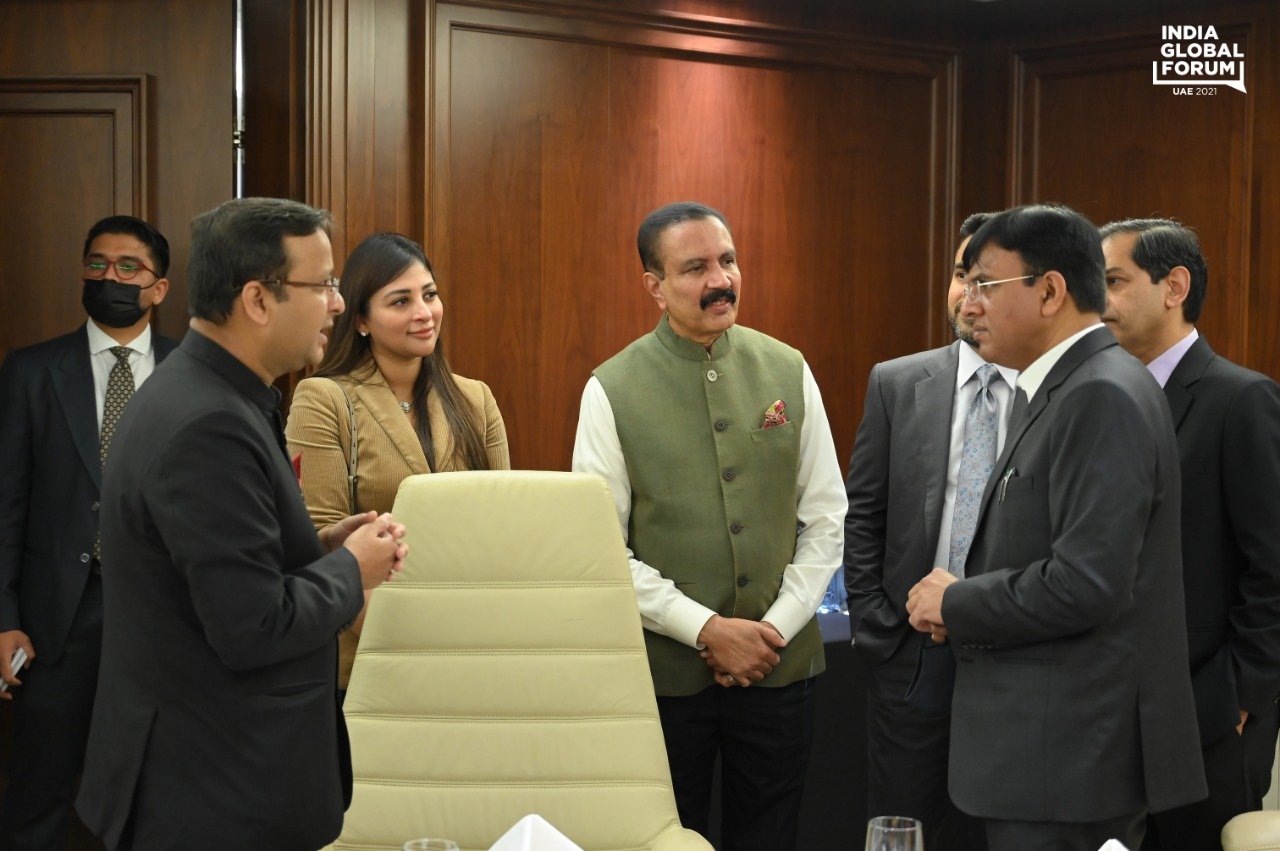
Dr. Azad Moopen, Founder Chairman and Managing Director of Aster DM Healthcare and Ms. Alisha Moopen – Deputy Managing Director, Aster DM Healthcare met Dr. Mansukh Mandaviya, Hon’ble Minister of Health and Family Welfare, Chemicals & Fertilizers – India, to discuss various measures to strengthen India’s healthcare sector. Visiting to attend the India Global Forum 2022 in UAE, the Union Health Minister of India joined the meeting alongside Hon. Joint Secretary of Ministry of Health & Family Welfare – Mr. Lav Agarwal; H.E Sunjay Sudhir – Ambassador of India to UAE; and Dr. Aman Puri – Hon. Consul General of India in Dubai, key business leaders and delegates from UAE.

Dr. Azad Moopen, who is also the Director of NORKA (Non-Resident Keralite’s Affairs), discussed the plight of low-income NRIs regarding major illnesses after their retirement and return to India. For this, he presented a letter of consideration to the Health Minister with a request to consider 2 schemes, namely the Inclusion of NRIs in Ayushman Bharat (PM-JAY) and Participatory Insurance for NRI Returnees.

Speaking on the proposed scheme, Dr. Moopen said, “India has over 18 million people living outside with UAE, US and Saudi Arabia hosting the largest number of migrants. Among these, there is a large number of blue-collar workers who have only meager savings when they return to India after retirement. This is especially true for a large number of manual workers in GCC countries that has the largest density of low-income NRI population. Major illnesses like heart attack, stroke, cancer mostly strike after the age of 60 requiring huge spending for treatment. Unfortunately, majority of them are not eligible for coverage under insurance schemes like Ayushman Bharat (PM-JAY) because of their foreign employment history.”

The proposed scheme to include low-income NRIs under Ayushman Bharat (PM-JAY) would ensure life-long coverage for each individual along with their spouses. The scheme for participatory insurance for NRI returnees proposes an option for NRIs to remit the premium on a monthly or annual basis while they are working abroad. In general, NRIs start working abroad by the age of 25 to 30 years and return to India upon retirement by 60 years of age. They could remit the premiums for a period of 20 to 30 years in small installments. In this way, a significant amount will accumulate while they are outside the country, which can be utilized to provide coverage for the NRI and spouse for the rest of their lifetime.

Aster DM Healthcare is the only healthcare provider to operate outside while being listed in India. The UAE originated company led by Dr. Azad Moopen started with a single clinic in Dubai in 1987 and has emerged as one of the largest integrated healthcare providers in India and GCC with 455 facilities. While the company has been present in India since 2002 through Aster MIMS Hospital in Calicut, Kerala, Aster got listed on the Indian stock exchange in 2018. Currently, Aster has 14 hospitals, 77 pharmacies,[1] 9 labs and 9 clinics in India.