• Bhubaneswar India
  • Contact+ 91-9938772605
  • Mon - Sat : 10:00AM - 6:00PM

Archive: April 30, 2024

SEBI Advocates Fractional Ownership Platform Regularization: INR 4,500 Billion Market Float Expected by 2026

Gurugram, 30 April 2024: With Securities and Exchange Board of India (SEBI) formulating detailed guidelines for Small and Medium REITs (SM-REITs), a large number of erstwhile unregistered Fractional Ownership Platforms (FOPs) for real estate assets are expected to get listed as SM REITs. This will effectively have the potential to regularize underlying real estate assets to the tune of over INR 40 billion in the near to midterm. With an effective regulatory framework in place, the liquidity of assets under fractional ownership is likely to get enhanced and can command significant traction in equity markets.

It is worthwhile to iterate that fractional ownership of real estate assets can be broadly in form of two modes – either through direct ownership by developers (Strata sale model in case of commercial realty and web-based Fractional Ownership Platforms) or through the stock markets (REITs and SM REITs). While direct ownership enables developers to tap multiple asset buyers at a larger level, FOPs and SM REITs facilitates the eventual ownership by small scale investors at the retail level. Interestingly, even though residential, warehousing, agro-farms and retail assets come under the anvil of various web-based platforms, the current FOP universe is dominated by commercial office spaces.

The recent SEBI guidelines will be beneficial in regulating the fractional ownership market and increase retail participation. FOPs will ultimately find it prudent to list as SM REITs and gain access to granular level of funding. From an asset owner perspective, an eventual listing will lead to increase in fair value of assets, democratisation of ownership and reduction in transaction costs during exit.

“SM REITs will not only foster retail investors’ interest in the real estate sector but will ensure investment portfolio diversification in a regulated environment. Aspects like reduction in minimum investment amount, mandatory manager holding period, and 95% presence of income generating assets will make SM REITs more endearing to the informed investor. Interestingly, the number of unitholders for the three office REITs in India have shown an annual growth of 60-80% since listing. On similar lines, SM REITs have a potential to witness an increase in ownership base by up to 20 times in the next 4-5 years. Altogether, Indian realty sector will witness fractional ownership being established as a promising alternative investment avenue in the coming years.” said Badal Yagnik, Chief Executive Officer, Colliers India.

Fractional ownership in CRE: Strata sale Grade A office stock to cross 260 million sq ft by 2026, translating into a valuation of around INR 4,500 billion

Strata sale form of fractional ownership is mostly prevalent in office buildings. As of March 2024, office market in top six cities of the country hold over 200 million sq. ft of Grade A strata sale stock, constituting 28% of total Grade A office stock. Mumbai followed by Delhi NCR are the leading cities in terms of quantum and strata penetration. 40-50% of their respective overall office stock is strata sold.

City-wise strata sold stock and penetration as of March 2024

City Strata Sold Stock (in million sq ft) Strata Penetration (%)
Mumbai 60.3 49%
Delhi NCR 55.6 41%
Bengaluru 40.3 19%
Hyderabad 22.4 21%
Chennai 12.9 16%
Pune 10.6 15%
Pan India 202.1 28%

Strata penetration refers to strata sold stock as % of overall Grade A office stock of respective city Of the ~200 million sq ft of Grade A properties under the Strata sale model, it is estimated that only 10-20% office assets are currently being offered by FOPs that are accessible to the retail investor. A vast majority of commercial asset developers are yet to fully tap the potential investment coming in from small scale retail investor. Colliers predicts that strata stock in top six cities in India will swell to 260-270 million sq ft in next two years, with an estimated market value of around INR 4,500 billion. As SM REITs will gain more popularity, the share of commercial assets accessible to the retail investor will also increase in the future. Fractional ownership of commercial real estate is set for a boost and the SEBI’s veil is likely to accentuate the transition of existing FOPs, especially ones within the office segment into SM REITs in the future.

Fractional ownership activity varies across cities, to pick up significant pace albeit by varying magnitudes

Interestingly, in Delhi NCR, strata sale is the most popular form of fractional ownership of office assets wherein developers offer office floors or even entire buildings to multiple owners. With about 55 million sq ft of office strata sold stock, the region accounts for the second highest share across the top six cities. However, web-based FOP activity is quite low in the region and very few office buildings have been put up for retail investment by major FOP operators. However, with a regulatory framework in place, the region holds huge potential for offering fractional ownership of office assets through web-based FOPs/SM REIT and attract retail investments in the next few years.

City-wise Fractional ownership activity (as of March 2024)

City/Fractional ownership channel Web-based platform activity* Strata sale activity REIT activity
Mumbai High High Medium
Bengaluru High Medium High
Delhi NCR Low High High
Hyderabad Medium Medium Medium
Chennai Medium Low Low
Pune Low Low Medium

“Within the fractional ownership ecosystem, commercial real estate segment holds significant growth potential.  Grade A strata sale stock is likely to rise from the current levels of around 200 million sq ft to over 260 million sq ft by 2026. Correspondingly, the market value of strata sale Grade A commercial developments is poised to reach ~INR 4,000 – 4,500 billion in next three years from the existing ~ INR 2,500 – 3,000 billion level. Furthermore, higher quantum of commercial office assets is likely to be listed as SM REITs to tap the full market potential while enhancing tradability of erstwhile closely held assets. This has the potential to be a win-win situation for leading commercial developers and retail investors targeting comparatively higher, stable and assured real estate returns” said Vimal Nadar, Senior Director & Head of Research, Colliers India.

Regulated fractional ownership of real estate to expand beyond commercial real estate

A well-regulated market of fractional ownership will attract a larger number of investors across various asset classes. SM REITs will attract a larger number of investors for co-ownership of prime commercial offices, thus bringing in more funds to manage and upgrade office assets as per international standards. In the residential segment, post covid-19, there is an increased investor preference of owning villas and luxury apartments as second homes in the popular tourist destinations. In the coming years, premium residential properties in the major offbeat destinations like Alibaug, Lonavala, Goa, Kodagu, Rishikesh and Shimla, is likely to see rising demand. Fractional ownership market is also likely to diversify in other alternative asset classes like industrial & warehousing, data centres, retail, student housing and healthcare in the years to come.
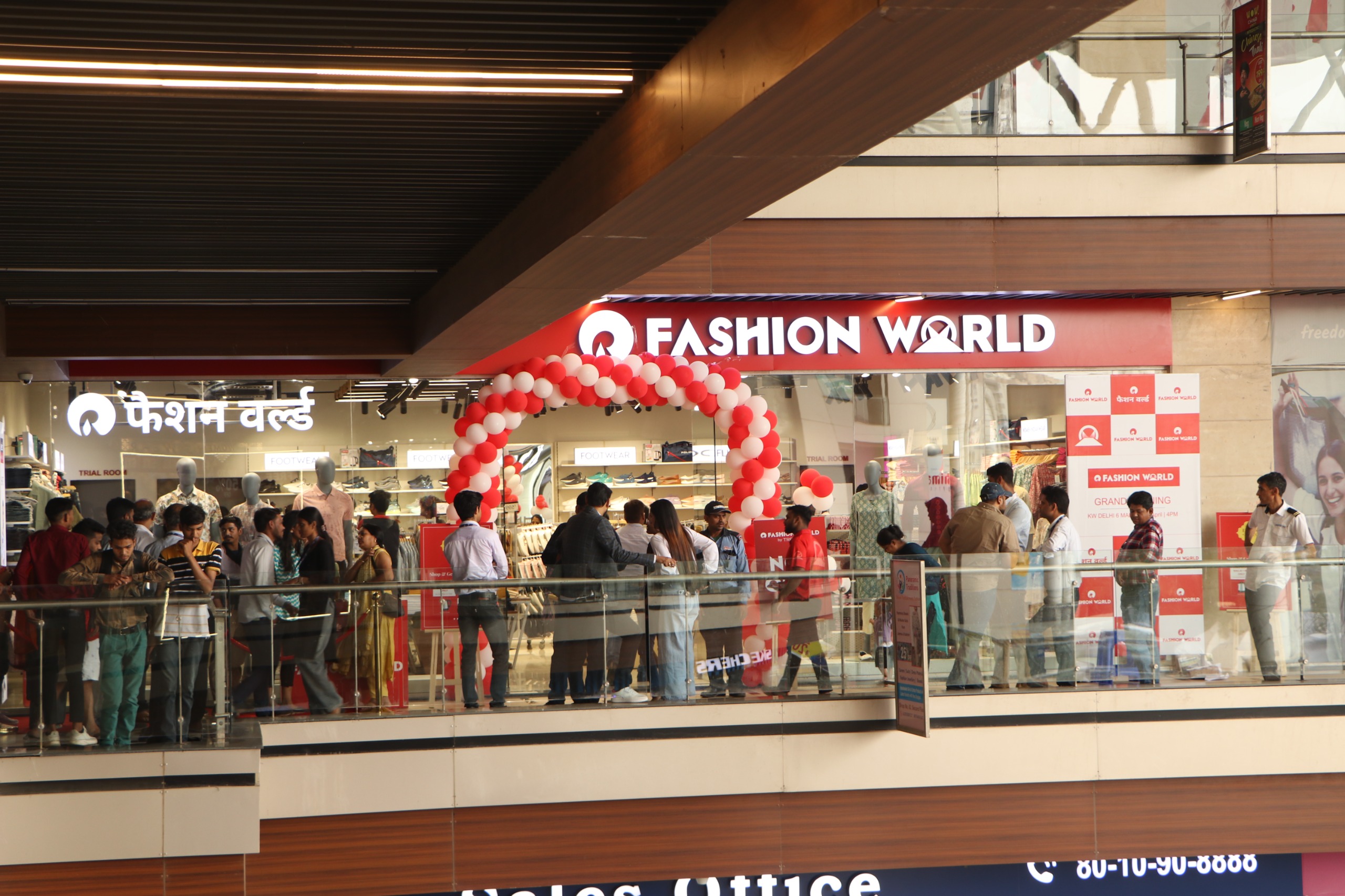

Fashion World Launches Its Store At KW Delhi 6 Mall, Adds Glamour With A Fashion Show

New Delhi, 30 April 2024: KW Delhi 6 Mall, Ghaziabad’s renowned commercial development based in Raj Nagar Extension, has added to its lifestyle lineup with the opening of Fashion World, with a grand event on April 20th, 2024. The brand marked its opening with a grand fashion show that added to the patrons’ delight.

Fashion World by Reliance Trends is a lifestyle outlet that offers latest products, merchandise assortments, and a lot more, that are customised for each market. They offer more affordable options, feasible for the first-time buyers who seek branded as well as ready-made apparels.

fashion world

Sharing his views, Mr. Pankaj Kumar Jain, Director, KW Group, said, “We envision to host the most premium brands across all verticals to elevate the experience of our visitors. The addition of Fashion World has further enhanced the lifestyle services that our project offers. We would further onboard remarkable brands to ensure that our customers and investors make the most of their visit to their go to destination Delhi6″

YES BANK and ANQ Launch Co-Branded Credit Cards, Pi and Phi, Bridging Traditional Banking with Fintech

National, India 30th, April 2024: YES BANK, a prominent private sector bank in India, has partnered with Bengaluru-based financial services provider, ANQ, to unveil two groundbreaking credit cards catering to Indian consumers: The Pi and Phi co-branded cards. This strategic partnership aims to bridge the gap between traditional banking and the fintech industry, offering innovative solutions to meet evolving consumer needs.

The Pi and Phi co-branded cards are designed to revolutionise the financial landscape in India with their unique features and benefits:

The YES BANK ANQ Pi Credit Card is a digital-only card that offers seamless credit on UPI for domestic transactions, providing users with convenient and secure payment options. With no joining or annual fees, this card provides financial flexibility without any additional costs. Users can earn 8 reward points on UPI transactions above Rs. 2000, while also gaining access to RuPay Platinum Benefits for added perks. Moreover, the card provides accelerated rewards on UPI spending, enhancing the value of every transaction. Additionally, users can easily convert purchases into EMIs, further enhancing the flexibility of this innovative card.

Wealth Creation-all

On the other hand, the YES BANK ANQ Phi Credit Card caters to both domestic and international purchases with its physical card format, offering users versatility in their spending options. Like the Pi card, there are no joining fees, ensuring accessibility for all users. This card boasts rewards across various categories including dining and travel, allowing users to maximise their benefits with every spend. Additionally, users can enjoy fuel surcharge waivers and international lounge access, adding further value to their card usage. With the ability to earn 24 reward points on selected categories for spends of Rs. 200 and 4 reward points on other spends of Rs. 200, this card offers unparalleled reward potential. Suitable for both online and offline shopping worldwide, the Phi card provides users with a comprehensive and rewarding payment solution for all their needs.

This collaboration signifies a significant step towards providing Indian consumers with unparalleled choices in both spending and rewards. The partnership between YES BANK and ANQ embodies a response to the rapidly evolving digital finance landscape, characterised by technological advancements and shifting consumer behaviours.

A Benchmark for the Fintech Ecosystem:

Regarding the alliance, Mr. Ashish Khandelwal, Founder of Anq, stated, “This partnership with Yes Bank to launch these co-branded credit cards is a testament to our commitment. With ANQ’s fintech solutions, our focus is on enabling intelligent digital-first solutions. Yes Bank’s vision aligns seamlessly with our goal of delivering maximum value to savvy consumers. Together, we are dedicated to ensuring that this alliance brings forth smart financial solutions that cater to the evolving needs of the modern consumer.”

As YES BANK and Anq embark on this journey, they highlight a broader transition towards a digital-first economy, with their collaboration serving as a guiding light for the future of the Indian fintech ecosystem. The strategic vision of Anq and YES BANK to target this segment underscores a deep comprehension of the market’s future trajectory.

We are forging a path toward a future where every financial decision, no matter how minor, represents an opportunity for advancement. In doing so, they are not only reshaping the landscape of credit cards in India but also reimagining the essence of financial interaction for future generations.

Mr. Anil Singh, Country head of Credit Cards and Merchant Acquiring, YES BANK, said “Together with ANQ, we are poised to introduce a pioneering rewards ecosystem and card solutions that seamlessly blend the reliability of traditional banking with the agility of fintech innovation. Our collaboration is set to redefine the card industry, offering consumers unparalleled choices in spending and rewards.”

The Phi card, powered by the Mastercard network, promises limitless rewarding experiences both online and offline, worldwide, while the Pi card, a virtual RuPay card, provides seamless credit transactions on UPI, offering unparalleled convenience and versatility.

Huawei Proposes the Idea of RAN Intelligent Agents in Efforts to Illuminate 5.5G with Intelligence

[Shenzhen, China, April 30, 2024] During the 2024 Huawei Analyst Summit, Huawei launched its game-changing RAN Intelligent Agents. The RAN Intelligent Agents introduce a set of telecom foundation model, RAN digital twins system (RDTS), and intelligent computing power to empower 5.5G with intelligence, according to Eric Zhao, Vice President and Chief Marketing Officer of Huawei Wireless Network, highlighting that the RAN Intelligent Agents will reshape the O&M process, network experience, and service model to help global operators achieve a leap in network productivity in the 5.5G era.

After three years of industry development, 5.5G has become reality and made debut worldwide. In the foreseeable future, standard enhancement will give 5.5G greater vitality and 5.5G will support more services to broaden its business space. In return, 5.5G networks will continue to improve in three aspects. That is, every hertz of the abundant 5.5G spectrum will be efficiently utilized, every watt will be efficiently leveraged to improve 5.5G network energy efficiency, and more importantly, every byte will be efficiently managed to upgrade wireless networks from automated to intelligent.

RAN Intelligent Agents enable wireless networks to maximize the potential of the rapidly developing prowess of artificial intelligence. A set of RAN Intelligent Agents consists of a telecom foundation model, RDTS, and intelligent computing power. The telecom foundation model is trained on massive wireless network product knowledge and O&M experience to support the policy analysis and decision making of wireless networks. The RDTS implements a multi-dimensional representation of physical networks in real time to provide accurate network prediction for the RAN Intelligent Agents. The intelligent computing power provides centralized or distributed computing support for the RAN Intelligent Agents.

5.5G has to deliver diverse services that require various coverage, capacity, and latency. The imminent 100-fold data traffic growth will place mobile networks under tremendous pressure of energy consumption. The RAN Intelligent Agents support intent-driven interaction, all-domain sensing and prediction, multi-objective analysis and decision-making, and scenario-based self-learning. These four revolutionary features will enable 5.5G networks to become more productive, reshaping network O&M, experience, and service models.

First, reshape O&M process. The RAN Intelligent Agents leverage the specialized knowledge and experience of the telecom foundation model to quickly provide engineers with problem-solving strategies. This allows O&M to move away from time-consuming, inefficient multi-department coordination to significantly improve efficiency. During troubleshooting, the RAN Intelligent Agents associate a large number of historical cases to help quickly locate the root cause and generate rectification measures. As such, the entire process can be shortened from over four hours to just one hour.

Second, reshape network experience. Traditional single-objective optimization encounters limitations in meeting the diverse requirements of user experience. The RAN Intelligent Agents conduct multi-objective optimization to effectively balance network indicators and deliver optimal user experience network-wide. To optimize network energy efficiency, for instance, the RAN Intelligent Agents harness high-dimensional modeling to create a digital twin environment. In this environment, thousands of rounds of virtual iterations are carried out in mere minutes. This rapid process assists customers in swiftly pinpointing solutions that excel in both energy saving and user experience.

Finally, reshape service models. The traditional service provisioning process includes reservation, evaluation, and verification, which is too slow to address the dynamic user requirements in the 5.5G era. The RAN Intelligent Agents incorporate online real-time service evaluation that assists operators in achieving immediate service provisioning, thereby significantly enhancing the user experience. For example, during fixed wireless access (FWA) service provisioning, the RAN Intelligent Agents facilitate the online evaluation of various experience metrics including coverage, latency, and capacity. This enables on-demand service provisioning, drastically shortening the service provisioning period from 2–3 weeks to a mere 1 day.

In his concluding remarks, Eric Zhao called on to illuminate 5.5G with intelligence and embrace a future of digital intelligence together. He emphasized that the RAN Intelligent Agents, bolstered by the telecom foundation model, RDTS, and intelligent computing power, will undergo relentless evolution to enhance their capabilities and functions. Through operators’ continuous management and optimization, this remarkable innovation will deliver even greater benefits to operators. Huawei believes that the RAN Intelligent Agents are poised to spearhead the communications industry into an unprecedented era of intelligence.

Unlocking Healthy Hair: A Guide to Choosing the Best Ayurvedic Shampoo

Ms. Roopali Bhardwaj, Co – Founder, Bindumatra

For centuries, Ayurveda, the ancient Indian system of medicine, has offered a holistic approach to wellness, and hair care is no exception. Ayurvedic shampoos, formulated with natural ingredients and based on doshic principles, are gaining popularity as a gentler and more effective alternative to conventional shampoos. But with a plethora of options available, how do you choose the best Ayurvedic shampoo for your unique needs? This blog will guide you through the world of Ayurvedic hair care, exploring its benefits over conventional shampoos, key ingredients, and factors to consider when selecting the perfect product.

The Ayurvedic Advantage: Nature’s Gentle Touch

Conventional shampoos often rely on harsh sulphates and chemicals for cleansing. While these ingredients effectively remove dirt and oil, they can strip the scalp of its natural sebum, leading to dryness, irritation, and even color fading. Ayurvedic shampoos, on the other hand, take a gentler approach. They utilize the power of plant-based cleansers like shikakai and soapberry, which effectively cleanse without disrupting the scalp’s natural balance.

Beyond Cleansing: A Nurturing Experience

Ayurvedic shampoos go beyond mere cleansing. They are formulated with a blend of herbs and botanical extracts that address specific hair concerns. These ingredients offer a multitude of benefits:

  • Amla (Indian Gooseberry): Rich in vitamin C and antioxidants, amla strengthens hair follicles, promotes hair growth, and adds natural shine.
  • Bhringraj (False Daisy): A revered herb in Ayurveda, bhringraj stimulates hair growth, combats dandruff, and prevents premature greying.
  • Neem: Known for its antibacterial and antifungal properties, neem soothes an itchy scalp, combats dandruff, and promotes overall scalp health.
  • Hibiscus: Packed with vitamins and antioxidants, hibiscus strengthens hair follicles, prevents breakage, and adds volume.
  • Aloe Vera: This cooling and hydrating ingredient soothes irritation, promotes scalp healing, and conditions dry hair.
  • Coconut Oil: A natural moisturizer, coconut oil nourishes dry hair, prevents split ends, and promotes hair growth.

Understanding Your Dosha: A Personalized Approach

Ayurveda emphasizes the importance of tailoring your hair care routine to your individual dosha. Doshas are the three mind-body constitutions – Vata, Pitta, and Kapha – that determine your overall health and well-being. Here’s how to choose the best Ayurvedic shampoo based on your dosha:

  • Vata Dosha (Dry and Airy): Vata hair tends to be dry, frizzy, and prone to breakage. Look for Ayurvedic shampoos with moisturizing ingredients like coconut oil, almond oil, and brahmi (Bacopa monnieri) to balance dryness and promote scalp health.
  • Pitta Dosha (Oily and Fiery): Pitta hair is often oily, prone to dandruff, and has a tendency to thin. Choose Ayurvedic shampoos with cooling and clarifying ingredients like shikakai, neem, and amla to balance oil production and soothe scalp irritation.
  • Kapha Dosha (Thick and Watery): Kapha hair is typically thick, oily, and prone to dandruff. Opt for Ayurvedic shampoos with stimulating ingredients like bhringraj, fenugreek, and rosemary to promote scalp circulation and prevent hair loss.

Choosing the Best Ayurvedic Shampoo: Beyond Ingredients

While ingredients play a crucial role, consider these additional factors:

  • Hair Type: Do you have dry, oily, or normal hair? Look for shampoos formulated for your specific hair type alongside the doshic considerations.
  • Brand Reputation: Choose a reputable brand that uses high-quality, ethically sourced ingredients.
  • Certifications: Look for certifications like USDA Organic or COSMOS Organic to ensure the shampoo is free from harmful chemicals.
  • Reviews and Recommendations: Read online reviews and consult a trusted hair care professional for personalized recommendations.

Transitioning to Ayurvedic Hair Care

The transition to Ayurvedic shampoos may require some patience. Since they are gentler than conventional shampoos, your hair might initially feel less lathered or appear oilier. However, with consistent use, you’ll likely experience healthier, stronger, and more manageable hair in the long run.

Ultimately, the best Ayurvedic shampoo depends on your individual needs and dosha. Consider consulting an Ayurvedic practitioner for a personalized recommendation. With a little exploration, you can unlock the power of plants and achieve your healthiest, most beautiful hair yet.

Bangalore Teen Wins 3rd Prize for Cybersecurity Innovation at Scaler School Challenge

Bangalore, 30, April 2024: Kavin Muthuselvan, a 12th-grade student from Head Start Educational Academy, Bangalore, aims to make waves in the world of cybersecurity with his groundbreaking authentication system, Syncseed. Driven by his passion for technology and a desire to create secure solutions, Kavin won third prize at the Indian Silicon Valley Challenge contest hosted by Scaler School of Technology.

Syncseed is an authentication system that utilises special number generators (PRNGs) to verify users. Unlike traditional methods, Syncseed does not rely on precise timing, making it more resistant to cyber-attacks. Kavin’s inspiration for creating this robust alternative stemmed from his research into developing a secure system for online users, unlike existing single sign-on methods, which lacked both security and storage efficiency.

Kavin’s journey into cybersecurity began with his fascination for computer science and technology, nurtured by his upbringing and support from his parents, who have been instrumental in encouraging his passion. Kavin’s dad works as a General Manager in IT for Ultratech Limited, and his mother is a homemaker.

“My inspiration to create this project was drawn from sci-fi movies and was driven by a desire to contribute to online security. Before joining the Indian Silicon Valley Challenge, I worked on my technical skills through various projects, including creating a python based chat client. However, it was my passion for cybersecurity that made me create Syncseed. Participating in the challenge not only allowed me to push my boundaries but also provided invaluable opportunities to engage with industry experts. I am eager to gain further insights on refining Syncseed and advancing its development for the greater cause of cybersecurity.” Said Kavin Muthuselvan

“Cybersecurity is a critical concern in today’s digital age, and innovative solutions like Kavin’s Syncseed have the potential to make a profound impact on safeguarding online systems and data. With the right resources and support, projects like Syncseed can evolve into powerful tools for enhancing cybersecurity measures. Kavin’s ingenuity and dedication are commendable, and we at Scaler School of Technology will remain committed to nurturing such talent and empowering them to drive meaningful changes in society.” Said Bhavik Rathod, SVP & Head of Scaler School of Technology.

Subhash Chaudhary, Co-Founder & CTO of Dukaan and one of the judges at the Scaler School of Technlogy’s Indian Silicon Valley Challenge, remarked, “It was truly inspiring to witness such creative talent coming up with innovative approaches to address pressing issues in the tech industry. His concept not only demonstrates technical proficiency but also reflects a deep understanding of market dynamics and user needs. Platforms like the Indian Silicon Valley Challenge play a crucial role in fostering innovation and providing aspiring entrepreneurs with the opportunity to showcase their ideas on a national stage.”

In the latter half of 2023, Scaler School of Technology launched The Indian Silicon Valley Challenge, a nationwide competition designed to identify and nurture India’s brightest young minds. Open solely to Grade XI and XII students, the contest aimed to provide a platform for young tech innovators like Kavin to showcase their innovation to the masses. The challenge witnessed an extensive participation of 18,300 candidates from various backgrounds and schools across the nation, engaging in rigorous competition. The success of the challenge is attributed to the expertise and commitment of distinguished jury members, including individuals such as Love Babbar, Subhash Choudhary, Anshuman Singh, Mohak Mangal, and Iqlipse Nova (Deepanshu Raj). Their collective insights and support have enriched the experience for all participants and contributed significantly to the advancement of innovative ideas with the potential to shape the technological landscape.

Badshah Visits New Parliament Building

Renowned singer-songwriter, rapper, entrepreneur and philanthropist Badshah visited the newly constructed Parliament House in the nation’s capital yesterday. The 39-year-old artist becomes the first music personality to be specially invited by the Government Of India to visit the architectural masterpiece in New Delhi.

This prestigious invitation comes as a recognition of Badshah’s trailblazing contribution to Indian music and immense influence in pop culture. The exclusive visit not only highlights the rapper’s achievements as a cultural icon but also underscores the government’s efforts to bridge the gap between art, culture and architectural landmarks.

Badshah shares, “I am incredibly grateful and honoured to have got a chance to visit the new Parliament building. It is a celebration of India’s diverse cultural tapestry and heritage and also reflects the spirit of our people and our democracy. It is a sight to behold as it also showcases our country’s artisans and brilliant craftsmanship. This is the New India! Jai Hind.”

During his visit to the iconic new Parliament House designed by Bimal Patel, Badshah who has a deep appreciation for Indian heritage, enjoyed the opportunity to witness first-hand the architectural splendor and cultural significance of this monumental structure, including a detailed tour of the Sangeet Gallery which exhibits dance, song, and musical traditions of India.

India’s new Parliament House covering an area of 65,000 sq cm was inaugurated by Hon’ble Prime Minister Narendra Modi during the 75th Anniversary of Indian Independence on May 28, 2023. Film celebrities such as Ayushmann Khurrana, Rakul Preet Singh and Jackky Bhagnani, Tamannaah Bhatia, Kangana Ranaut, Bhumi Pednekar, Esha Gupta, Divya Dutta, Dolly Singh and Shenaaz Gill have also visited the architectural marvel.

On the professional front, Badshah is preparing for his expansive debut global tour across South East Asia, USA, Europe and Canada in support of his critically acclaimed third studio album ‘Ek Tha Raja’ that has topped global charts on Spotify and Apple. He is also set to make new entrepreneurial additions to his investment and brand empire later this year.

StoxBox Forecasts 16% Upside for Asian Paints

Asian Paints has metamorphosed into a holistic home-improvement brand, transcending the boundaries of conventional paint companies. Beyond vibrant hues and durable coatings, it now offers a comprehensive suite of products ranging from paints to waterproofing solutions and home decor items. “StoxBox assigns a Buy rating for Asian Paints with an investment horizon of 12 months. On the valuation front, based on P/E of 51x of FY25E earnings, we have arrived at a target price of Rs. 3,300 per share (16% upside from CMP),” says Manish Chowdhury, Head of Research at StoxBox, emphasizing the firm’s optimistic stance on Asian Paints.

The company caters to modern lifestyles, and has demonstrated resilience and strategic acumen with a 26.0% Compound Annual Growth Rate in revenue over the past three years. This growth demonstrates the company’s ability to navigate market conditions and capitalize on emerging opportunities, showcasing its resilience and strategic acumen.

Asian Paints has a strong Indian root and operates in 15 countries. The company has localized its offerings to cater to diverse consumer preferences, fostering strong customer relationships and driving growth.

Manish shares expansion plans: “Asian Paints is committed to expansion and capacity enhancement, with investments of Rs. 3,400 crores over the next three years for brownfield expansions and strategic initiatives. These investments not only strengthen the company’s production capabilities but also reinforce its market leadership position.”

Asian Paints is a company that embodies resilience, innovation, and market leadership. It provides investors with avenues of sustainable growth and compelling returns. According to Manish, Asian Paints presents an opportunity for shareholders to benefit from its potential to deliver value. The company has a wide product portfolio, strong financial performance, and strategic expansion initiatives that make it stand out. In the realm of home decor and beyond, Asian Paints is a beacon of opportunity that illuminates the path towards a brighter and more colourful future.

Disclaimer: This press release serves for informational purposes only and does not constitute professional advice. Any reliance on the information provided is at the reader’s discretion.

Intelsat, CNH Smart Farming Satellite Connectivity Coming to Brazil

April 30, 2024 McLean, Va., United States
Intelsat, operator of one of the world’s largest integrated satellite and terrestrial networks, and CNH (NYSE: CNHI), whose brands include Case IH, New Holland and Steyr, agreed to install, connect and operate ruggedized multi-orbit satellite terminals on CNH farm equipment operating in remote farmland throughout Brazil with Intelsat’s global network.

“As the first satellite communications company to provide multi-orbit connectivity to farmers around the world, Intelsat’s collaboration with CNH will unlock new capabilities in the most remote locations through our global communications platform,” said Dave Wajsgras, CEO of Intelsat. “We’ve proven that ruggedized, built-for-purpose terminals that can access multiple satellite orbits from anywhere offer the highest network reliability, greater throughput and the best user experience.”

Connected smart farms or “precision farming” require robust connectivity to stream data among farm equipment and from the equipment to the cloud. There are over 570 million farms globally, many of which are located in rural locations with poor access to traditional connectivity solutions. In Brazil, for example, less than a quarter of farmland is close enough to a cellular tower to make connection possible. Intelsat FlexMove satellite network is giving end users the reliable connectivity needed to adopt connected equipment and to bring on the next great agricultural revolution.

“Satellite technology helps solve the complex connectivity challenges for hard-to-reach farms, but not all providers are equal. Intelsat stands out for their depth of experience as well as the quality and reliability of their service and industrial terminal offerings. We look forward to serving customers around the world with their solution,” said Marc Kermisch, Chief Digital and Information Officer at CNH.

Intelsat and CNH plan to introduce the solution in Brazil in the third quarter of the year. Farming is a large part of the Brazilian economy and Intelsat has invested in infrastructure to provide a new level of service throughout the country.

Intelsat in Brazil:

  • Operations center expansion: Intelsat’s Brazil Network Operations Center (NOC) has grown in staff to deliver better support for regional customers, offering 24/7 access to support representatives fluent in five languages including Brazilian Portuguese.
  • New satellite capacity and teleport: Two satellites positioned over Brazil and Latin America, provide reliable connectivity. Located outside of Rio de Janeiro, the teleport facility expands Intelsat’s existing global network and enables direct connections between Intelsat satellites and Brazil’s local terrestrial networks to reduce the distance user internet traffic has to travel.